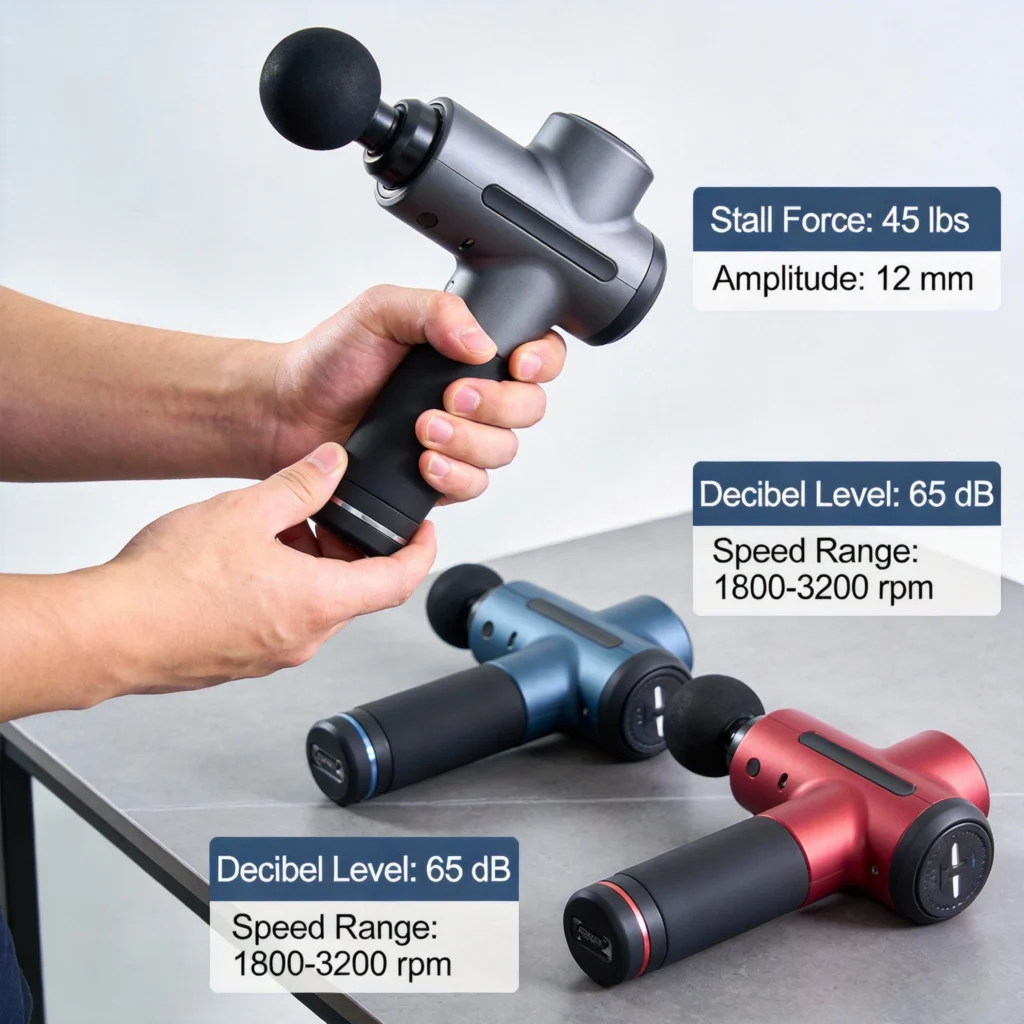
When choosing a massage gun, start by comparing the specs that truly affect performance: stall force for pressure, amplitude for depth, speed range for versatility, and decibel level for comfort. Laying options side by side makes it easier to see which model aligns with your body type, pain tolerance, and recovery habits.
Before comparing brands, it helps to understand what the core specs actually mean for your muscles. Stall force, amplitude, speed range, and battery capacity directly control how deeply a gun penetrates, how comfortable it feels on joints, and how long you can use it before recharging. Knowing your pain tolerance and training volume keeps you from overbuying or underpowering.
Key Specs That Actually Matter
Stall force describes how much pressure a massage gun motor can handle before stalling, usually 20–60 pounds. Heavier lifters and tight hips often need at least 35 pounds, while casual users can stay around 20–30. Amplitude, typically 8–16 millimeters, dictates how deep each stroke travels, with 12–16 millimeters better for dense quads and glutes.
Comfort, Noise, and Practical Usability
Noise ratings around 40–50 decibels feel like a quiet conversation, while 55–60 can annoy roommates or office neighbors. Handle angle and rubberized grips reduce hand fatigue when you’re reaching hamstrings or mid-back alone. Swappable heads—ball, flat, fork, bullet—let you fine-tune pressure so bony areas like shins or forearms don’t feel brutally hammered during longer sessions.