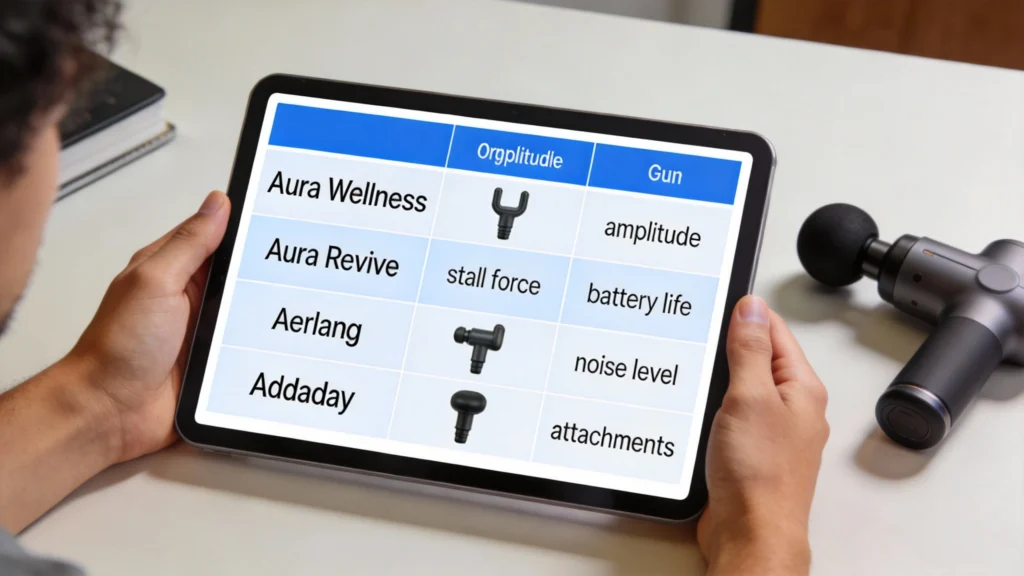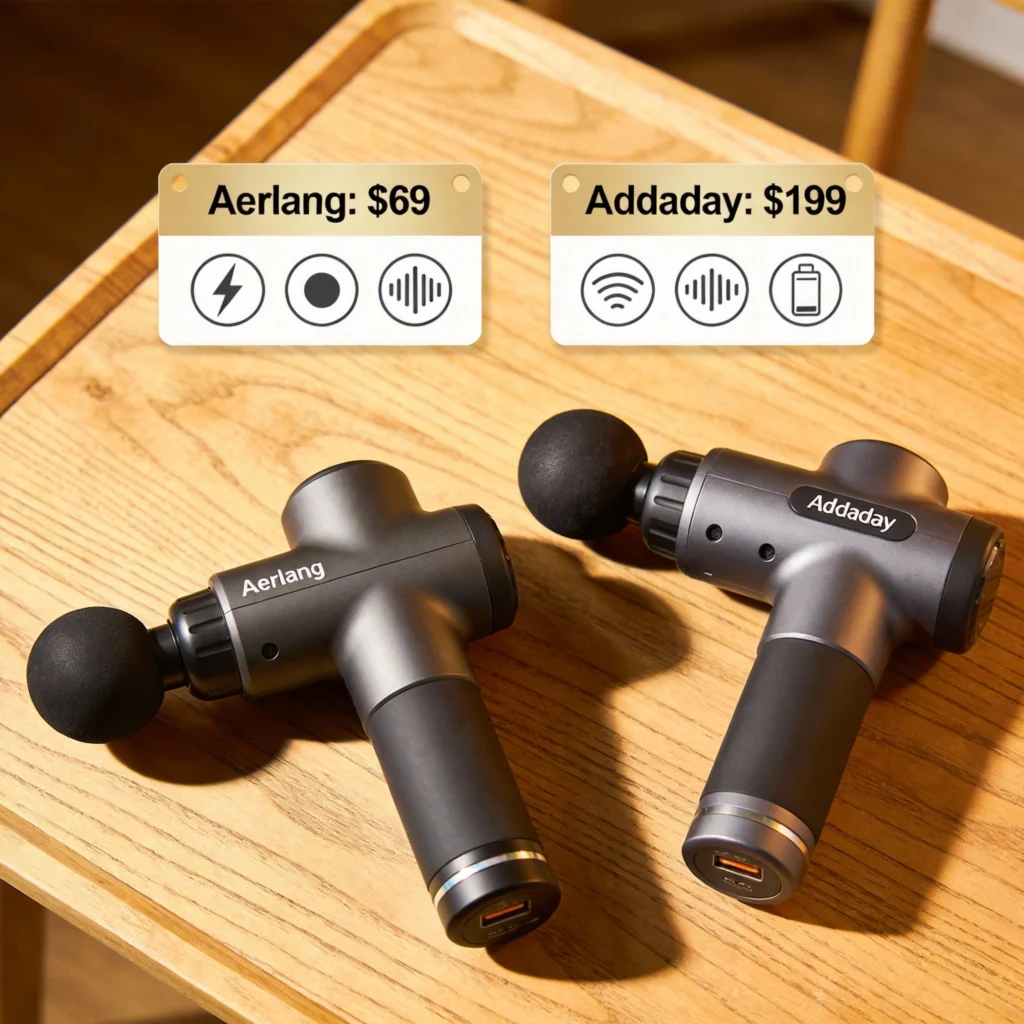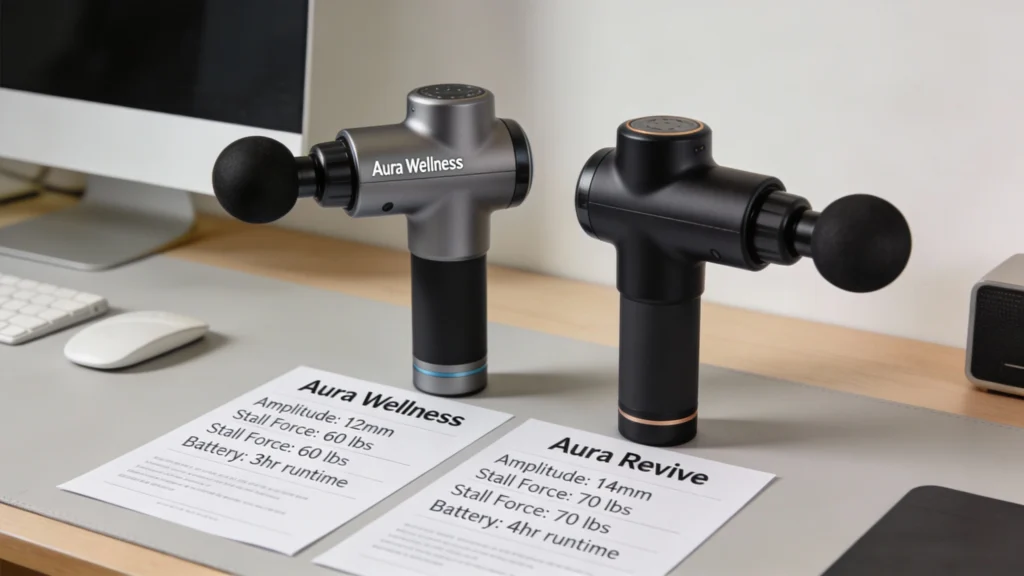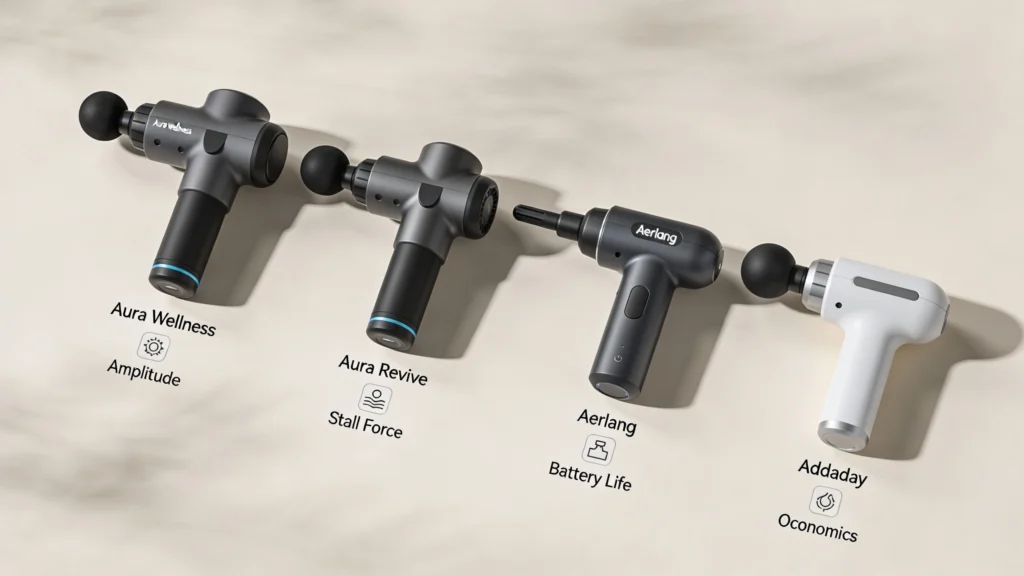
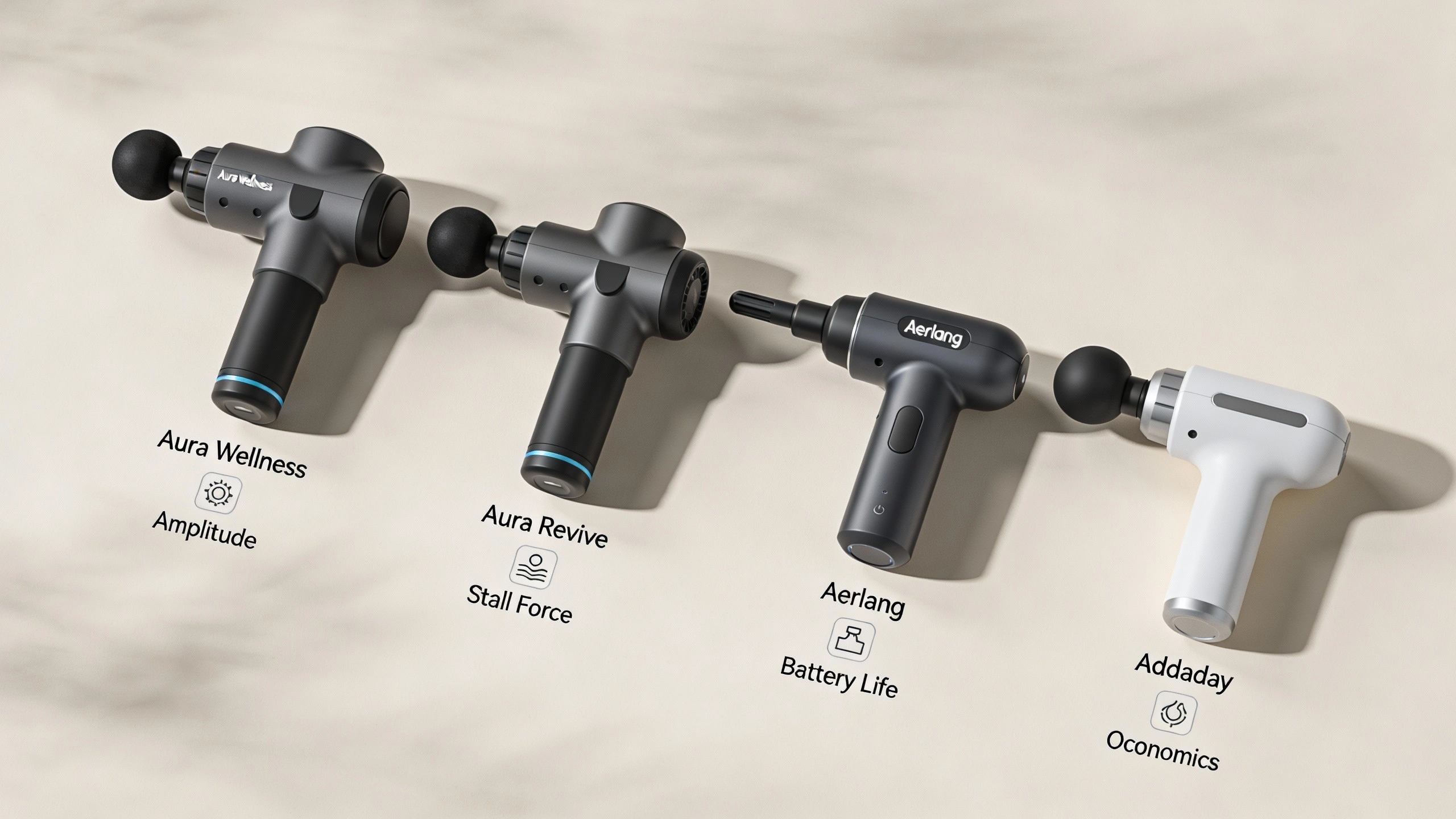
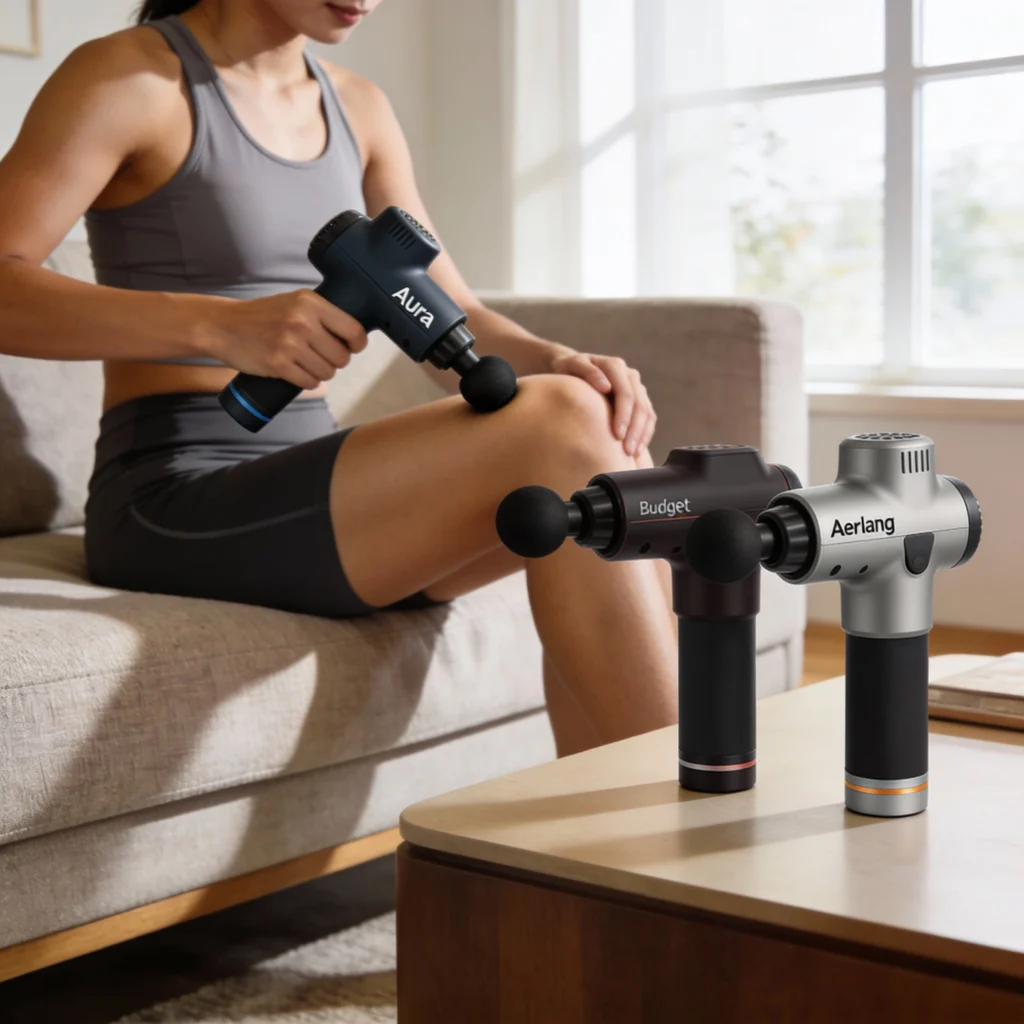
Massage guns like the Aura Wellness and Aerlang have made percussive therapy accessible for everyday users, not just athletes. Used three to five times a week for short sessions, they can help ease tight muscles between workouts. The key is matching the device’s power and comfort to your actual body and budget needs.
Massage guns use rapid percussive strokes, typically 1,600–3,200 percussions per minute, to deliver pressure deeper than traditional foam rolling. Devices like the Aura wellness massage gun and Aerlang massage gun can reach 10–14 mm amplitude, helping mechanically deform tight fascia and stimulate blood flow, which may reduce perceived muscle soreness within 24–48 hours after intense training sessions.
How Percussive Massage Supports Recovery
Percussive therapy works by repeatedly compressing and releasing muscle tissue, creating a pumping effect that encourages venous return and lymphatic drainage. When applied for 30–120 seconds per muscle group, this can reduce stiffness and improve range of motion. Many lifters use a massage gun pre‑workout on quads and glutes to enhance warm‑up, then post‑workout on calves and hamstrings to blunt delayed onset muscle soreness.
Who Uses Massage Guns and Why
Beyond athletes, desk workers and travelers rely on massage guns to counteract static postures and cramped seating. Someone sitting eight hours daily often applies light percussion along upper traps and between shoulder blades for two to three minutes. Runners frequently target hip flexors and IT bands, using a softer attachment to avoid aggravating sensitive tissue while still improving comfort before long sessions or races.