Benefits of Eye Massager Devices: Do They Really Work?

Eye massager devices promise relief from screen fatigue, headaches, and stress with just 10–20 minutes of use. Yet many people wonder whether these benefits are real or just clever marketing. Looking at how these devices work, who they help most, and where their limits lie makes it easier to decide if one belongs in your routine.

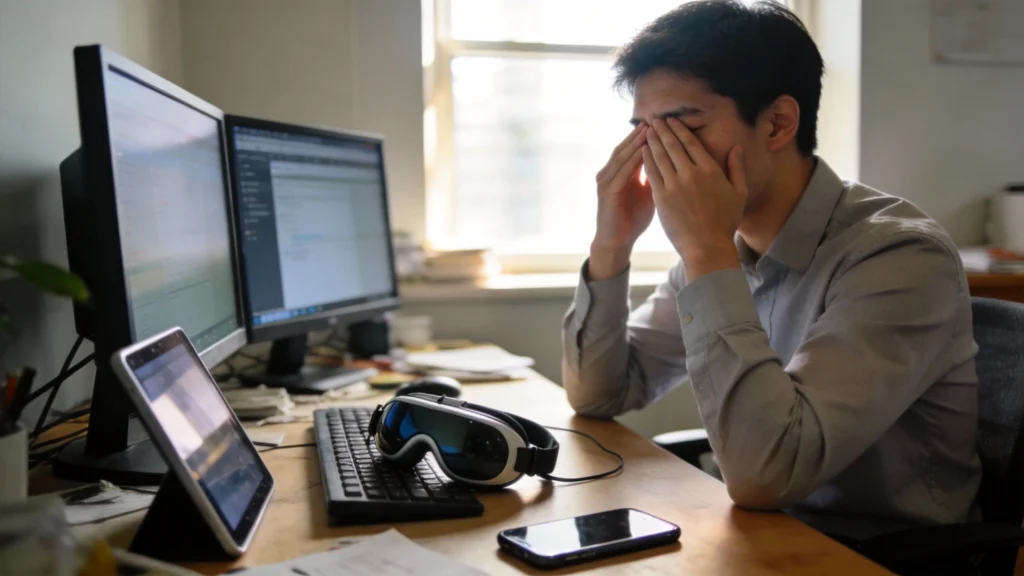
Eye massager devices combine gentle vibration, air compression, heat, and sometimes sound to relax the muscles around your eyes. When used correctly, an eye massager can support relief from digital eye strain and tension headaches, especially for people spending over six hours daily on screens. Understanding the actual benefits of eye massager tools helps separate realistic expectations from hype.

Most models cycle through modes lasting 10–20 minutes, targeting the temples, brow, and under-eye area. By increasing local blood flow and encouraging you to close your eyes, they create a forced break from visual input. This is valuable for remote workers, gamers, and students who often ignore the 20-20-20 rule. Still, eye massagers are wellness tools, not medical treatments.

Used safely, they can complement good lighting, ergonomics, and regular screen breaks. However, people with certain eye diseases, recent eye surgery, or uncontrolled blood pressure must be cautious. Looking closely at the benefits of eye massager devices, and when they may be overstated, keeps your expectations grounded and your eyes protected.

1

What Is an Eye Massager and How Does It Work?

What Is an Eye Massager and How Does It Work?

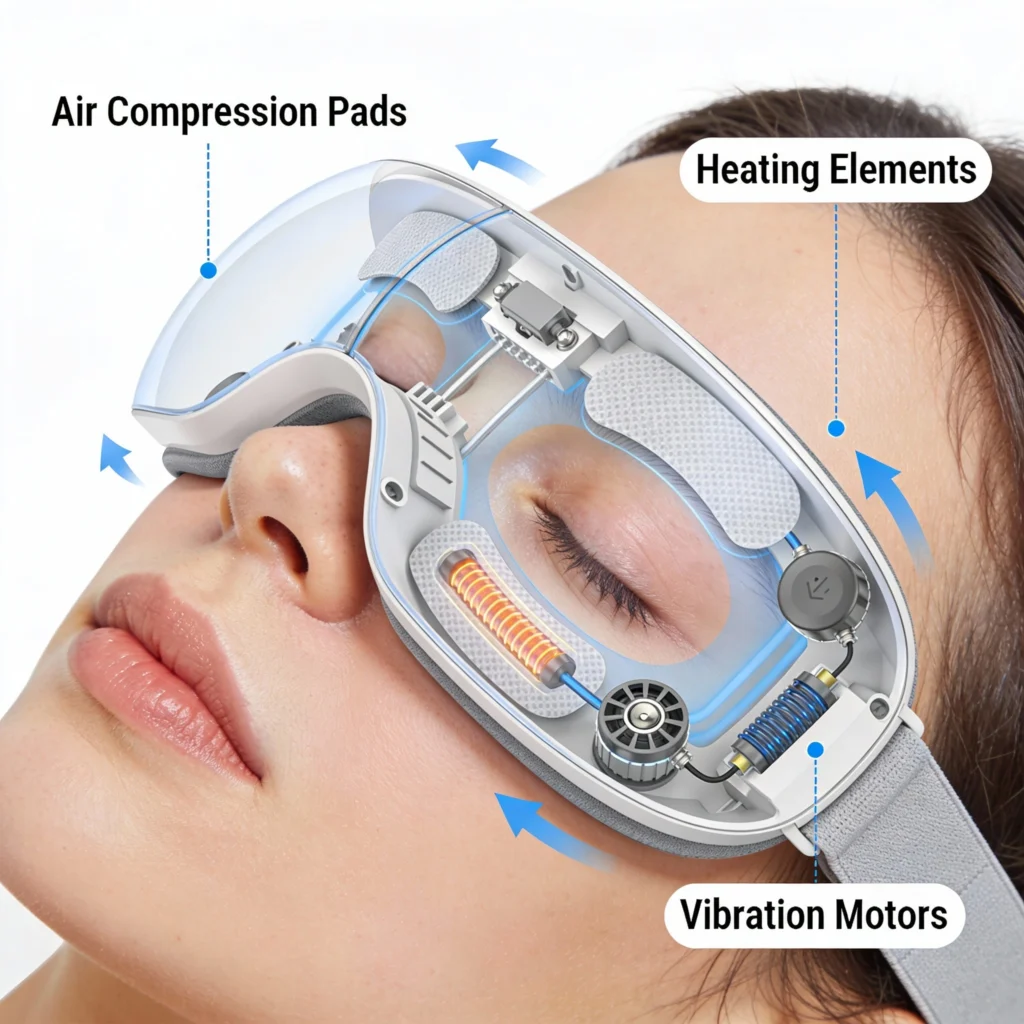
An eye massager works by targeting the muscles and pressure points around your eyes, not the eyeball itself. Inside the device, small air chambers inflate and deflate rhythmically while heating elements provide gentle warmth. This combination can encourage relaxation, improve local blood flow, and reduce the tight, tired feeling that often follows long screen sessions.

Eye massagers are wearable devices, usually shaped like a wraparound visor or foldable goggles, that sit over the eyes and temples. Most run on rechargeable batteries and weigh between 250–400 grams, so they don’t press heavily on the face. Their goal is to relax periorbital muscles, stimulate circulation, and encourage a short, device-guided rest period.

Key Components and Mechanisms

Typical eye massagers combine air compression chambers, vibration motors, and heating elements set between 38–42°C. Compression gently squeezes and releases the temples and eye area, mimicking fingertip massage. Vibration adds rhythmic stimulation, while warmth can improve blood flow and comfort. Some models, like Renpho or Breo iSee, include Bluetooth audio to pair massage with calming music or guided meditations.

How Eye Massagers Target the Eye Area

These devices avoid direct pressure on the eyeballs by focusing on the brow bone, temples, and upper cheek. Internal pads are contoured to rest on bony areas, distributing force safely. Adjustable straps and multiple intensity settings let you customize fit and pressure. By closing off visual input and dimming external light, eye massagers also reduce sensory load, which can ease tension-related discomfort.
2
benefits of eye massager

Core Benefits of Eye Massager Use for Modern Lifestyles

Long hours on laptops, phones, and gaming monitors make digital eye strain almost unavoidable. Eye massagers address several contributors to discomfort: sustained focus at a fixed distance, reduced blinking, and muscle tension from frowning or squinting. When used for 10–15 minutes after work sessions, they can help transition your nervous system from high-alert productivity mode into a calmer, parasympathetic state.

Core Benefits of Eye Massager Use for Modern Lifestyles

The people who tend to benefit most from eye massagers are those with consistently high screen time, such as office workers, students, and remote professionals. When paired with healthy habits like regular breaks, hydration, and good posture, these devices can become a helpful tool for managing everyday eye fatigue and stress-related discomfort.

Support for Screen Fatigue and Tension

Screen fatigue often shows up as heaviness around the eyes, mild burning, or tightness in the forehead. Warm compression and vibration encourage microcirculation and relax the frontalis and orbicularis oculi muscles. Many users report subjective relief within one session, especially when they’ve been staring at 60–120 Hz monitors for hours. While this doesn’t correct vision, it can make continued screen use more tolerable.

Relaxation and Stress-Reduction Effects

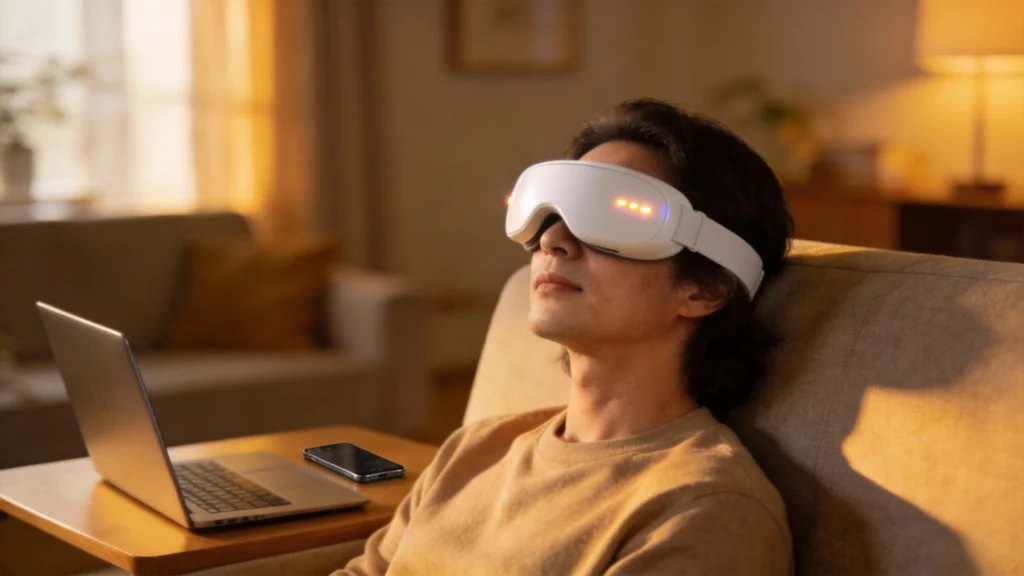
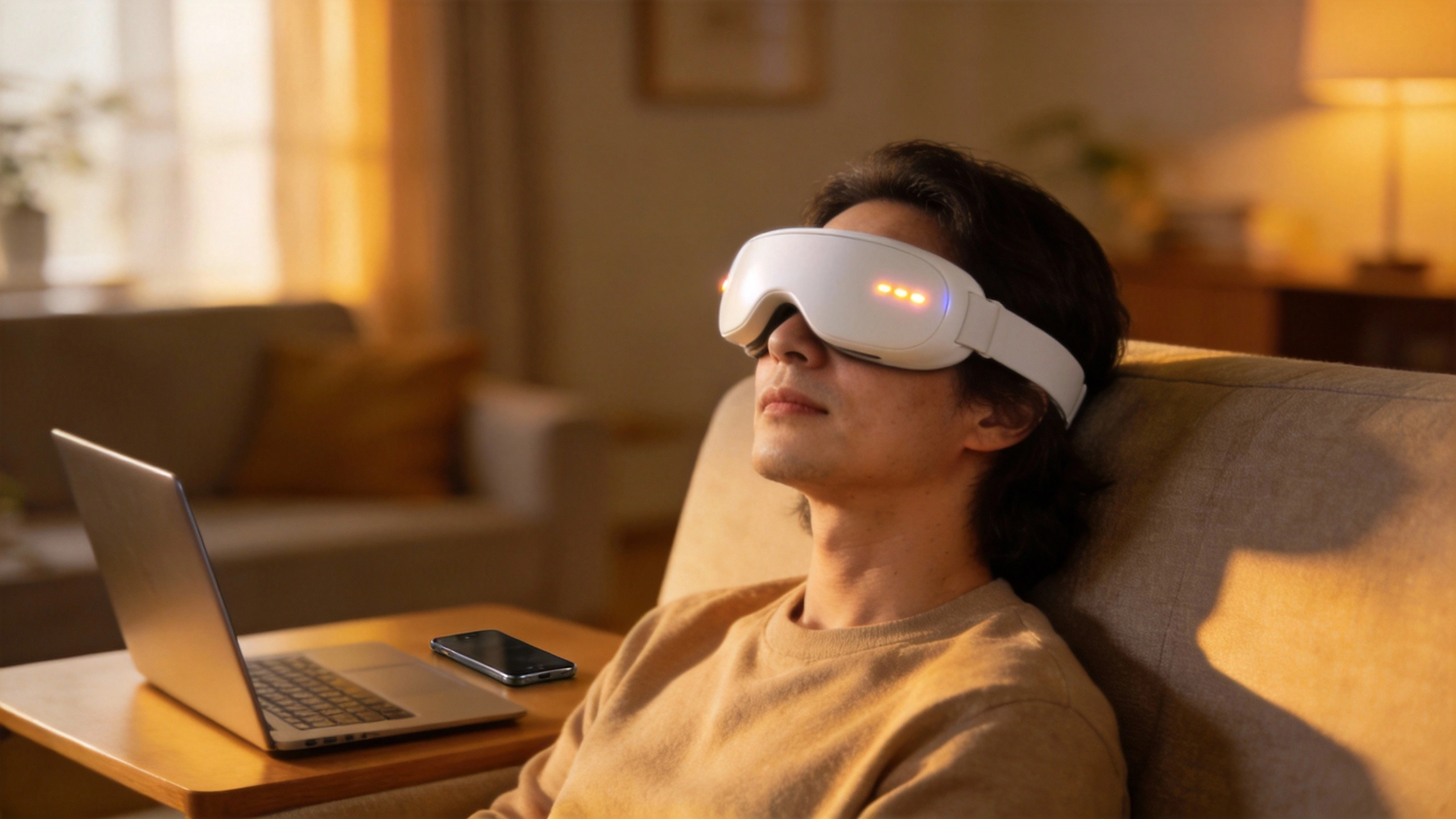
Because eye massagers require you to lie back or sit still with eyes closed, they act as a structured mini-break. Some studies on massage and heat therapy show reductions in perceived stress scores of 20–30% after short sessions. Paired with slow breathing at around six breaths per minute, an eye massager can become a simple, repeatable ritual that signals the end of your workday or gaming session.

3

Benefits of Eye Massager for Headaches and Eye Strain

Benefits of Eye Massager for Headaches and Eye Strain

People prone to tension headaches or discomfort around the temples may find that the warmth and gentle pressure of an eye massager provide soothing relief. While it’s not a cure for chronic migraines or underlying conditions, the device can help ease muscle tightness and support other headache management strategies recommended by a healthcare professional.

Many people buy eye massagers hoping they’ll help with headaches linked to eye strain or tension. While they are not a cure for migraines or serious neurological issues, they can ease mild to moderate tension-type headaches. These are often triggered by tight muscles across the forehead and temples, prolonged concentration, and poor posture at desks or gaming setups.

How Eye Massagers May Help Headache Symptoms

Gentle pressure and warmth along the temples can reduce muscle guarding, which contributes to band-like tension headaches. By relaxing the corrugator and temporalis muscles, eye massagers may lower perceived pain intensity by a few points on a 0–10 scale. Some users find that a 15-minute session at low compression combined with darkness helps interrupt early headache stages before they escalate.

Targeting Digital Eye Strain Discomfort

Digital eye strain, sometimes called computer vision syndrome, causes dryness, burning, and blurred vision after two or more hours of screen use. Eye massagers don’t change your prescription, but they can improve comfort by encouraging more complete blinking afterward and reducing surrounding muscle fatigue. They work best alongside lubricating eye drops, proper screen distance of 50–70 cm, and regular micro-breaks.

4

Who Gets the Most Benefits from an Eye Massager?

Eye massager devices are especially appealing for people whose work or hobbies keep them glued to screens or in visually demanding environments. Those who already practice some self-care, like stretching or meditation, often integrate the device more consistently and notice more reliable benefits. Certain groups, based on lifestyle patterns, tend to report higher satisfaction and more frequent use.

Who Gets the Most Benefits from an Eye Massager?

For people who spend much of the day switching between monitors, phones, and tablets, eye strain can build gradually. Short breaks with an eye massager may help interrupt that cycle by loosening tense muscles around the eyes and temples. This can complement good habits like screen breaks, proper lighting, and adjusting display settings.

Ideal Users and Use Cases

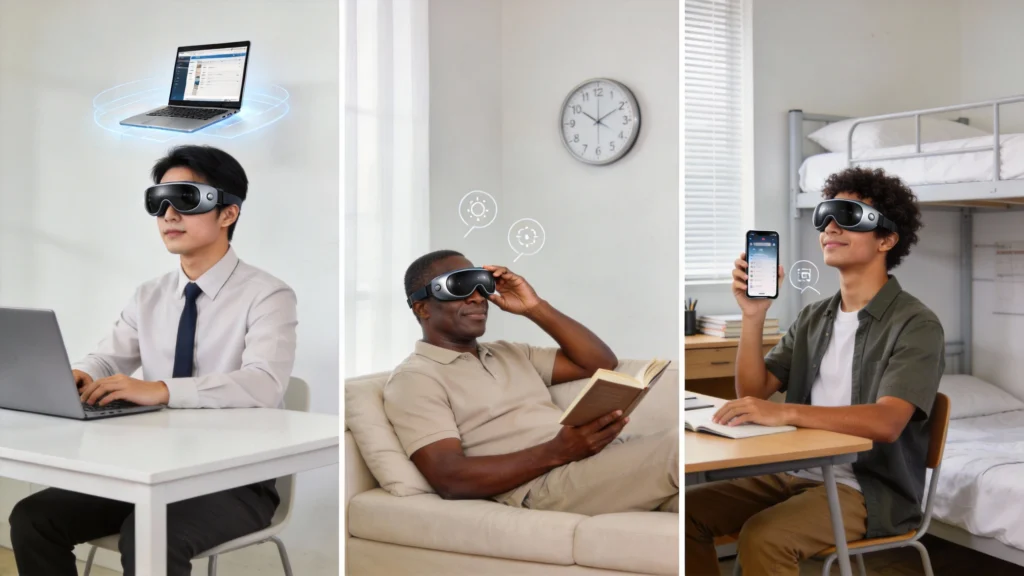
Remote workers spending eight or more hours on laptops, competitive gamers grinding for several hours nightly, and university students reading dense digital textbooks are prime candidates. Frequent travelers dealing with dry cabin air and jet lag also benefit from portable, foldable eye massagers. People with stress-related jaw clenching or frowning may notice less facial tension when pairing devices with posture and ergonomics improvements.

Users who treat eye massagers as one tool within a broader routine—alongside breaks, hydration, and sleep hygiene—tend to report steadier relief and fewer flare-ups of eye strain or tension headaches than those relying on the device alone.

Who Should Be Cautious or Avoid Use

Anyone with glaucoma, severe dry eye disease, diabetic retinopathy, or recent eye surgery should talk to an eye care professional before using an eye massager. Increased pressure around the eye area, even if indirect, may be risky in these conditions. People with implanted facial hardware, uncontrolled hypertension, or frequent unexplained headaches should also seek medical clearance before starting regular sessions.

5

How to Use an Eye Massager Safely and Effectively

Getting the most benefits from an eye massager means paying attention to duration, intensity, and timing. Most manufacturers recommend sessions of 10–20 minutes, once or twice daily. Starting at the lowest compression and heat settings allows you to gauge comfort. If you feel throbbing pain, dizziness, or visual changes, you should stop immediately and reassess.

How to Use an Eye Massager Safely and Effectively

Recommended Settings and Frequency

For beginners, one short session in the evening, around 10–15 minutes, is a reasonable starting point. Choose mild heat around 38–40°C and low compression, then adjust upward gradually if comfortable. People with very long screen days might add a second session at midday. Avoid exceeding 40 minutes total daily use, since more time doesn’t necessarily equal more benefit and could irritate sensitive tissues.

  • Start with 10-minute sessions, low compression, and mild heat around 38–40°C to monitor comfort and skin response.
  • Limit daily use to 20–30 minutes total, split into one or two sessions, to avoid prolonged pressure exposure.
  • Use after major screen blocks of 3–4 hours, pairing with a full 10–15 minute away-from-screen break.
  • Clean contact surfaces with a gentle alcohol wipe after each use to reduce bacterial buildup on eyelid skin.
  • Stop immediately if you notice flashing lights, sudden blurred vision, or sharp eye pain during any session.

When to Consult a Professional

If you experience headaches that worsen with eye massager use, or visual symptoms like double vision, halos, or persistent redness, consult an optometrist or ophthalmologist. People with chronic conditions such as glaucoma or macular degeneration should bring the device to their appointment and ask specifically about pressure safety. Eye massagers should complement, not replace, professional advice and prescribed treatments.

6

Limitations and When the Benefits of Eye Massager May Be Overstated

Limitations and When the Benefits of Eye Massager May Be Overstated

Marketing claims sometimes suggest eye massagers can fix dark circles, erase wrinkles, or permanently cure headaches. These promises go far beyond what the technology can realistically deliver. The devices mainly provide short-term comfort and relaxation. They do not change eye anatomy, correct refractive errors, or treat underlying neurological or vascular diseases causing serious headache patterns.

Realistic Expectations vs. Hype

While some mild puffiness may decrease temporarily due to improved lymphatic drainage, persistent dark circles usually relate to genetics, pigmentation, or lifestyle. Fine lines might look slightly softer after heat and hydration, but this is not equivalent to medical treatments like retinoids or laser procedures. Headaches that respond only briefly to massage but return daily may require evaluation for vision problems or muscle imbalance.

If a claim sounds like a permanent cure—promising to reverse eye disease, eliminate migraines, or replace prescription lenses—it should raise skepticism. Evidence supports comfort and relaxation benefits, not structural eye changes or long-term medical outcomes.

Red-Flag Symptoms Requiring Medical Care

Eye pain with nausea, sudden vision loss, intense halos around lights, or one-sided weakness are emergency signs that need urgent care, not home massagers. Frequent morning headaches, rapidly changing vision, or eye pain when moving the eyeballs deserve prompt optometric or neurologic evaluation. Using an eye massager on top of these symptoms may delay diagnosis and appropriate treatment, increasing potential risk.

7

Integrating Eye Massager Sessions into a Full Relaxation Routine

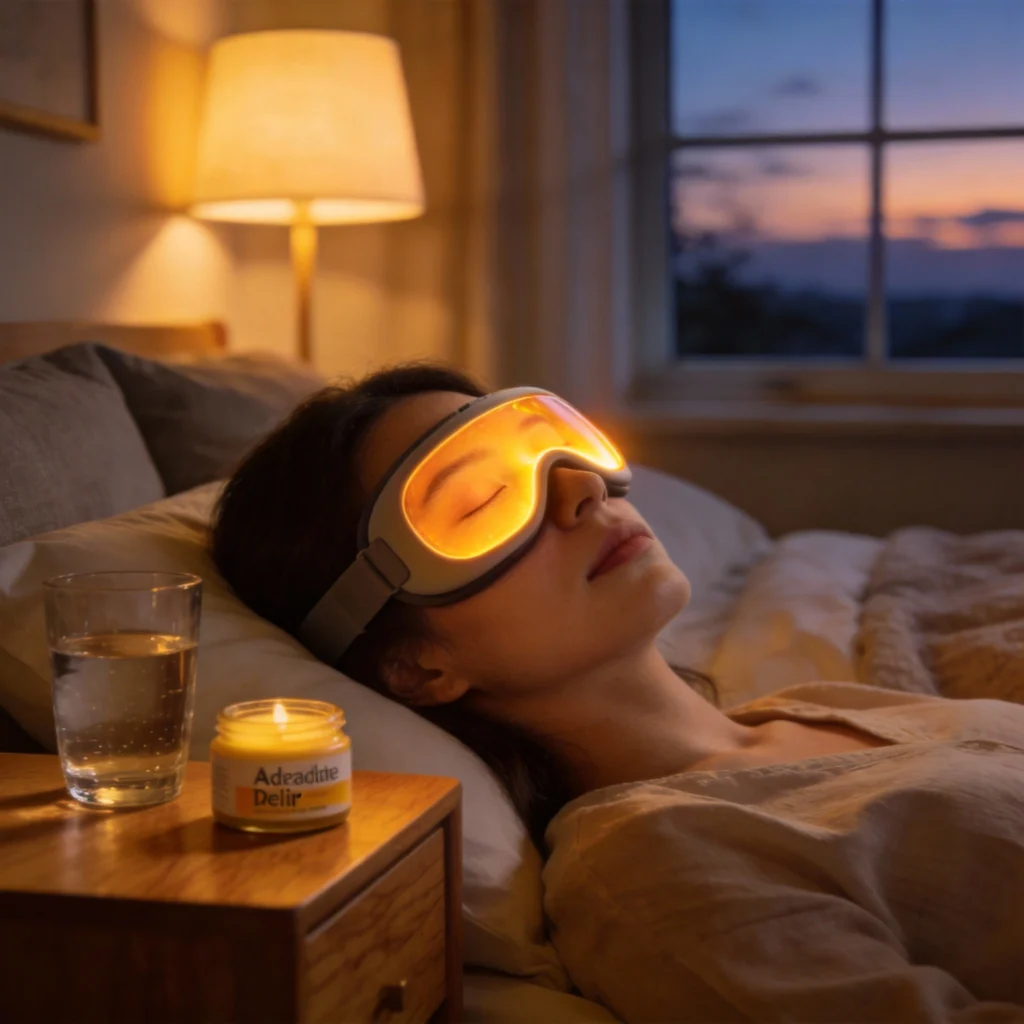
Eye massagers work best when they’re one part of a broader strategy to manage digital load, stress, and sleep quality. Instead of using them randomly, anchoring sessions to existing habits—like after shutting down your laptop or just before bedtime—helps create a predictable wind-down ritual. Pairing them with breathing exercises and screen hygiene amplifies relaxation and eye comfort.

Integrating Eye Massager Sessions into a Full Relaxation Routine

Building a Complementary Routine

Combining an eye massager with simple practices can produce more noticeable benefits than using the device alone. For example, a 10-minute session after work, followed by five minutes of diaphragmatic breathing and a short walk, can drop perceived stress significantly. Turning off bright overhead lights and avoiding phones during the session reduces blue light exposure, supporting melatonin production.

Routine ElementDurationMain BenefitPractical Example
Eye massager session10–15 minutesRelieves eye tensionUse after final work email block at home desk
Screen break rule20 seconds every 20 minutesReduces strain buildupLook 6 meters away at a window or distant wall
Breathing exercises5 minutesLowers heart rateInhale 4 seconds, exhale 6 seconds while seated comfortably
Evening light control2–3 hours pre-bedImproves sleep onsetDim lights, enable night mode on all screens
Hydration and blinkingOngoingSupports tear filmDrink water regularly, practice 10 slow blinks every hour
Ergonomic checkWeekly 5–10 minutesPrevents posture strainAdjust chair, monitor height, and keyboard distance

By weaving eye massager use into this kind of structured routine, you address both symptoms and root contributors to eye discomfort. Over several weeks, many people notice less end-of-day heaviness, fewer tension headaches, and easier transitions into sleep. The device then becomes a helpful support tool rather than a standalone solution expected to fix every eye-related complaint.

Face, Neck, Head, Body, Back & Foot Massager
For a Relaxing & Relieving Lifestyle
14-day money back guarantee
Lowest Prices: 365 Days Discount
Safe & Secure online payment
Contact Us

Massagers Mart © 2025. All Rights Reserved

Massagers Mart
Logo
Compare items
  • Total (0)
Compare
0
Shopping cart