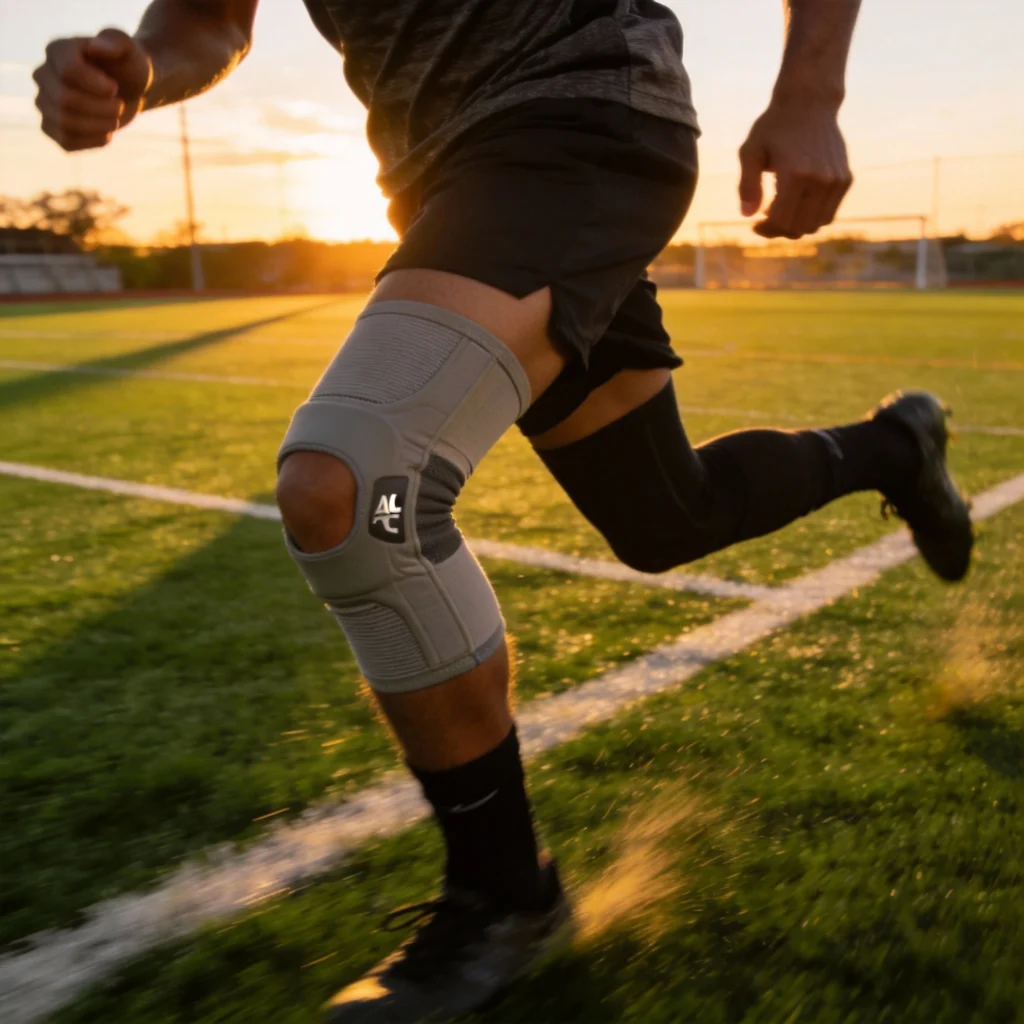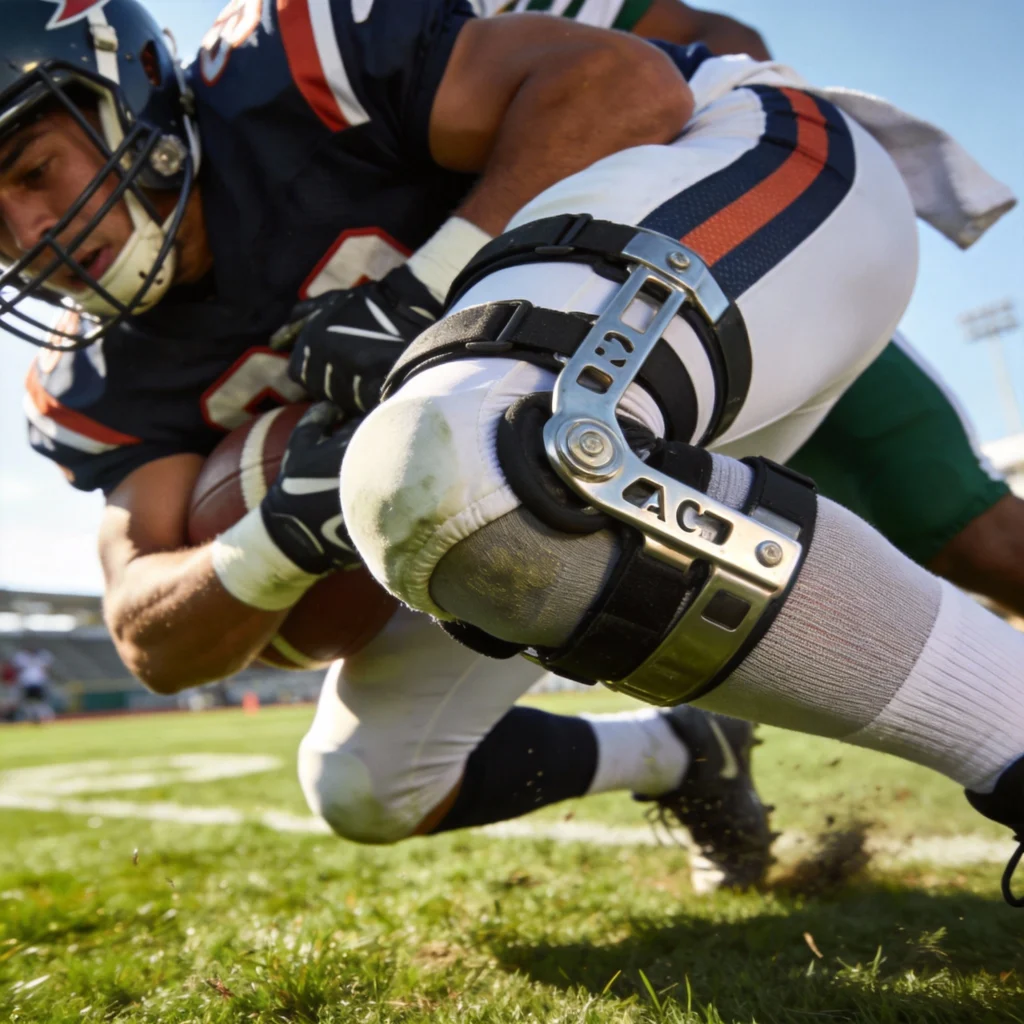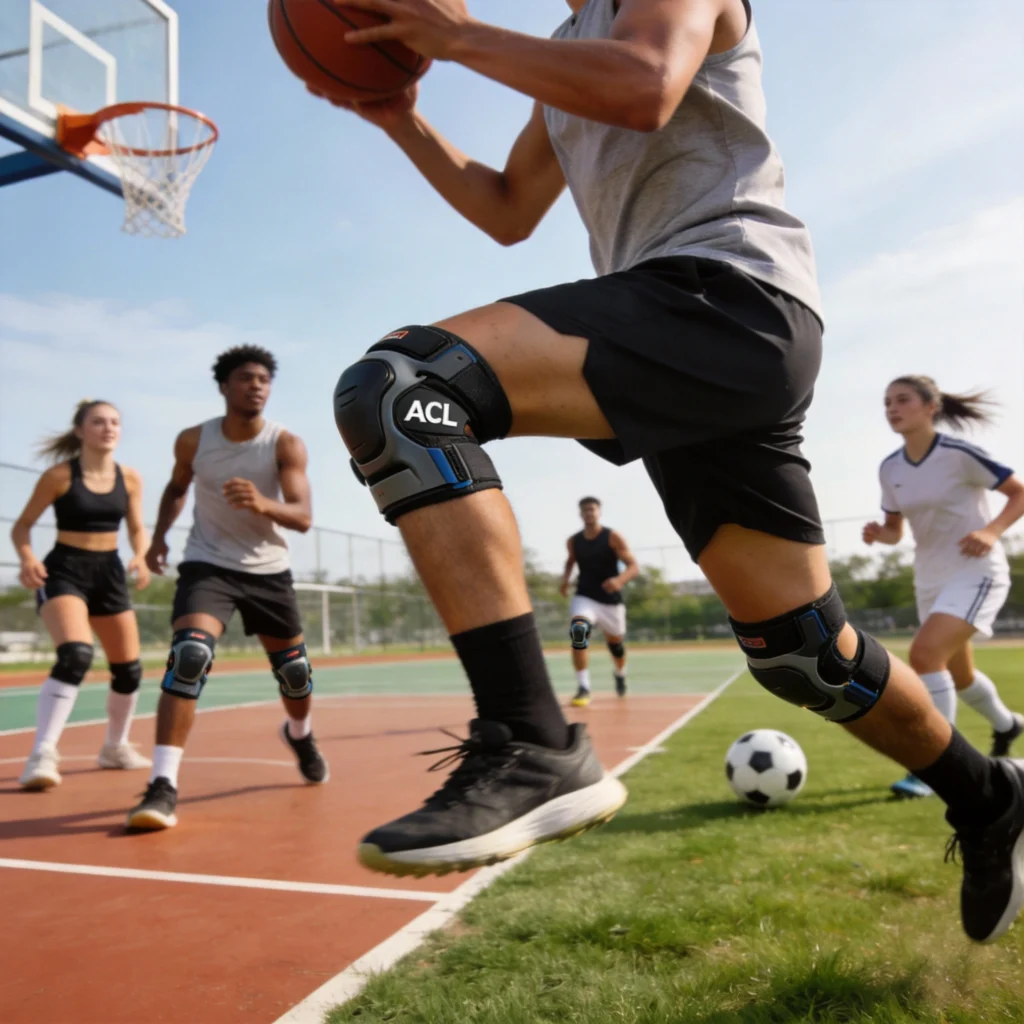

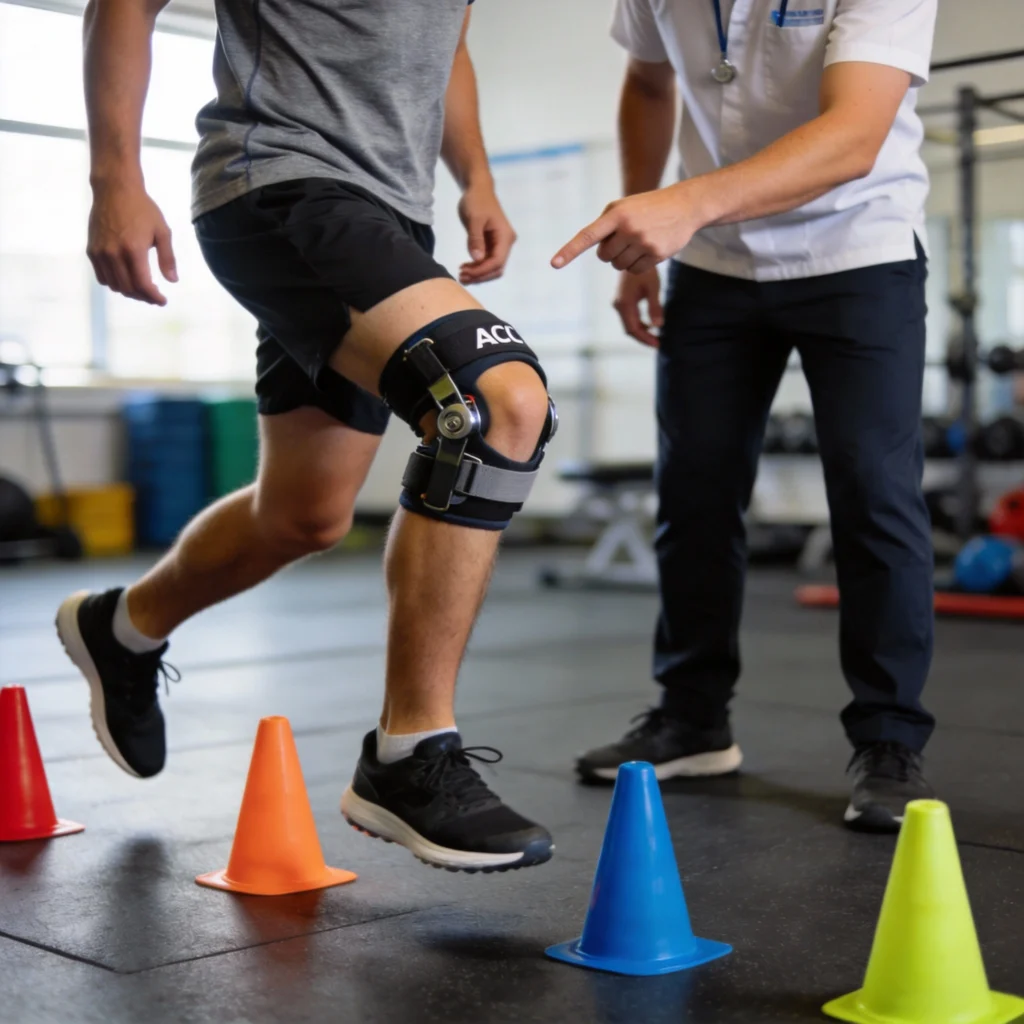
During the return-to-play phase, an ACL knee brace acts as an external safety net while you rebuild strength and control. By resisting anterior tibial translation and supporting rotational stability during drills, it lets you practice cutting, hopping, and deceleration patterns under supervision without overloading a still-maturing graft.
After ACL surgery, the graft is weakest between weeks 6 and 12, just when athletes start more aggressive drills. An ACL knee brace for sports adds external stability against anterior tibial translation and rotational forces created by cutting and landing. That mechanical backup can reduce peak strain on the healing graft during unpredictable movements like unplanned pivots or contact.
Mechanical Support in High-Risk Movements
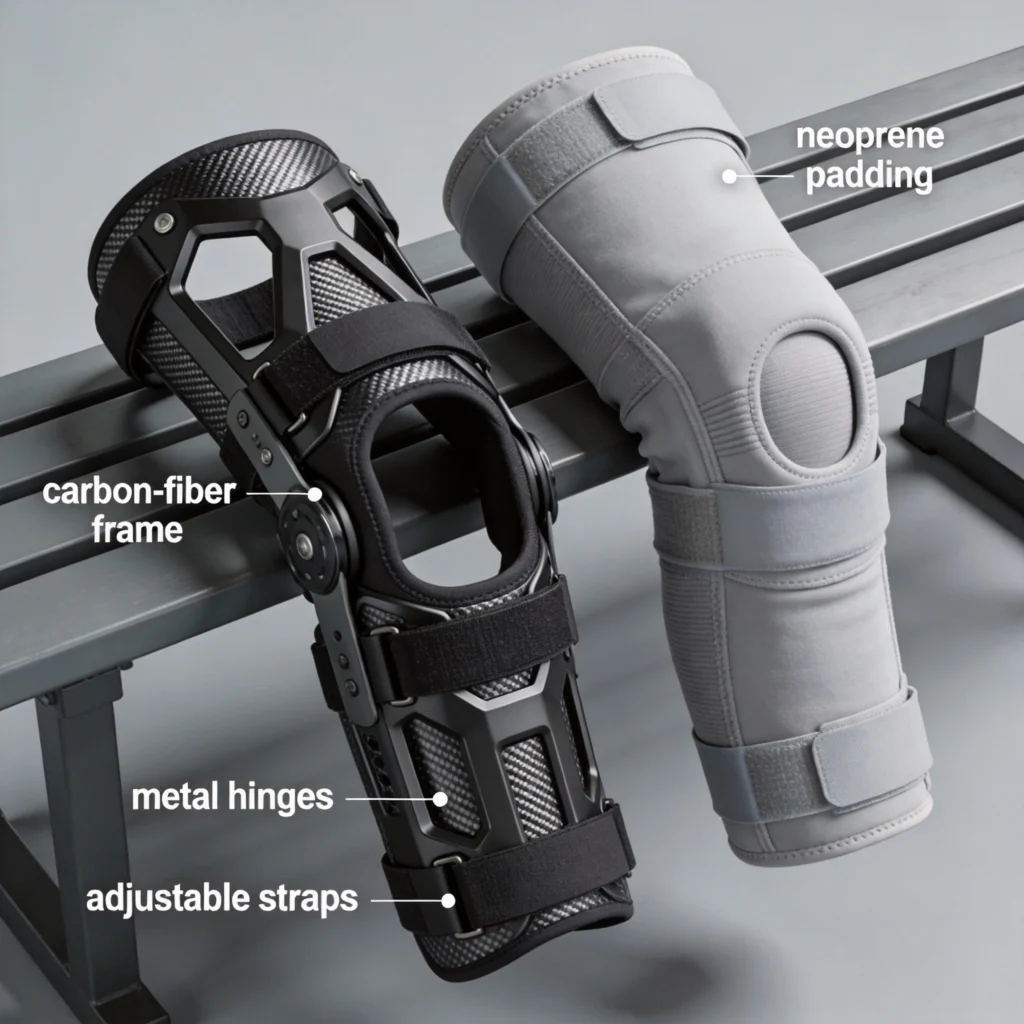
Functional ACL braces use rigid side uprights and a four-point strap system to resist forward tibial movement by roughly 2–3 mm under load. During a soccer cut at 30–40 degrees, that small reduction meaningfully lowers strain on the graft. Hinges also help control hyperextension by blocking motion past 0–5 degrees, crucial when landing from rebounds or ski jumps.
Psychological Confidence and Motor Control
Fear of re-injury can reduce quad activation by 10–20%, slowing reaction times and destabilizing the knee. Wearing a brace often improves perceived stability scores in return-to-sport testing, encouraging athletes to fully commit to cuts and landings. That confidence allows more natural movement patterns, which in turn improves neuromuscular control gained during ACL physical therapy.
Many athletes report the brace as a “safety belt,” not because it prevents every injury, but because it lets them trust their training enough to move decisively again.