Best Massage Gun for Sciatica Relief: What Works and What to Avoid

When sciatic pain flares, a massage gun can look like a miracle shortcut. Yet using intense percussion on irritated nerves or the lower back without guidance can easily backfire, increasing inflammation or numbness. Understanding how these tools interact with muscles, fascia, and nerves helps you decide when they are helpful and when they are risky.

Many people search for the best massage gun for sciatica after weeks of burning or shooting pain down the leg. Percussion therapy can relax tight glutes and hip rotators that compress the sciatic nerve, but only when used with conservative intensity and precise positioning. Choosing a device with fine speed control and softer heads matters more than raw power or stall force ratings.

Sciatica usually reflects an underlying issue such as a lumbar disc bulge, spinal stenosis, or piriformis syndrome rather than a simple muscle knot. That means a massage gun is an adjunct, not a cure. Used around, not on, the painful nerve pathway, it may reduce guarding and improve tolerance to movement, especially when combined with stretching and walking.

Because nerve tissue is delicate, safety must come before symptom chasing. If pain radiates below the knee, worsens with coughing, or coincides with weakness, percussion should be paused until a clinician evaluates your spine. The goal is to use technology strategically, protecting irritated structures while restoring circulation and mobility to the muscles that support them.

1
best massage gun for sciatica

Can the Best Massage Gun for Sciatica Really Help Nerve Pain?

Can the Best Massage Gun for Sciatica Really Help Nerve Pain?

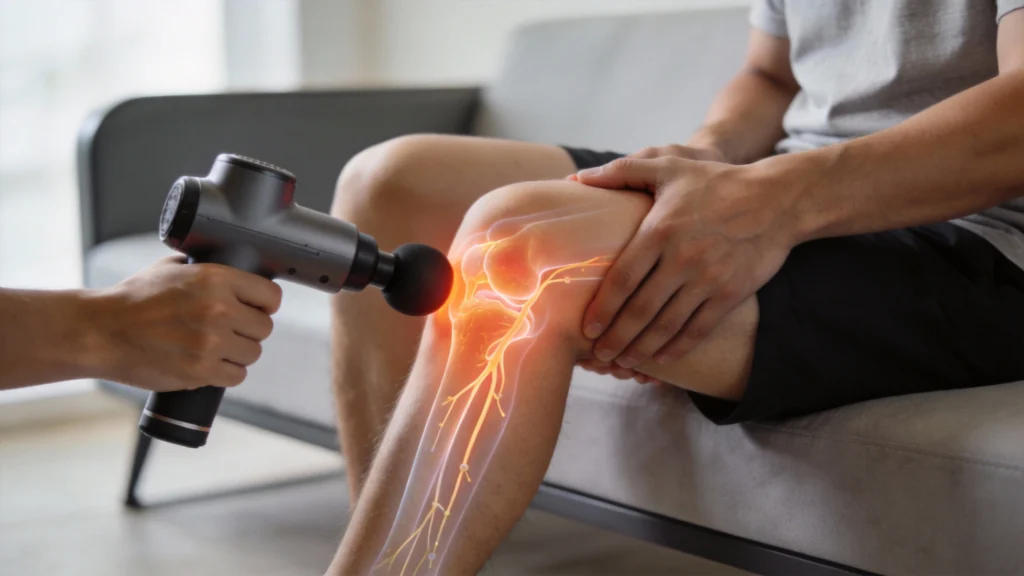
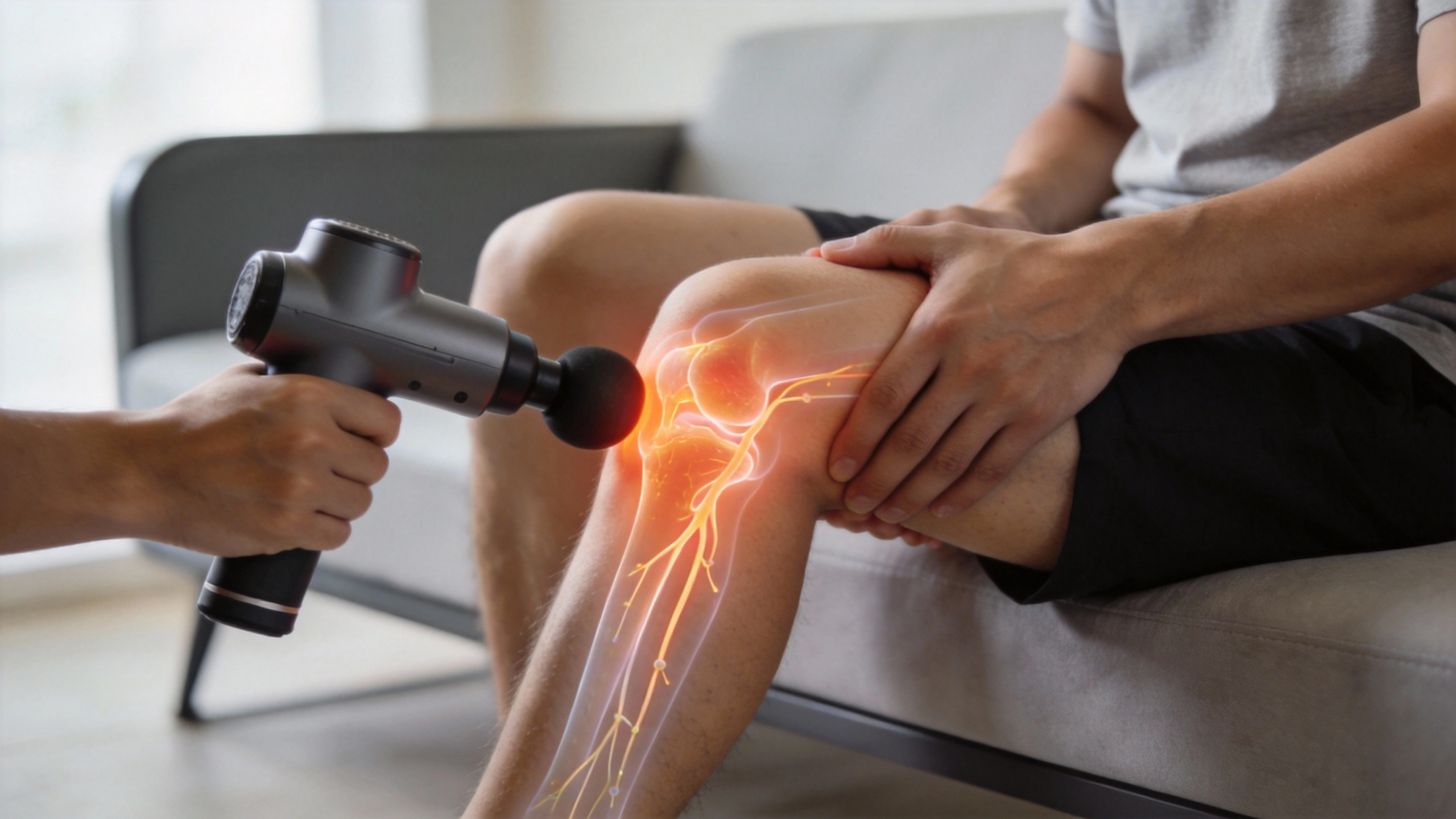
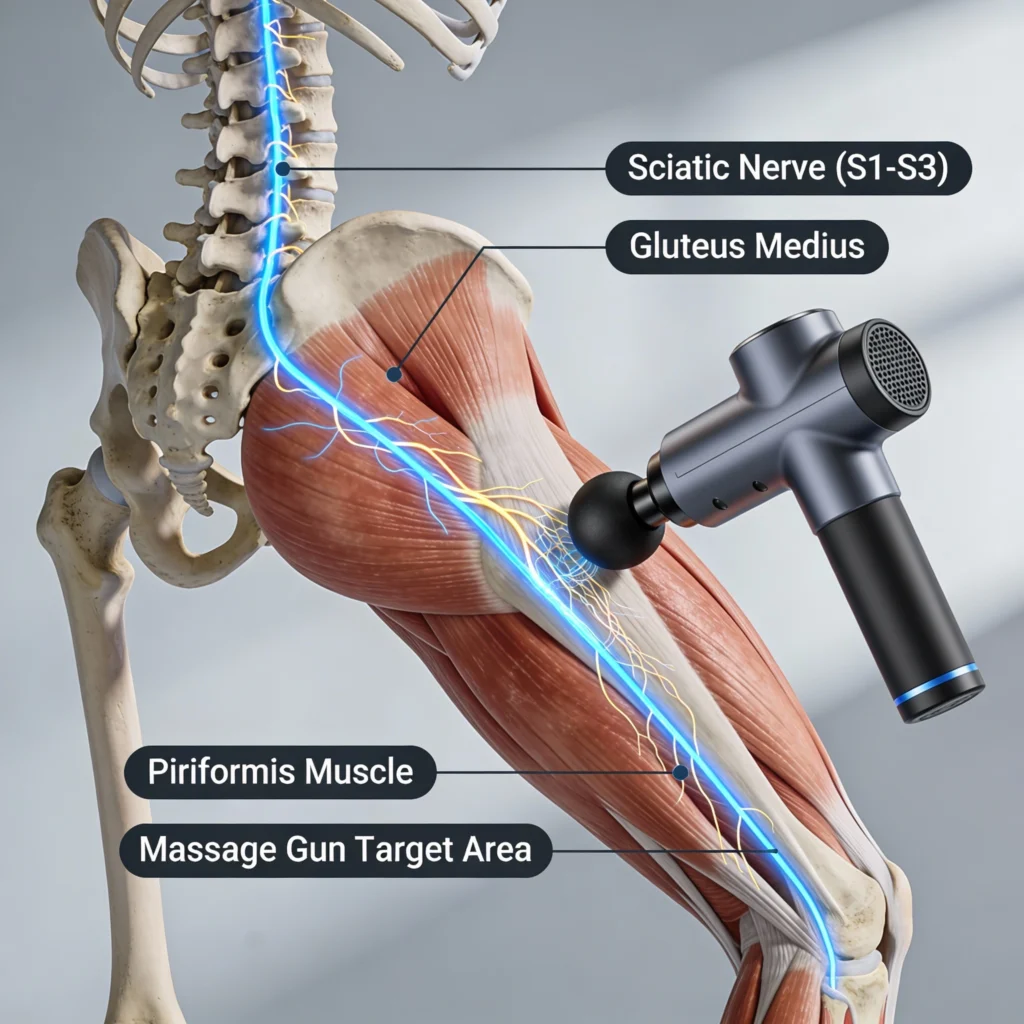
Sciatic pain usually starts where the nerve exits the lower spine and travels through the deep hip muscles, which is why location matters more than pressure. A massage gun should never be driven directly into the spine or nerve line. Instead, focus on surrounding muscles that can compress or irritate the sciatic pathway.

Sciatica describes symptoms from compression or irritation of the sciatic nerve, often from L4–L5 or L5–S1 disc issues, bony narrowing, or tight deep hip muscles. A massage gun does not decompress discs or widen foramina, but it can down-regulate muscle tension and improve local blood flow, which sometimes reduces mechanical pressure on the nerve’s outer sheath.

How Percussion Therapy Influences Sciatic Symptoms

When muscles like the piriformis, gluteus maximus, and deep rotators stay in spasm, they can squeeze the sciatic nerve as it exits the pelvis. Gentle percussion at 1,600–2,000 percussions per minute can disrupt pain signaling by activating larger sensory fibers, a concept called gate control. This often changes sharp pain into a dull ache, allowing easier walking or sitting for short periods.

When You Need Medical Guidance Before Using a Massage Gun

Red-flag sciatica includes symptoms like progressive leg weakness, foot drop, saddle numbness, or loss of bladder control, which may indicate cauda equina syndrome requiring emergency care. Even without those signs, constant night pain, unexplained weight loss, or history of cancer warrants imaging before aggressive self-treatment. In such cases, a massage gun might mask warning signals temporarily while the underlying condition worsens.
2
massage gun for sciatica relief

Key Features of the Best Massage Gun for Sciatica Relief

Choosing the best percussion massage gun for sciatica means prioritizing control and comfort over maximum depth. Sciatic irritation often worsens with aggressive pressure, so devices offering low starting speeds around 1,200–1,400 percussions per minute and 10–20 millimeter stroke depth are usually safer. Subtle increments between levels help you fine-tune intensity as tissues warm up or flare down.

Key Features of the Best Massage Gun for Sciatica Relief

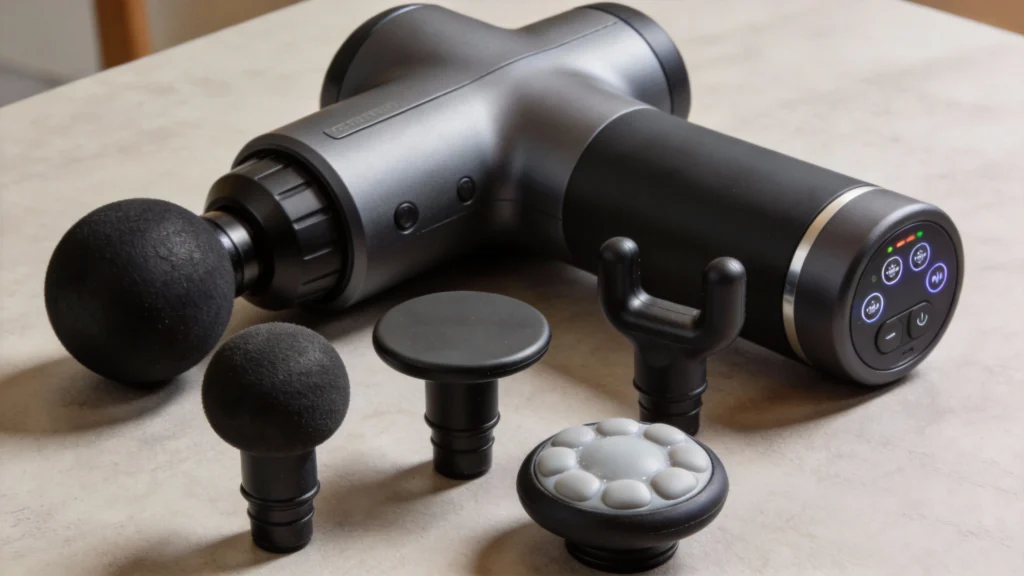
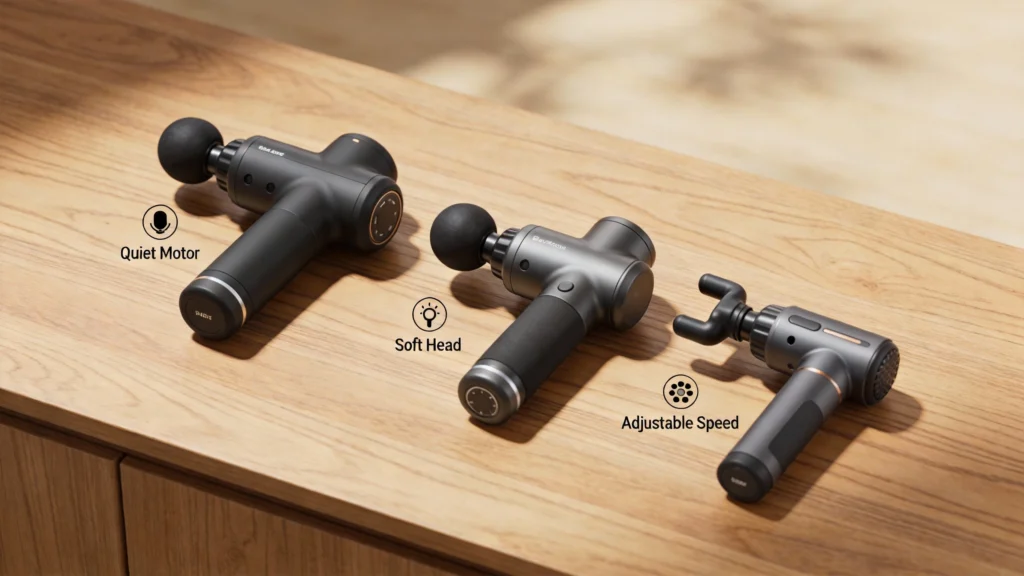
Not every massage gun is a good match for sciatica. Compact, quieter models with soft heads and lower starting speeds are usually better than heavy, ultra-powerful devices. Look for tools that let you start gently, stay below pain levels, and swap attachments as your hips and glutes become less irritated.

What to Look For in a Sciatica-Friendly Massage Gun

Several design features directly influence how safely you can treat the hips and lower back. A long, angled handle lets you reach the glutes without twisting your lumbar spine, while quieter motors under 50–60 decibels reduce subconscious bracing. Interchangeable soft attachments distribute force over a larger area, lowering peak pressure on sensitive trigger points or near the nerve’s course.

  • Adjustable speed range from roughly 1,200–3,200 percussions per minute with at least five discrete levels for gradual progression.
  • Soft or air-cushioned head made from silicone or foam to diffuse impact over 4–5 square centimeters of tissue.
  • Ergonomic handle angle between 45–90 degrees allowing hip access while keeping shoulders relaxed and spine neutral.
  • Battery life of 120–180 minutes per charge, supporting multiple brief sessions without frequent recharging interruptions.
  • Stall force under 40–50 pounds, preventing excessive drive into bony structures when you accidentally press too hard.
3

How to Use the Best Massage Gun for Sciatica Around the Lower Back and Hips

How to Use the Best Massage Gun for Sciatica Around the Lower Back and Hips

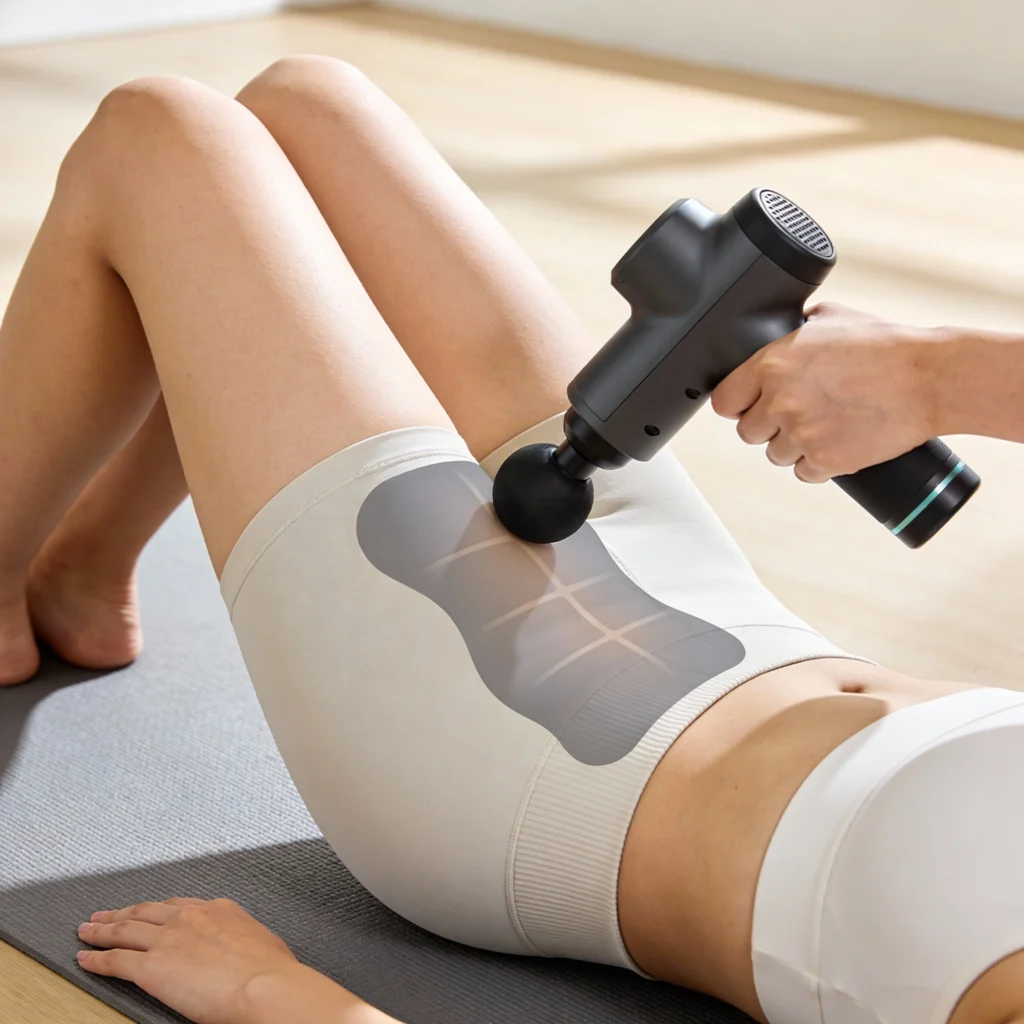
Positioning your body well makes massage gun use around the lower back and hips safer. Lying on your side or leaning against a wall helps you reach the outer hip and glute without twisting your spine. Avoid bony areas and the direct spinal column, keeping the head moving slowly over muscle instead.

Positioning determines whether a massage gun calms sciatic symptoms or aggravates them. Instead of chasing pain down the leg, aim for surrounding muscles that influence pelvic alignment and nerve tension. Working the gluteal group, piriformis, and hip rotators for 30–60 seconds each at low speed often reduces referred pain by easing compressive forces near the nerve root.

Step-by-Step Technique for Safer Hip and Glute Work

Start lying on your side or leaning against a wall with a slight bend in the knees to relax the lumbar spine. Place a soft ball or cushion under the waist if side-lying to keep the pelvis level. Hold the massage gun so the head hits the outer buttock, not the spine or sacrum, and glide in small circles over the upper and mid-gluteal region.

  • Begin at the outer hip near the greater trochanter, moving slowly toward the mid-buttock for 30–45 seconds.
  • Avoid direct percussion over the spine or sacroiliac joints, staying at least two finger-widths lateral to bone.
  • Limit total session time to 8–10 minutes, dividing evenly between both hips and avoiding prolonged focus on one spot.
  • Use only mild to moderate pressure; stop immediately if tingling, electric shocks, or increased leg numbness appears.
  • After treatment, walk for 3–5 minutes to integrate changes in muscle tone and promote circulation through the nerve.
5

Areas to Avoid When Using a Massage Gun for Sciatica

Knowing where not to use a percussion massager is as important as mastering technique. The sciatic nerve emerges near the L4–S3 spinal segments, passes under or through the piriformis, then travels down the posterior thigh. Direct hammering over the lumbar spine, sacrum, or behind the knee risks worsening inflammation, bruising superficial tissues, or compressing the nerve against bone.

Areas to Avoid When Using a Massage Gun for Sciatica

High-Risk Zones and Patterns That Aggravate Sciatica

Certain anatomical regions contain concentrated nerve bundles, vascular structures, or minimal soft-tissue padding, making them poor targets for percussion. Repetitive impact in these areas can trigger protective muscle guarding or neuropathic sensations like burning, pins-and-needles, or electric shocks. Respecting these boundaries helps you harness benefits while minimizing flare-ups and secondary injuries.

  • Midline lumbar spine from L3–S1, where spinous processes and discs lie close to the surface without muscular cushioning.
  • Directly over the sacrum and tailbone, where the sacral plexus emerges and periosteum is easily irritated by vibration.
  • Back of the knee, where the tibial and common fibular nerves and popliteal vessels are relatively exposed.
  • Any area with active bruising, visible swelling, or recent surgery, as percussion can disturb healing tissues or scar formation.
  • Regions of altered sensation or numbness, since impaired feedback prevents you from gauging intensity and potential damage.
6

Combining the Best Massage Gun for Sciatica with Stretching and Mobility

Combining the Best Massage Gun for Sciatica with Stretching and Mobility

A massage gun works best when it prepares tissues for movement rather than serving as the entire treatment. Short bouts of percussion can reduce pain enough to tolerate stretching that was previously impossible. This combination helps restore normal nerve glide, hip rotation, and lumbar stability, which collectively reduce recurrent sciatic irritation over weeks instead of mere hours.

Building a Simple Percussion-Plus-Mobility Routine

Think of percussion as a warm-up lasting 5–8 minutes before mobility work. Start with low-speed treatment to the glutes, lateral hips, and upper hamstrings, then immediately transition into dynamic stretches. Adding 2–3 rounds of controlled motion after each area is treated teaches the nervous system that new ranges are safe, helping changes last longer between sessions.

Blending gentle percussion with targeted stretching can reduce sciatic discomfort more effectively than either approach alone, because muscles relax while joints regain motion and nerves slide more freely through surrounding tissues.

Practical combinations include glute percussion followed by figure-four stretches, hamstring work before nerve flossing, and hip-rotator treatment before controlled lunges. Aim for 20–30 seconds of stretch, repeated two or three times per side, keeping discomfort under 4 out of 10. Over several weeks, track improvements in walking distance, sitting tolerance, and morning stiffness rather than chasing complete pain elimination.

7

When Not to Use a Massage Gun for Sciatica and When to See a Professional

There are situations where even the best percussion massager should stay on the shelf. Recent trauma such as a fall, accident, or heavy lifting injury causing sudden severe back or leg pain suggests structural damage needing imaging. Using a massage gun in these scenarios can obscure diagnostic clues, delay treatment, or aggravate fractures, disc herniations, or ligament sprains.

When Not to Use a Massage Gun for Sciatica and When to See a Professional

Red Flags and Professional Support for Sciatic Pain

Certain symptoms demand prompt evaluation by a physician, neurologist, or physical therapist rather than self-management. These include progressive weakness, difficulty lifting the foot, loss of reflexes, or pain that does not change with position after several days. A clinician can differentiate between disc-related radiculopathy, piriformis syndrome, and other causes, then incorporate massage guns safely into a broader rehab plan.

If pain is severe, constant, or accompanied by weakness or bowel or bladder changes, stop percussion immediately and seek urgent medical assessment before resuming any mechanical treatment.

Once serious pathology is ruled out, a professional can show exact lines to follow with your device, ideal speeds, and daily limits tailored to your condition. Combining this guidance with strengthening for core and hip muscles, ergonomic changes at work, and graded activity usually offers more durable relief than relying on passive tools alone, even sophisticated percussion devices.

Face, Neck, Head, Body, Back & Foot Massager
For a Relaxing & Relieving Lifestyle
14-day money back guarantee
Lowest Prices: 365 Days Discount
Safe & Secure online payment
Contact Us

Massagers Mart © 2025. All Rights Reserved

Massagers Mart
Logo
Compare items
  • Total (0)
Compare
0
Shopping cart