Air Force Physical Therapy: Careers, Settings, and Referral Pathways

Military missions hinge on healthy, deployable airmen, so Air Force physical therapy looks very different from a civilian outpatient clinic. Understanding how PT fits into the medical group, how referrals work, and what careers exist helps students, clinicians, and service members navigate care and plan futures.

Air Force physical therapy integrates rehabilitation, injury prevention, and human performance under one readiness-focused system. Instead of simply restoring daily function, clinicians prioritize mission tasks like rucking, flying, and weapons handling. Because the primary keyword is Air Force physical therapy, this article explains how PT clinics operate, who they serve, and how referral pathways support rapid return-to-duty.

Unlike many civilian systems driven by insurance authorization and productivity targets, Air Force PT works within TRICARE and Defense Health Agency policies. This structure shapes visit frequency, imaging access, and collaboration with primary care managers. Knowing these differences helps civilian PTs considering commissioning estimate caseloads, documentation demands, and deployment expectations with far greater accuracy.

For active-duty members and families, understanding referral rules can speed access to care and prevent unnecessary profiles or duty restrictions. Students exploring military PT careers can compare training routes, service commitments, and promotion timelines against civilian residencies or orthopedic fellowships. Throughout, examples from common clinics, such as Joint Base San Antonio or Langley, illustrate how readiness, performance, and long-term musculoskeletal health intersect.

1
Air Force physical therapy

What Is Air Force Physical Therapy and Who It Serves

What Is Air Force Physical Therapy and Who It Serves

Air Force physical therapy serves a wide spectrum of patients, from pilots and security forces to maintainers, support staff, and sometimes family members and retirees. Each group brings unique physical demands and injury patterns, so therapists tailor assessments and treatment plans to the specific mission profile, duty requirements, and deployment expectations of each patient.

Air Force physical therapy is a specialty service inside military treatment facilities focused on optimizing musculoskeletal health for operational readiness. Clinicians evaluate everything from ankle sprains after fitness tests to chronic low back pain in pilots logging 200–300 flying hours annually. Instead of only restoring basic function, they design programs that meet physical training standards and specific occupational demands.

Populations Served Across the Air Force System

Most Air Force PT clinics treat three primary groups: active-duty members, dependents enrolled in TRICARE, and retirees eligible for space-available care. Active-duty airmen typically receive priority scheduling, often within 72 hours for acute injuries, because delayed rehabilitation can jeopardize deployment rosters. Dependents and retirees may experience longer waits, especially at smaller bases with only one or two full-time PTs.

Mission and Readiness-Focused Goals

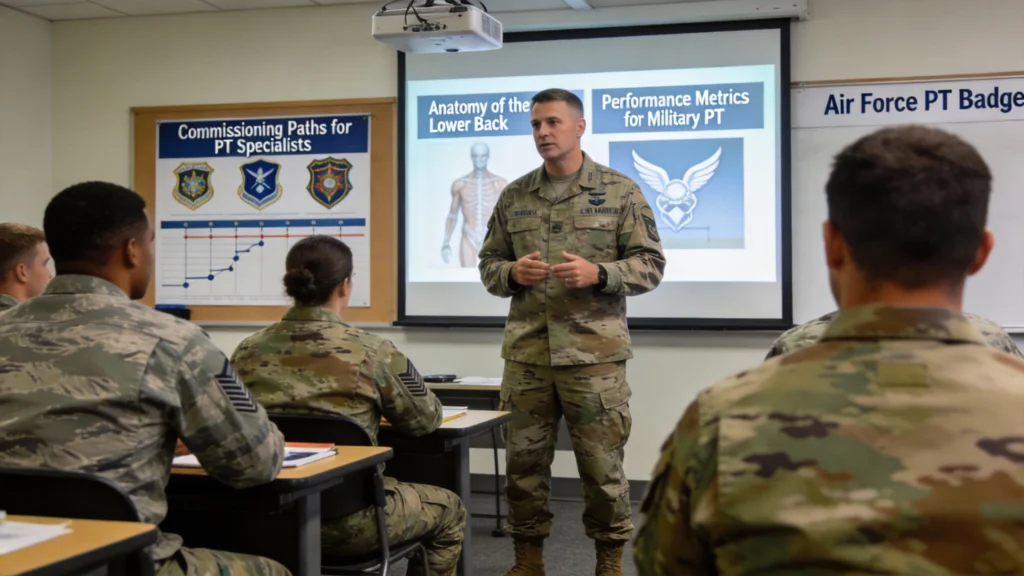
The mission of Air Force physical therapy extends beyond symptom relief to preserving unit readiness metrics, such as deployable strength and fitness pass rates. PTs collaborate with commanders, public health, and human performance teams to reduce limited duty days. They track outcomes like time-to-return-to-duty, profile duration, and re-injury rates, using these data to refine screening protocols and targeted prevention programs.
2
care settings

Care Settings in Air Force Physical Therapy Clinics

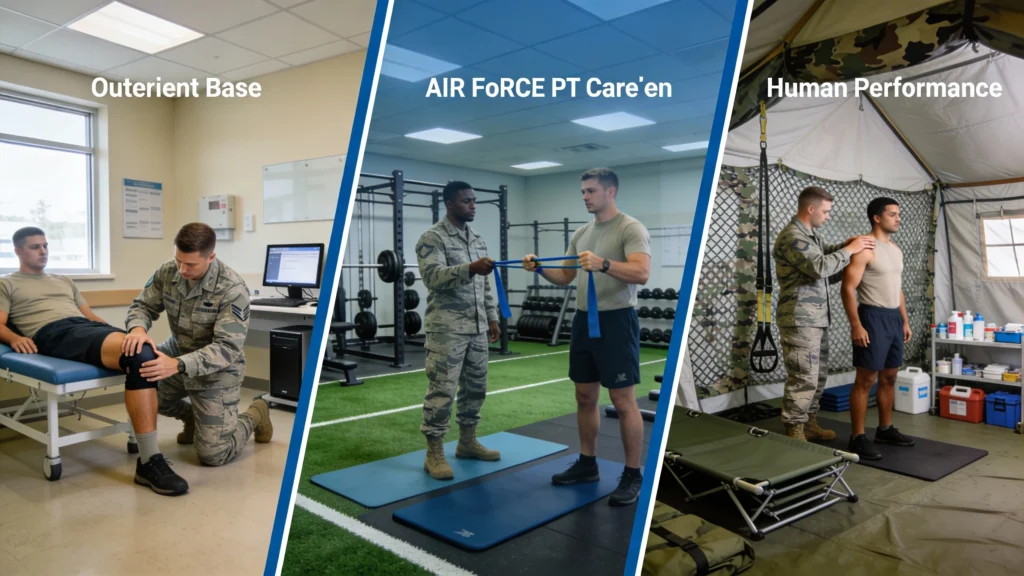
Care settings for Air Force physical therapy span from traditional base outpatient clinics to embedded human performance cells supporting flying squadrons or security forces. A large medical group may staff eight to twelve PTs, several PTAs, and technicians, while smaller clinics operate with only one or two providers covering all musculoskeletal referrals. These variations strongly influence appointment length, volume, and program design.

Care Settings in Air Force Physical Therapy Clinics

Training and career paths in Air Force physical therapy combine advanced clinical education with leadership development. Many clinicians enter with civilian DPT degrees, then grow into roles that include mentoring, program management, and deployment leadership. Understanding these pathways helps civilian PTs gauge how their skills may translate into military practice and promotion systems.

Clinic-Based and Embedded Care Environments

Many PTs work in main medical treatment facilities, running 30–40 minute appointments for 10–14 patients daily, depending on manning. Others serve in embedded units, such as special tactics squadrons, where they observe training, adjust programs on the flight line, and coordinate with strength coaches. Embedded roles often emphasize group injury-prevention sessions, tactical conditioning, and on-the-spot movement assessments during unit workouts.

Comparing Ambulatory and Specialty Settings

Ambulatory PT clinics handle most musculoskeletal issues, while specialty settings like orthopedic surgery or pain management clinics receive complex cases. PTs may rotate through post-operative care, managing ACL reconstructions, rotator cuff repairs, or lumbar microdiscectomies. These patients often follow standardized protocols, but PTs modify timelines to meet deployment windows, sometimes compressing rehabilitation to 5–6 months when evidence and command requirements align.

3
referral pathways

Referral Pathways Into Air Force Physical Therapy

Referral Pathways Into Air Force Physical Therapy

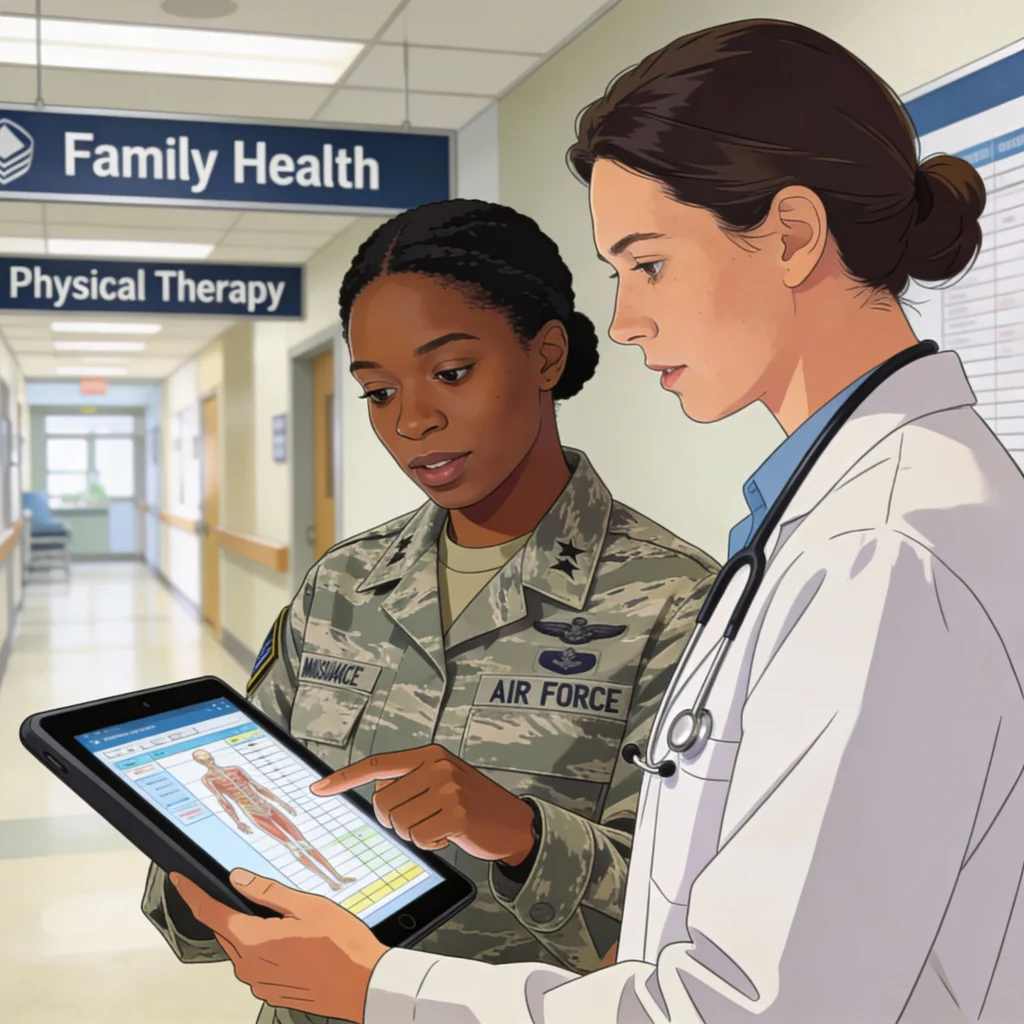
Referral pathways into Air Force physical therapy typically run through primary care managers, flight medicine, or direct access in some settings. Electronic health records streamline these referrals, allowing rapid triage of musculoskeletal complaints, quick imaging decisions when needed, and close collaboration that helps keep airmen in the fight rather than on prolonged profile.

Referral pathways into Air Force physical therapy balance access, safety, and resource management. Most bases use a combination of primary care referrals, orthopedic consults, and limited direct access depending on local policy. Understanding these models helps service members seek timely care while helping PTs anticipate documentation requirements and communication expectations with primary care managers and commanders.

Primary Care, Orthopedic, and Direct Access Routes

Typical entry starts with a primary care manager visit, where musculoskeletal complaints trigger an electronic consult to PT. Orthopedic surgeons refer more complex surgical or imaging-driven cases. Some bases authorize direct access, allowing airmen to self-refer for non-traumatic issues like overuse knee pain or chronic neck stiffness, provided no red flags such as unexplained weight loss or neurological deficits appear.

  • Primary care referrals usually follow initial evaluation, basic imaging, and trial of NSAIDs, streamlining PT triage and scheduling decisions.
  • Orthopedic referrals often accompany MRI or X-ray reports, clarifying structural pathology and guiding post-operative or conservative care plans.
  • Direct access models allow same-week PT visits for low-risk injuries, reducing profile duration and limited duty days across squadrons.
  • Emergency department consults handle acute trauma, like ankle fractures or shoulder dislocations, transitioning quickly into rehabilitation programs.
4

Training and Career Paths in Air Force Physical Therapy

Training and career paths for Air Force physical therapy professionals include direct accession as a Doctor of Physical Therapy, commissioning programs for students, and enlisted-to-officer transitions. All PTs hold a DPT from a CAPTE-accredited program and an active state license, while PTAs complete accredited associate degrees. Service commitments, promotion timelines, and deployment expectations differ significantly from civilian employment contracts.

Training and Career Paths in Air Force Physical Therapy

Care settings for Air Force physical therapists extend far beyond a standard outpatient clinic. Providers may rotate between base clinics, embedded human performance cells, and deployed environments, each with different equipment and space. This variety shapes how they dose exercise, manage acute injuries, and coordinate with flight medicine or operational units.

Entry Routes and Early Career Development

Most officers commission through the Health Professions Scholarship Program or direct accession after civilian DPT completion. New PTs attend Commissioned Officer Training, then report to their first base, often as a captain. Early years focus on broad outpatient experience, profiling policies, and readiness metrics. Many pursue board certification in orthopedics or sports within three to five years, supported by continuing education funds.

Advanced Roles, Leadership, and PTA Careers

Mid-career PTs may lead clinics, oversee residency programs, or serve as consultant-level subject matter experts. They manage budgets, supervise PTAs and technicians, and advise commanders on injury trends. PTAs, usually enlisted, progress through NCO ranks, taking on more supervisory and training duties. Some PTs transition into human performance squadrons, designing strength, conditioning, and injury-prevention initiatives for high-risk operational communities.

5

Air Force Physical Therapy vs Civilian PT Practice

Comparing Air Force physical therapy with civilian practice reveals differences in scope, caseloads, deployment requirements, and resource access. While both systems follow evidence-based guidelines, military PTs often enjoy greater autonomy in ordering imaging, placing limited-duty profiles, and recommending duty modifications. However, they must balance individual care with unit readiness, sometimes accelerating or adapting timelines based on operational demands.

Air Force Physical Therapy vs Civilian PT Practice

Practice Patterns and Resource Comparison

This table contrasts typical Air Force PT practice patterns with a civilian outpatient orthopedic clinic. Values represent realistic ranges seen across large bases and mid-sized civilian practices. Actual numbers vary by manning, patient population, and regional cost-of-living differences, but the comparison highlights key operational and financial distinctions affecting clinicians and patients.

AspectAir Force PT ClinicCivilian Outpatient PTTypical Range/Value
Daily patient load per PT10–14 visits12–18 visits30–45 minute appointments
Average copay per visit$0 for active duty$25–$60 per visitVaries by insurance
Imaging ordering authorityOften direct X-ray/MRIUsually via physicianBase and state dependent
Documentation platformMHS GENESIS/CHCSWebPT, Raintree, Epic5–15 minutes per note
Deployment requirementYes, 6–12 month cyclesNo formal deploymentUnit and rank dependent
Salary structureMilitary pay plus benefitsHourly or salariedBAH, BAS, bonuses

Military PTs trade higher base autonomy and comprehensive benefits for deployments and potential geographic moves every three to four years. Civilian clinicians may earn higher cash salaries in certain markets but face productivity quotas and variable insurance reimbursement. For many, the decision hinges on desire for structured advancement, leadership opportunities, and direct impact on operational missions versus local stability.

6

Daily Life of an Air Force Physical Therapy Clinician

Daily Life of an Air Force Physical Therapy Clinician

Daily life for an Air Force physical therapy clinician blends typical outpatient care with military responsibilities like fitness testing oversight and commander briefings. A standard day might run from 0730 to 1630, including 10–12 patient visits, documentation, and team meetings. Schedules also accommodate group injury-prevention classes, shop visits, and readiness tasks such as deployment health assessments.

Typical Schedule and Patient Mix

Morning often starts with acute injuries from physical training, including ankle sprains and shoulder strains. Midday slots may cover post-operative cases, like ACL reconstructions at 10–12 weeks, focusing on strength benchmarks and hop testing. Afternoons frequently involve chronic low back or neck pain from desk work or piloting, where ergonomic counseling and progressive loading strategies complement manual therapy techniques.

Interdisciplinary Collaboration and Military Tasks

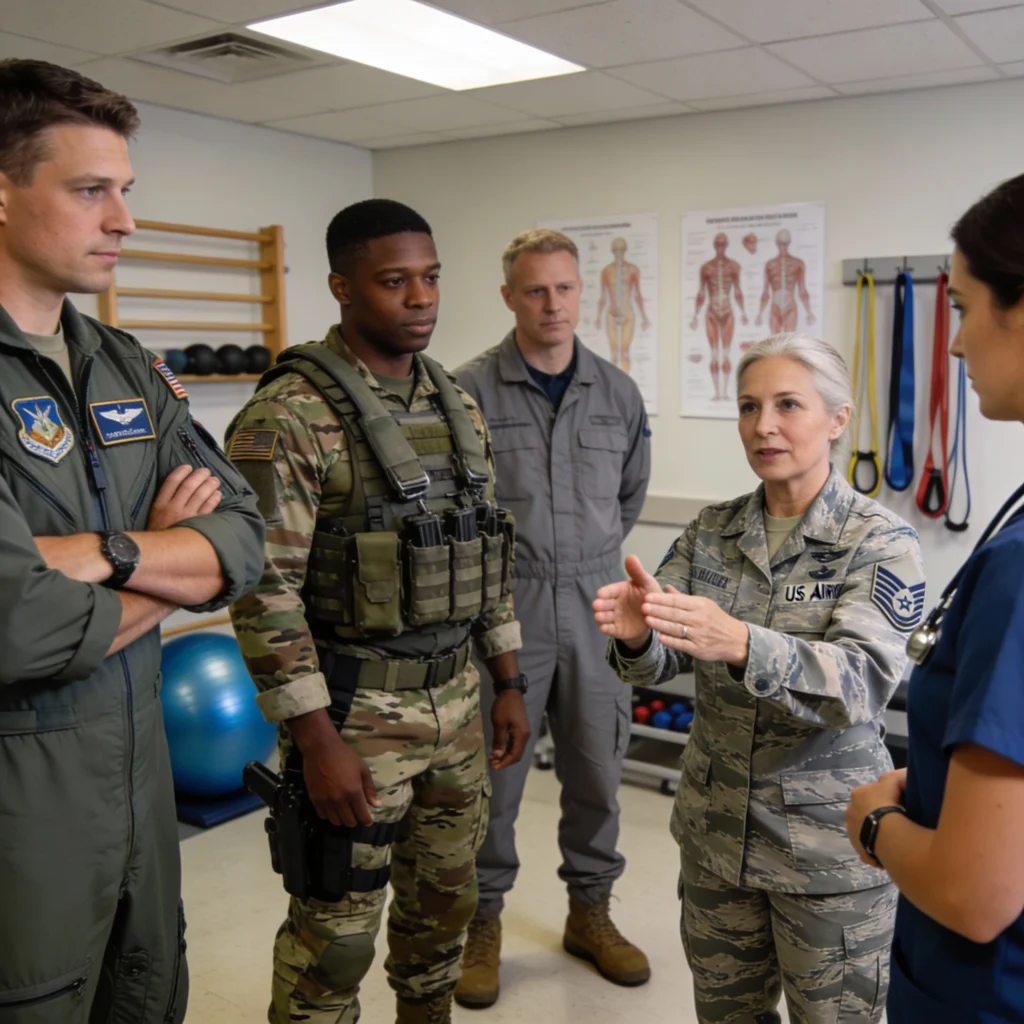
Clinicians routinely coordinate with primary care, orthopedics, chiropractic, and mental health, especially for chronic pain cases. They attend squadron health meetings, reviewing injury trends and recommending changes to unit PT programming. Military-specific duties include fitness test waivers, duty restriction profiles, and pre-deployment screenings. These responsibilities require familiarity with Air Force Instructions governing fitness standards and occupational health requirements.

7

Readiness, Return-to-Duty, and Performance in Air Force Physical Therapy

Readiness, return-to-duty, and performance metrics drive many decisions in Air Force physical therapy. Instead of only tracking range of motion or pain scores, clinicians monitor duty limitations, fitness test outcomes, and mission-essential task performance. This approach demands close collaboration with commanders and careful documentation that justifies profiles while avoiding unnecessary restrictions that might strain unit manning.

Readiness, Return-to-Duty, and Performance in Air Force Physical Therapy

Return-to-Duty Criteria and Performance Testing

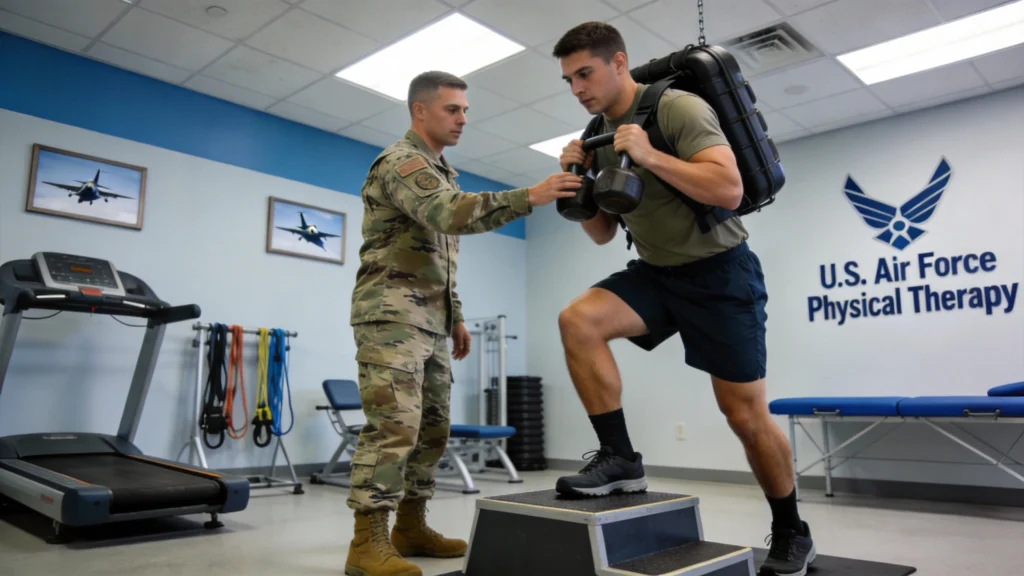
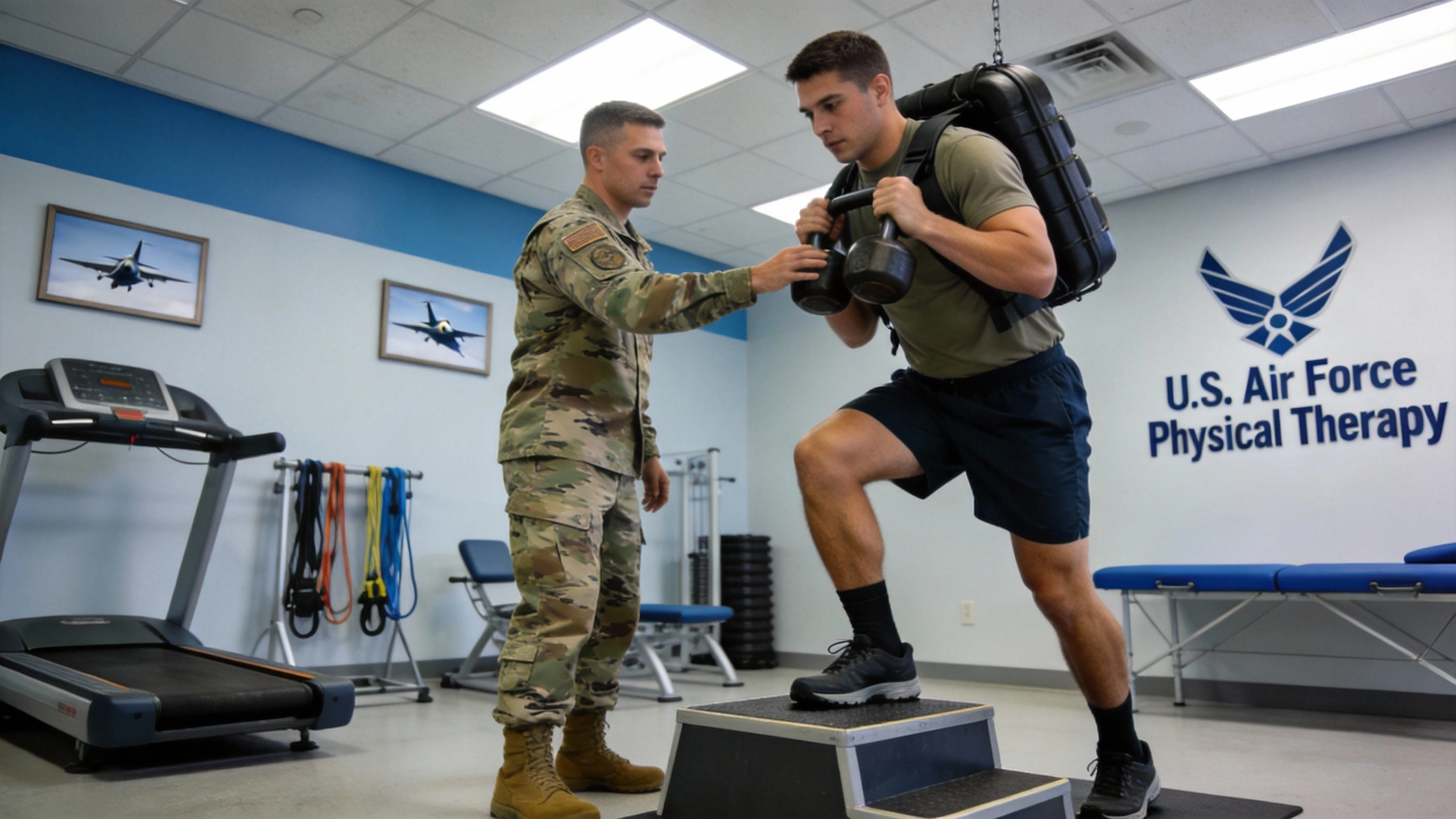
Return-to-duty decisions often hinge on objective criteria like single-leg hop distances within 90% of the uninvolved limb or pain-free loaded squats at 1.5 times body weight. PTs design progressive programs using tools such as force plates or handheld dynamometers where available. When equipment is limited, they rely on standardized field tests and carefully graded exposure to occupational tasks.

  • Lower extremity return-to-duty testing may include triple hop, crossover hop, and timed hop over 6–8 meters.
  • Upper extremity protocols often use closed-kinetic chain tests like push-up capacity and plank shoulder taps under time.
  • Running readiness assessments track cadence, heart rate, and pain levels over 1.5–3 mile distances on track surfaces.
  • Occupational simulations may involve ruck marches with 35–50 pound loads, ladder climbs, or equipment carries.
8

How to Apply for Air Force Physical Therapy Positions

How to Apply for Air Force Physical Therapy Positions

Applying for Air Force physical therapy positions involves coordinating with a health professions recruiter, assembling academic and licensure documents, and completing medical and security screenings. Timelines can stretch from six to twelve months, so prospective applicants should start early, especially if targeting specific commissioning boards or scholarship cycles aligned with their graduation dates.

Application Steps and Selection Considerations

The process begins by contacting an Air Force Health Professions recruiter, who verifies eligibility, including citizenship, age, and degree requirements. Candidates submit transcripts, NPTE scores, state licenses, and letters of recommendation. Competitive applicants typically maintain GPAs above 3.3, demonstrate leadership or prior military experience, and show interest in orthopedics, sports, or tactical performance specialties relevant to Air Force missions.

Resources and Planning for a Military PT Career

After selection, officers attend Commissioned Officer Training, then receive base assignments based on service needs and personal preference lists. Prospective PTs should review Air Force Instruction documents on medical standards, talk with current military PTs, and compare service commitments against civilian job offers. Planning three to five years ahead helps align board dates, residencies, and family considerations with long-term career goals.

Face, Neck, Head, Body, Back & Foot Massager
For a Relaxing & Relieving Lifestyle
14-day money back guarantee
Lowest Prices: 365 Days Discount
Safe & Secure online payment
Contact Us

Massagers Mart © 2025. All Rights Reserved

Massagers Mart
Logo
Compare items
  • Total (0)
Compare
0
Shopping cart