Adaptive Equipment in Occupational Therapy: How to Choose and Use It

Buttons that feel impossible, showers that seem risky, or desks that leave you aching every day are more than annoyances. They are gaps between what your body can currently do and what life constantly demands from you at home, work, and in the community.

Adaptive equipment in occupational therapy helps bridge that gap with concrete, testable tools rather than vague encouragement. An occupational therapist looks closely at your exact movements, pain levels, and environments, then matches you with devices like reachers, shower chairs, and ergonomic keyboards that reduce effort by 20–60%. These changes often matter more for independence than any single exercise program.

Unlike general gadgets you might buy online, adaptive equipment occupational therapy recommendations are customized. A sock aid is chosen for your shoulder range, grip strength, and balance, not just your shoe size. The therapist also trains you and your caregivers to use devices correctly, checks safety in real bathrooms or kitchens, and revises choices as your condition improves or declines.

Viewing adaptive equipment this way turns it from a symbol of disability into a strategic tool. A properly fitted raised toilet seat or rolling shower commode can prevent falls that cause hospitalizations and acute care physical therapy stays. With the right guidance, equipment becomes a practical way to stay active, employed, and engaged in daily roles you value.

1
adaptive equipment

What Is Adaptive Equipment in Occupational Therapy?

What Is Adaptive Equipment in Occupational Therapy?

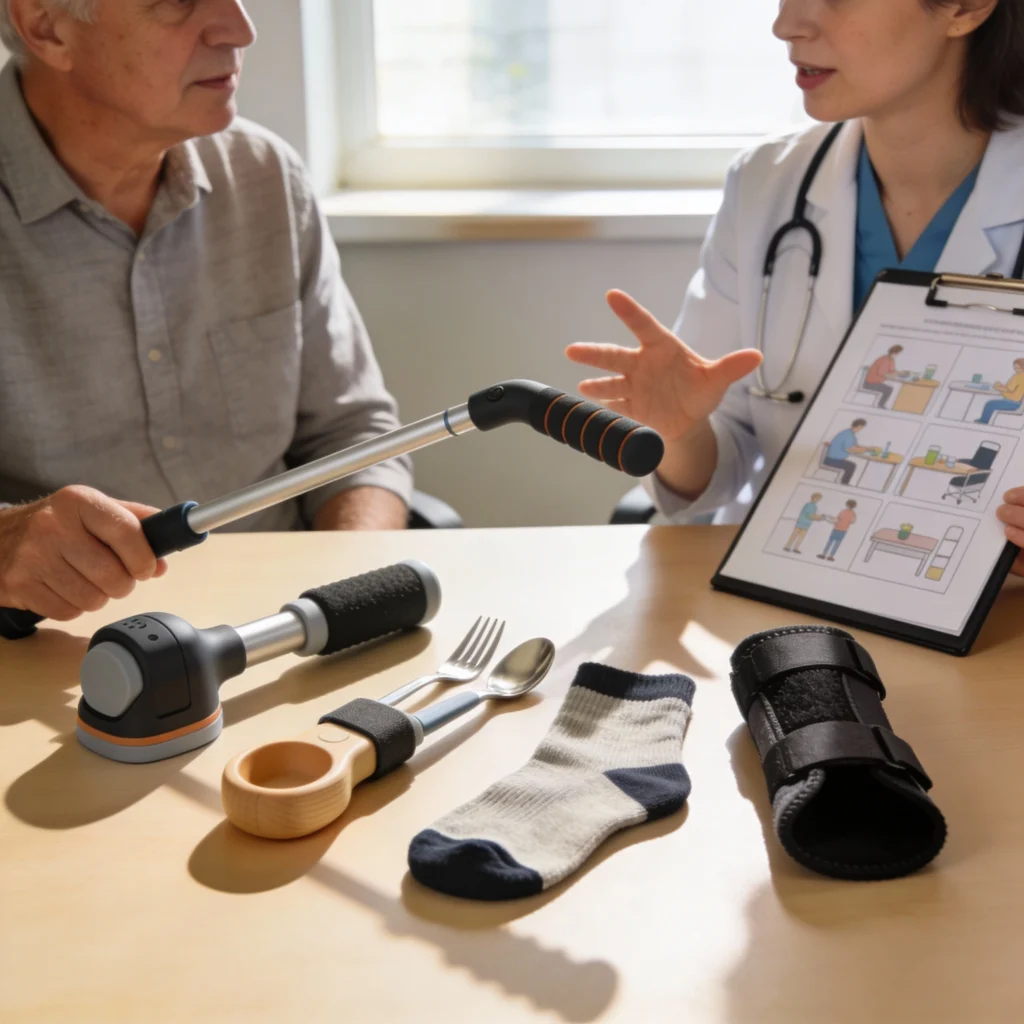
Adaptive equipment in occupational therapy includes a wide range of tools designed to make everyday tasks safer and easier. Rather than focusing only on exercise or motivation, the therapist uses concrete devices such as reachers, specialized utensils, and dressing aids to help you perform essential activities with less strain and more confidence in daily life.

Adaptive equipment in occupational therapy refers to any tool, device, or environmental change that lets someone perform daily activities more safely, efficiently, or independently. Instead of expecting a person to fit tasks designed for able-bodied norms, the therapist systematically adjusts tools and surroundings so tasks match current strength, range of motion, and cognition.

Major Categories of Adaptive Equipment

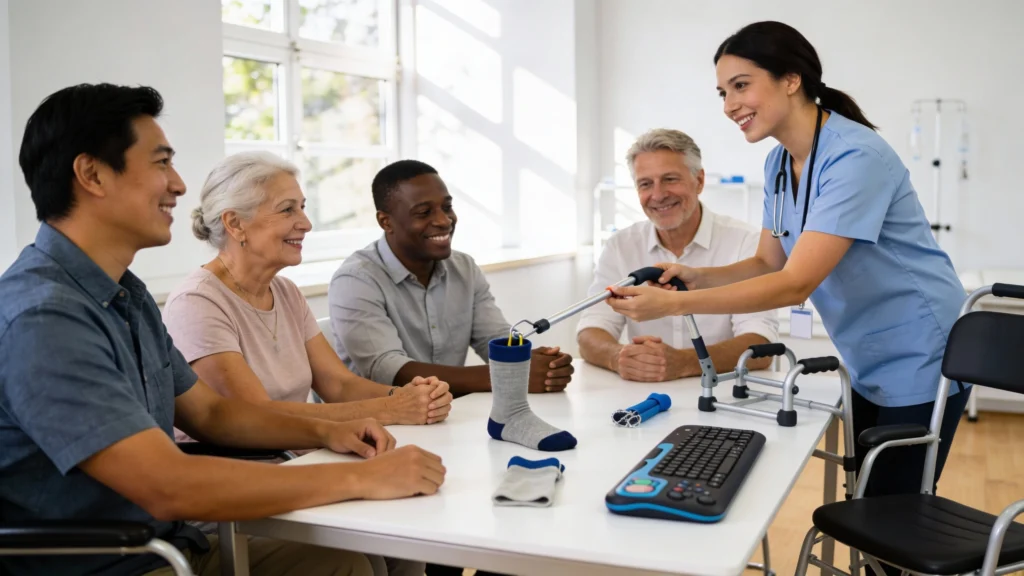
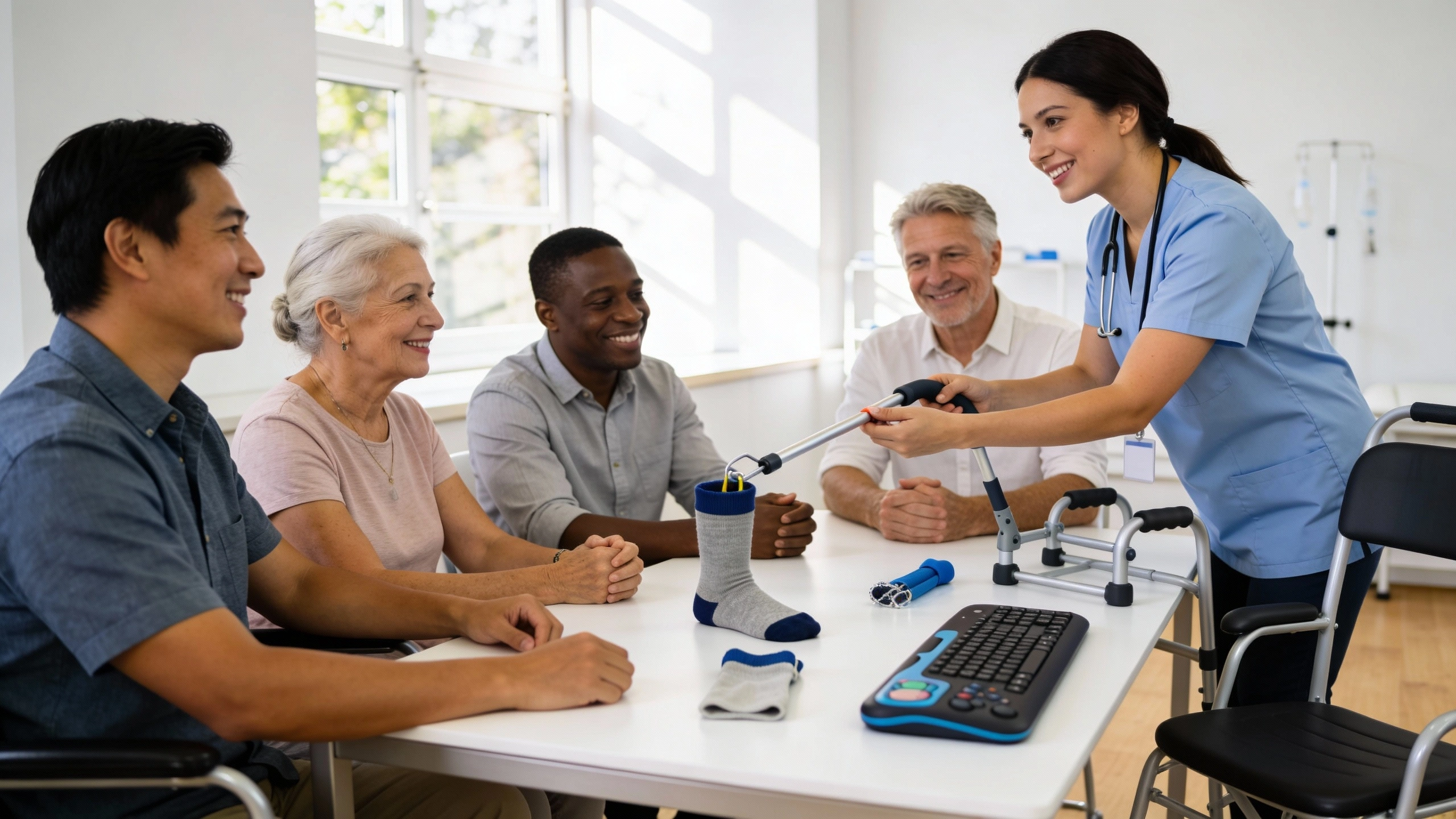
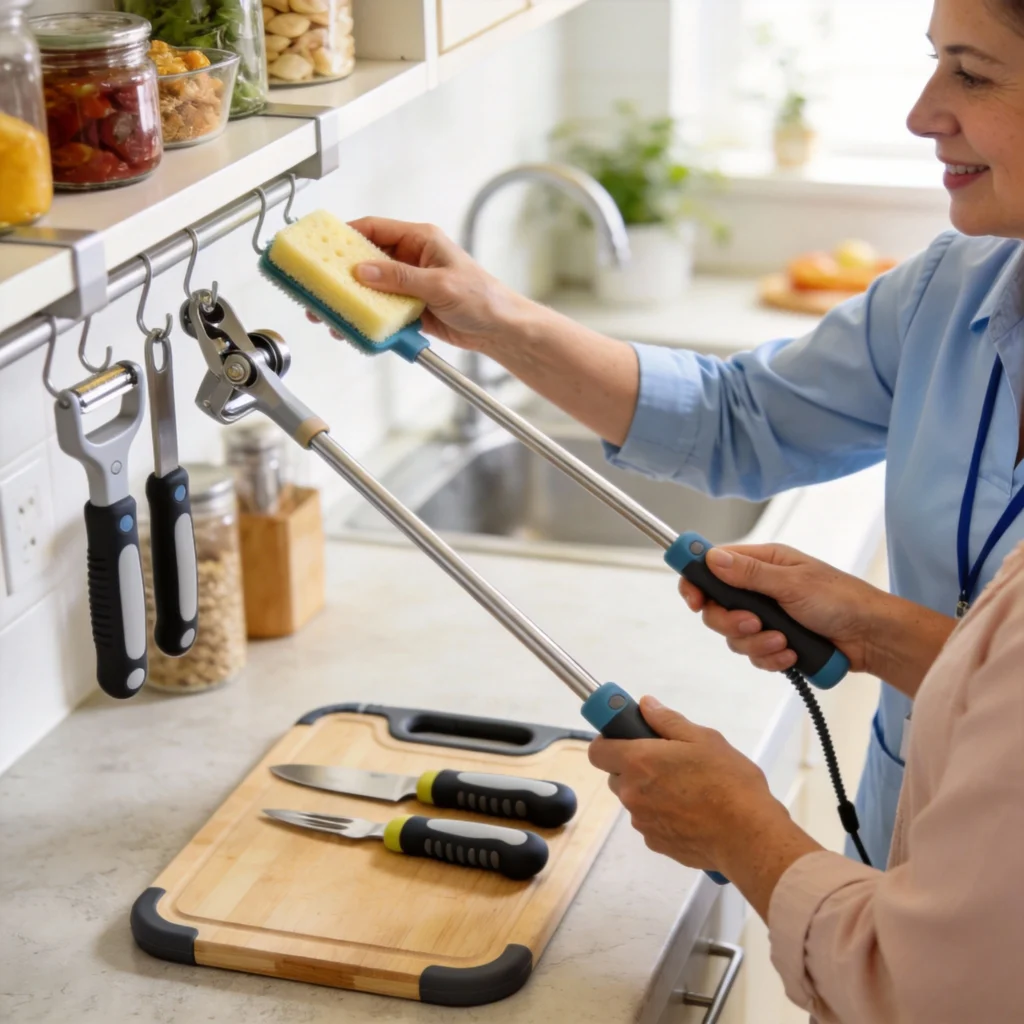
Occupational therapists group adaptive equipment into self-care tools, mobility aids, and environmental modifications. Self-care tools include long-handled sponges, sock aids, and built-up utensils that compensate for limited grip or shoulder movement. Mobility aids such as canes, walkers, and transfer boards reduce fall risk by widening base of support or shortening transfer distances between surfaces.

How OT Equipment Differs from General Rehab Gear

Adaptive equipment occupational therapy tools differ from typical gym or acute physical therapy equipment because they focus on task performance rather than isolated strength. For example, a therapy band strengthens shoulder muscles, but a reacher lets you immediately grab items from a 1.5–2 meter shelf without overhead lifting. Both matter, yet adaptive tools directly change how daily life actually feels.
2
occupational therapy

Assessing Needs for Adaptive Equipment in Occupational Therapy

Before recommending devices, occupational therapists perform a structured assessment combining interviews, standardized tests, and on-site observation. They measure joint angles, grip strength, balance, and endurance, then watch you complete tasks like dressing or meal prep. This functional focus distinguishes OT from many acute care physical therapy evaluations that emphasize mobility milestones such as walking distances.

Assessing Needs for Adaptive Equipment in Occupational Therapy

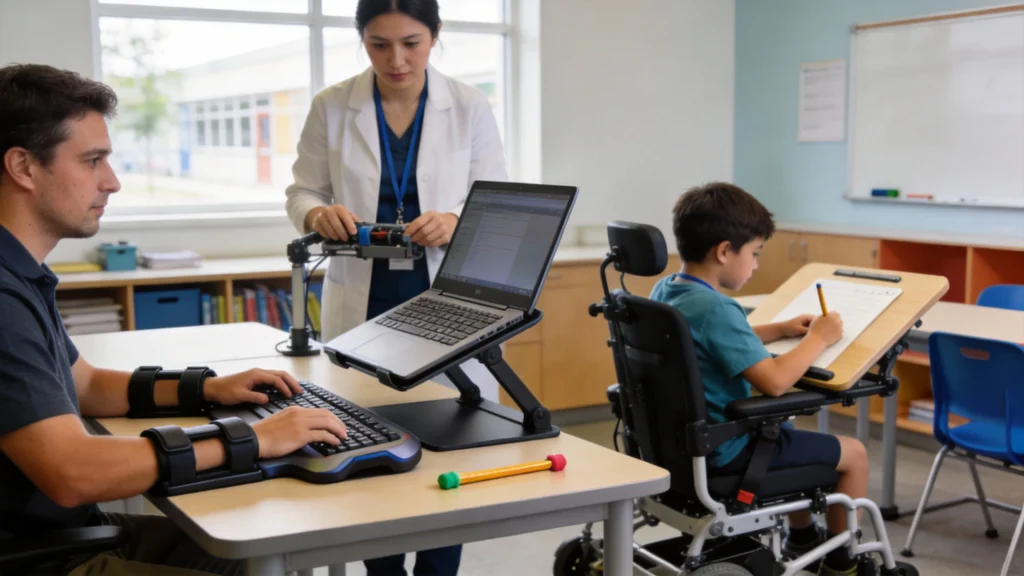
At work and school, adaptive equipment focuses on productivity and comfort. Ergonomic keyboards, adjustable chairs, laptop stands, and writing aids can reduce pain and fatigue by changing how your body interacts with tools and surfaces. Occupational therapists fine-tune these setups so you can sustain attention and performance without aggravating symptoms or risking injury.

Functional and Environmental Evaluation

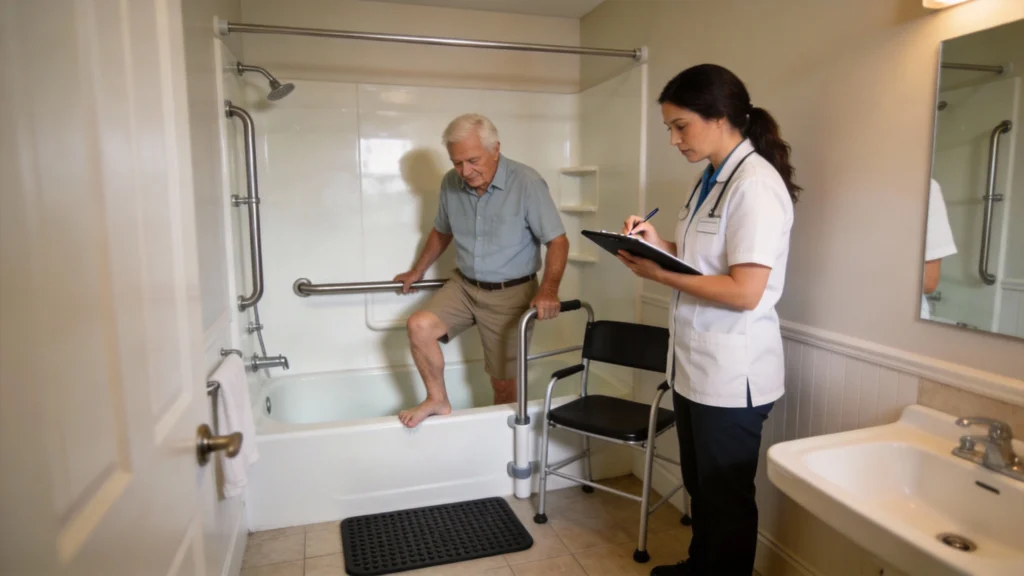
During evaluation, the therapist times how long tasks take and notes where you hesitate, lose balance, or experience pain above 4/10. They measure toilet height, tub edge height, counter depth, and bed height using tape measures, often in centimeters. These numbers guide choices like whether a 5 cm or 10 cm raised toilet seat will allow safe sit-to-stand without excessive forward trunk flexion.

Priorities, Goals, and Safety Risks

Client priorities heavily shape equipment decisions. One person may accept help with bathing but insist on independent toileting, while another prioritizes returning to computer work. Therapists weigh these goals against safety risks such as previous falls, low blood pressure episodes, or cognitive impulsivity. Equipment is then trialed during sessions, with therapists tracking improvements in task completion time and error rates.

3
adaptive equipment occupational therapy

Adaptive Equipment Occupational Therapy Uses for Self-Care and Home Tasks

Adaptive Equipment Occupational Therapy Uses for Self-Care and Home Tasks

For self-care and home tasks, adaptive equipment can transform challenging routines into manageable ones. Tools like long-handled sponges, jar openers, reachers, and large-grip utensils reduce the effort required for bathing, dressing, and cooking. The therapist ensures each item matches your strength, range of motion, and balance so you can complete tasks more independently.

Self-care and home management often drive the earliest adaptive equipment occupational therapy recommendations because difficulties here can force unwanted moves to assisted living. OTs analyze specific steps of dressing, bathing, toileting, cooking, and cleaning, then introduce tools that remove the hardest 20–30% of movement demands while keeping the person as active as safely possible.

Common Tools for Dressing, Bathing, and Toileting

For dressing, sock aids, dressing sticks, and long-handled shoehorns let someone with hip precautions avoid bending past 90 degrees. In the bathroom, shower chairs rated for 100–150 kg, non-slip mats with 0.5 cm ridges, and grab bars installed 80–90 cm from the floor reduce slip risk. Raised toilet seats with side arms often prevent dangerous pushing from unstable vanity counters.

  • Sock aids with semi-rigid plastic shells and 70–80 cm straps help people don socks despite hip or spine precautions.
  • Dressing sticks around 60 cm long with rubberized hooks assist with pulling zippers or removing shirts overhead safely.
  • Transfer benches spanning 120–130 cm allow seated tub entry, avoiding single-leg stance on wet surfaces during transfers.
  • Handheld showers with 1.5–2 meter hoses reduce reaching, letting users sit while washing lower legs and feet thoroughly.

Kitchen and Household Management Supports

Kitchen tasks demand standing tolerance, fine motor control, and safe handling of sharp objects and heat. OTs often start by reorganizing frequently used items to shelves between 60–140 cm from the floor, then add tools like rocker knives for one-handed cutting or electric jar openers generating 20–30 Nm torque. These devices protect joints while maintaining meaningful roles like cooking family meals.

4

Adaptive Equipment Occupational Therapy Strategies for Work and School

Work and school environments often involve sustained postures and repetitive motions that aggravate pain or fatigue. Adaptive equipment occupational therapy strategies here focus on ergonomics, task modification, and technology integration. The goal is rarely to eliminate work but to change how it is done, reducing symptom flares while preserving productivity and academic performance.

Adaptive Equipment Occupational Therapy Strategies for Work and School

Assessing needs for adaptive equipment often happens right where you live. An occupational therapist observes how you move in real spaces, such as your bathroom or kitchen, and identifies where fatigue, pain, or fall risk appear. This functional assessment guides precise recommendations instead of guesswork, ensuring each device fits your body and environment.

Ergonomic Seating and Desk Setups

For desk-based jobs, therapists adjust chair height so hips and knees rest near 90 degrees, with feet flat or on a footrest. Keyboard trays are set so elbows remain at 90–100 degrees, and monitor tops sit at or slightly below eye level. These small changes often reduce neck and shoulder pain by 30–50% over several weeks of consistent use.

  • Adjustable chairs with lumbar support depth of 4–6 cm maintain spinal curves during prolonged computer work or study sessions.
  • Split ergonomic keyboards with 10–15 degree tenting angles reduce ulnar deviation, easing wrist strain for typists and writers.
  • Document holders aligned within 30 degrees of monitor angle limit repetitive neck rotation during data entry or essay writing.
  • Anti-fatigue mats 1–2 cm thick support standing desks, decreasing lower limb discomfort in workers who stand several hours daily.

Assistive Technology and Cognitive Supports

OTs also introduce software and low-tech tools to support attention, memory, and fine motor challenges. Speech-to-text programs help those with hand weakness maintain note-taking or report writing. Visual schedules, color-coded binders, and timers assist students with executive function difficulties. In some workplaces, these accommodations prevent performance declines that might otherwise trigger medical leave or job loss.

5

Training Clients and Caregivers to Use Adaptive Equipment Safely

Even the best-chosen device fails if used incorrectly or inconsistently. Occupational therapists therefore devote significant time to training clients and caregivers, breaking down each movement into clear, repeatable steps. They watch for compensations such as twisting, holding breath, or using furniture for support, then refine techniques until transfers and tasks look smooth and controlled.

Training Clients and Caregivers to Use Adaptive Equipment Safely

Teaching, Practice, and Feedback

Training sessions often start with demonstration, followed by guided practice where the therapist provides hands-on support at the hips or shoulders. Verbal cues like “nose over toes” during sit-to-stand help encode safe movement patterns. Therapists may record videos on the client’s phone, so caregivers can review correct techniques later, especially after hospital discharges or acute care physical therapy stays.

Safety Checks and Habit-Building

Before equipment is used alone, therapists perform safety checks: verifying rubber tips on walkers, confirming grab bars are anchored into studs, and ensuring shower chairs do not wobble on tile. They then integrate devices into daily routines, tying use to consistent triggers like morning hygiene or meal prep. This repetition turns initially awkward tools into automatic habits that meaningfully reduce fall risk.

6

Funding, Insurance, and Access to Adaptive Equipment

Cost often shapes which adaptive equipment people can realistically obtain and keep using. Occupational therapists help navigate funding options, from insurance coverage to community loan closets. They balance ideal devices with what is financially sustainable, sometimes recommending lower-cost alternatives that still improve function by 20–40% compared to no equipment at all.

Funding, Insurance, and Access to Adaptive Equipment

Comparing Sources and Typical Costs

The table below compares common sources of adaptive equipment, approximate price ranges, and typical requirements. Prices vary by region, but these ranges help families and clinicians plan. Understanding which items require prescriptions or prior authorizations prevents delays, especially when timely equipment can shorten hospital stays or reduce the need for intensive acute physical therapy services.

SourceTypical ItemsApproximate Cost Range (USD)Requirements
Durable Medical Equipment SuppliersWalkers, commodes, shower chairs$60–$350 per itemPrescription, possible prior authorization for insurance coverage
Retail/Online StoresGrab bars, reachers, sock aids$10–$120 per itemNo prescription, out-of-pocket payment, variable return policies
Insurance/Medicare ProgramsMobility aids, some bathroom equipmentCopays $0–$80Medical necessity documentation, coverage limits, approved vendors
Community Loan ClosetsUsed walkers, wheelchairs, benchesOften free or $5–$20 donationLimited inventory, loan periods, cleaning responsibilities
Nonprofit/Charity ProgramsSpecialized devices, pediatric equipmentSubsidized or no costApplication process, income or diagnosis criteria

Occupational therapists often write detailed letters of medical necessity linking equipment directly to functional goals like safe toileting or meal preparation. Including objective data—such as fall history, gait speed, or inability to stand more than three minutes—strengthens approval chances. When coverage is denied, therapists may prioritize lower-cost items that still address the most dangerous barriers at home.

7

Reassessing Adaptive Equipment Over Time

Adaptive equipment needs rarely stay static. Conditions such as arthritis, multiple sclerosis, stroke recovery, or post-surgical status evolve over months and years. Occupational therapists schedule reassessments or encourage clients to request them after major health changes, falls, or new roles like returning to work, ensuring equipment remains matched to current abilities and risks.

Reassessing Adaptive Equipment Over Time

Monitoring Changes in Function and Environment

During reassessment, therapists repeat key measures like walking speed over 10 meters, sit-to-stand repetitions in 30 seconds, and grip strength in kilograms. They also recheck home measurements if furniture or bathroom fixtures changed. Sometimes, a previously safe setup becomes hazardous when endurance drops, prompting additions like a second grab bar or conversion from cane to rollator walker.

Upgrading, Simplifying, or Removing Devices

Reassessment can lead to upgrading equipment for greater independence or simplifying setups to reduce cognitive load. A person who improves after rehabilitation might transition from a transfer bench to a simple shower chair, regaining more normal movement. Conversely, someone with progressing disease may need powered mobility or automated home technology, trading physical effort for energy conservation and safety.

Face, Neck, Head, Body, Back & Foot Massager
For a Relaxing & Relieving Lifestyle
14-day money back guarantee
Lowest Prices: 365 Days Discount
Safe & Secure online payment
Contact Us

Massagers Mart © 2025. All Rights Reserved

Massagers Mart
Logo
Compare items
  • Total (0)
Compare
0
Shopping cart