Anaconda Knee Brace Review: Is It the Right ACL Knee Brace for You?

Choosing an ACL knee brace after a ligament injury can feel overwhelming when prices range from $60 sleeves to $800 custom frames. The Anaconda knee brace sits in the mid-range, promising solid ACL protection without a custom fitting bill. Understanding what it actually offers helps you avoid wasting weeks training in the wrong brace.

The Anaconda knee brace is marketed as a structured acl brace for knee stability during rehab, daily life, and recreational sports. It targets users with partial ACL tears, post-surgical reconstruction, or chronic instability who need more control than a soft sleeve. Many buyers consider it alongside DonJoy and Breg braces, trying to balance cost, stiffness, and comfort in real-world movement.

This review looks beyond basic product claims and focuses on how the Anaconda behaves under load, especially rotational and anterior shear forces that typically stress the ACL. By breaking down hinge design, frame rigidity, and strap placement, you can match the brace’s capabilities to your surgeon’s restrictions and physical therapist’s progression. That way, each training week builds confidence instead of compensations.

You will also see how the brace integrates with structured ACL physical therapy, including closed-chain exercises, jogging progression, and return-to-sport drills. Rather than assuming one brace fits every timeline, we will map which phases it excels in and where it may fall short. That context lets you decide whether the Anaconda is a main brace or a transitional option.

1
Anaconda knee brace

An Overview of the Anaconda Knee Brace as an ACL Knee Brace

An Overview of the Anaconda Knee Brace as an ACL Knee Brace

As an ACL knee brace, the Anaconda is positioned for people with partial tears, post-reconstruction recovery, or chronic instability who still want to move. It’s designed for low- to moderate-intensity activities, like gym work or light drills, where you need more control than a soft sleeve but not a full custom frame.

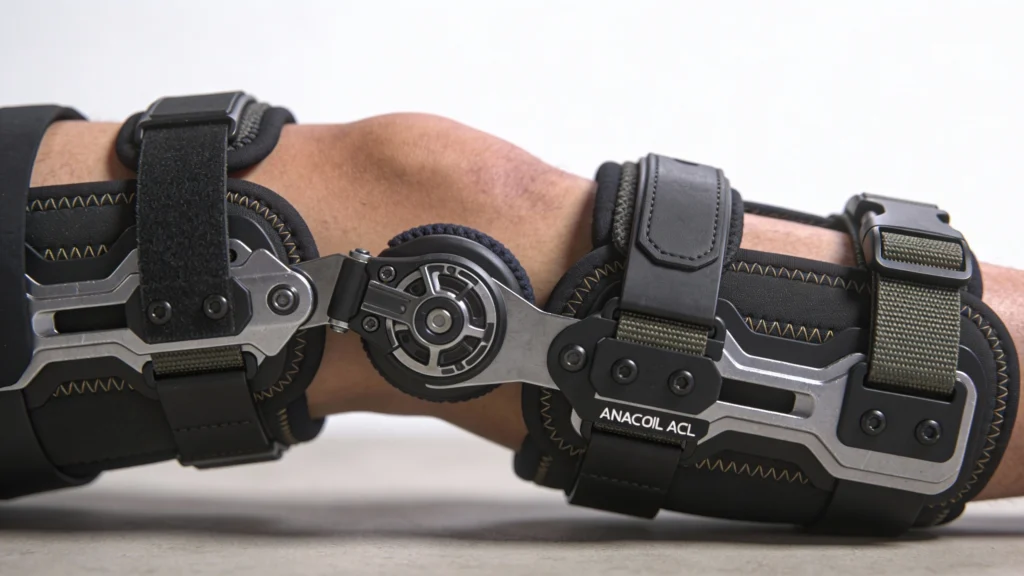
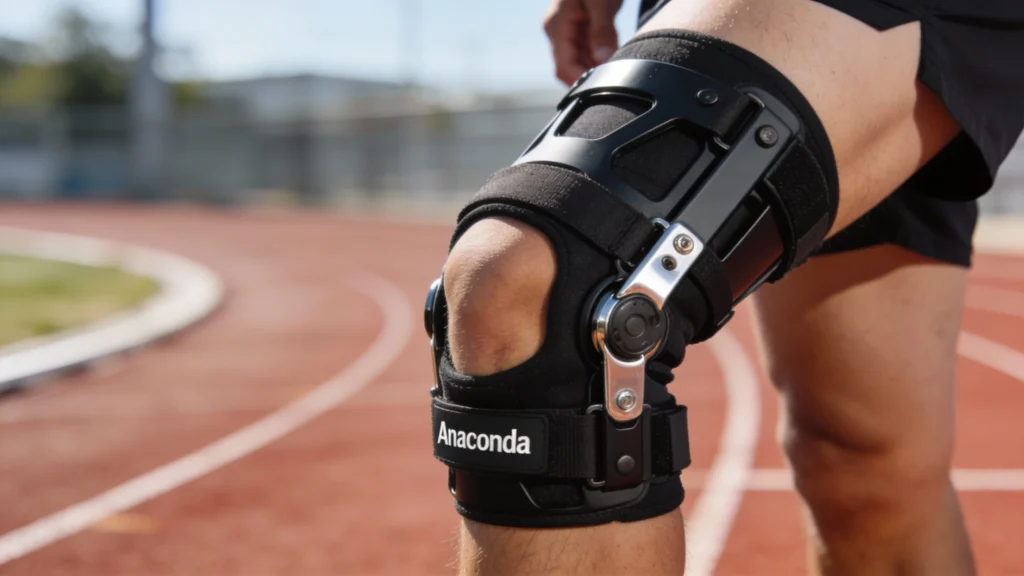
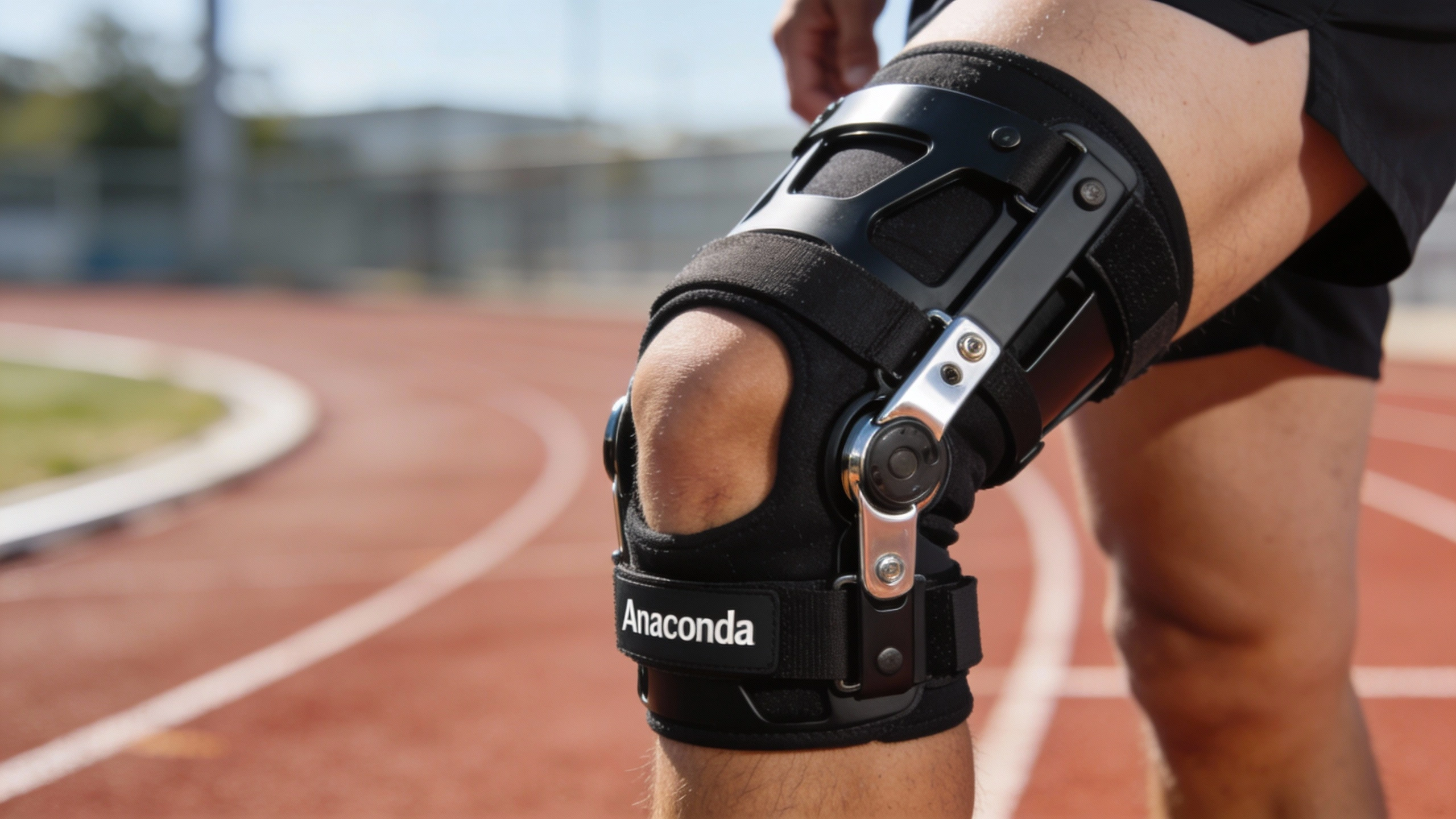
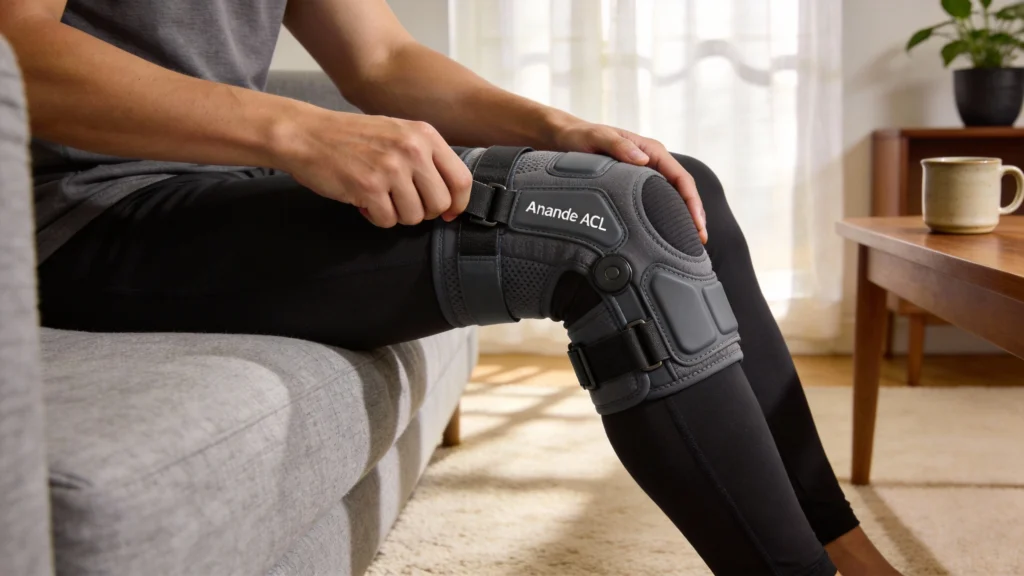
The Anaconda is positioned as a functional ACL knee brace for sports and everyday protection, rather than a simple compression sleeve. It typically features a rigid aluminum or composite frame spanning mid-thigh to upper calf, about 35–40 cm in length, with dual hinges. This structure aims to control anterior tibial translation and valgus stress, two motions strongly linked to ACL strain during cutting or landing.

Intended Use and Target Users

Manufacturers usually recommend the Anaconda brace for individuals between six weeks and two years post-ACL reconstruction or for chronic ACL-deficient knees. It is designed for users weighing roughly 55–110 kg, with thigh circumferences from about 38–65 cm. This range covers most adult athletes, but very petite or very muscular users may struggle to get precise strap tension, affecting stability under rapid deceleration.

Marketing Claims and Realistic Expectations

Marketing materials often emphasize that this acl brace for knee injuries can support recreational soccer, skiing, and basketball without significantly limiting performance. However, no brace restores the original ligament function or eliminates injury risk. Instead, the Anaconda should be seen as a mechanical backup while neuromuscular control improves.
“A brace can reduce peak strain by roughly 20–30%, but only coordinated strength and technique close the remaining gap.”
2

Design and Build Quality of the Anaconda Knee Brace

Design choices determine whether a brace feels like protective equipment or an awkward cage. The Anaconda relies on a semi-rigid frame with bilateral polycentric hinges that mimic the knee’s shifting center of rotation from flexion to extension. This hinge style reduces shear on the skin by distributing motion, which matters when you are wearing the brace for several hours of work, rehab, and commuting daily.

Design and Build Quality of the Anaconda Knee Brace

For day-to-day wear, comfort and fit matter as much as support. The Anaconda’s strap system and padding are designed to reduce slipping and pinching during normal activities like walking, climbing stairs, or working. Getting the right size and taking time to adjust the brace properly can make it more tolerable for longer use.

Frame, Hinges, and Strap System

The frame often uses aircraft-grade aluminum or a composite shell around 2–3 mm thick, balancing stiffness with weight under 600–700 grams. Straps typically number four, with two above and two below the patella, using Velcro and occasionally BOA-style dials. When positioned correctly, they create opposing forces that clamp the femur and tibia, helping resist anterior tibial shift during sudden stops.
“Correct strap tension can change perceived stability more than frame stiffness, especially in mid-flexion angles around 30–45 degrees.”

Durability Compared with Other ACL Braces

Compared with high-end DonJoy Defiance or Breg Fusion braces, which can last five to seven years, the Anaconda usually targets a three to five-year lifespan under recreational use. Padding density and hinge rivets are common wear points after 12–18 months of regular training. For athletes practicing four to five times weekly, inspecting strap stitching and hinge play every three months helps detect loosening before it compromises ACL protection.

3

Support and Stability: How the Anaconda Knee Brace Performs for ACL Protection

Support and Stability: How the Anaconda Knee Brace Performs for ACL Protection

In real-world movement, the Anaconda is meant to limit excessive rotation and forward shin movement that can compromise a healing ACL. While it won’t replace proper rehab or strength work, its structured support can offer extra confidence when you return to light running, change-of-direction drills, or casual field sports.

Support for ACL injuries depends on how effectively a brace limits anterior tibial translation and internal rotation during dynamic tasks. The Anaconda’s dual-hinge design and rigid uprights create a mechanical stop that can reduce forward tibial shift by several millimeters in mid-flexion. That difference seems small, but it can significantly decrease peak ACL load during a 1.5–2.0 times bodyweight landing or rapid plant-and-cut maneuver.

Stability During Daily Activities and Light Exercise

During walking, stair climbing, and controlled squats up to roughly 60 degrees, most users report a noticeable reduction in “giving way” episodes. The brace’s uprights act as rails, guiding the joint through flexion while the straps resist sudden translation. This is especially reassuring during early ACL physical therapy phases, when quadriceps strength may be 30–40% lower than the uninjured side, increasing reliance on passive stability supports.

Performance Under Higher Loads and Direction Changes

During cutting or lateral shuffles, the brace’s ability to limit valgus collapse becomes more apparent. The frame resists inward knee drift, which often precedes ACL injury, especially in fatigued athletes. However, users above 100 kg or with very high-speed demands, such as competitive rugby players, may still experience slight rotational play.
“A brace should never encourage reckless movements; it is a safeguard, not a license to ignore landing mechanics.”

4

Comfort and Fit: Wearing the Anaconda Knee Brace Day-to-Day

Comfort determines whether a brace stays on long enough to matter. The Anaconda uses foam or gel padding along contact points, typically 4–6 mm thick, to distribute pressure across the thigh and calf. When sized correctly, contact pressure remains under roughly 30–40 mmHg, enough to stabilize soft tissue without significantly impeding venous return or causing numbness during prolonged standing or walking.

Comfort and Fit: Wearing the Anaconda Knee Brace Day-to-Day

The design of the Anaconda brace focuses on a rigid frame with articulated side hinges and multiple adjustable straps to control knee motion. Interior padding aims to distribute pressure and reduce rubbing, while the outer shell provides the structure needed to guide movement and resist the twisting forces that stress the ACL.

Sizing, Adjustability, and Everyday Wear

Most sizing charts rely on three circumferences: 15 cm above the patella, mid-patella, and 15 cm below, measured in centimeters. Choosing a size too small increases localized pressure, leading to red marks after 30–45 minutes. Slightly larger sizes can be compensated with strap tension, but excessive slack allows migration. Many users find wearing a thin 1–2 mm compression sleeve underneath reduces chafing and improves moisture management during a full workday.

Bulk, Clothing, and Long-Session Comfort

The brace’s uprights add roughly 5–7 mm of lateral bulk, which can print through slim-fit pants but usually fits under looser joggers. For drivers or office workers sitting 6–8 hours, hinge placement around the joint line is crucial; misalignment can create pinching at 90 degrees of flexion.
“If you forget you’re wearing the brace during a two-hour meeting, the fit is likely optimized for your daily demands.”

5
ACL physical therapy

Using the Anaconda Knee Brace During ACL Physical Therapy and Sports

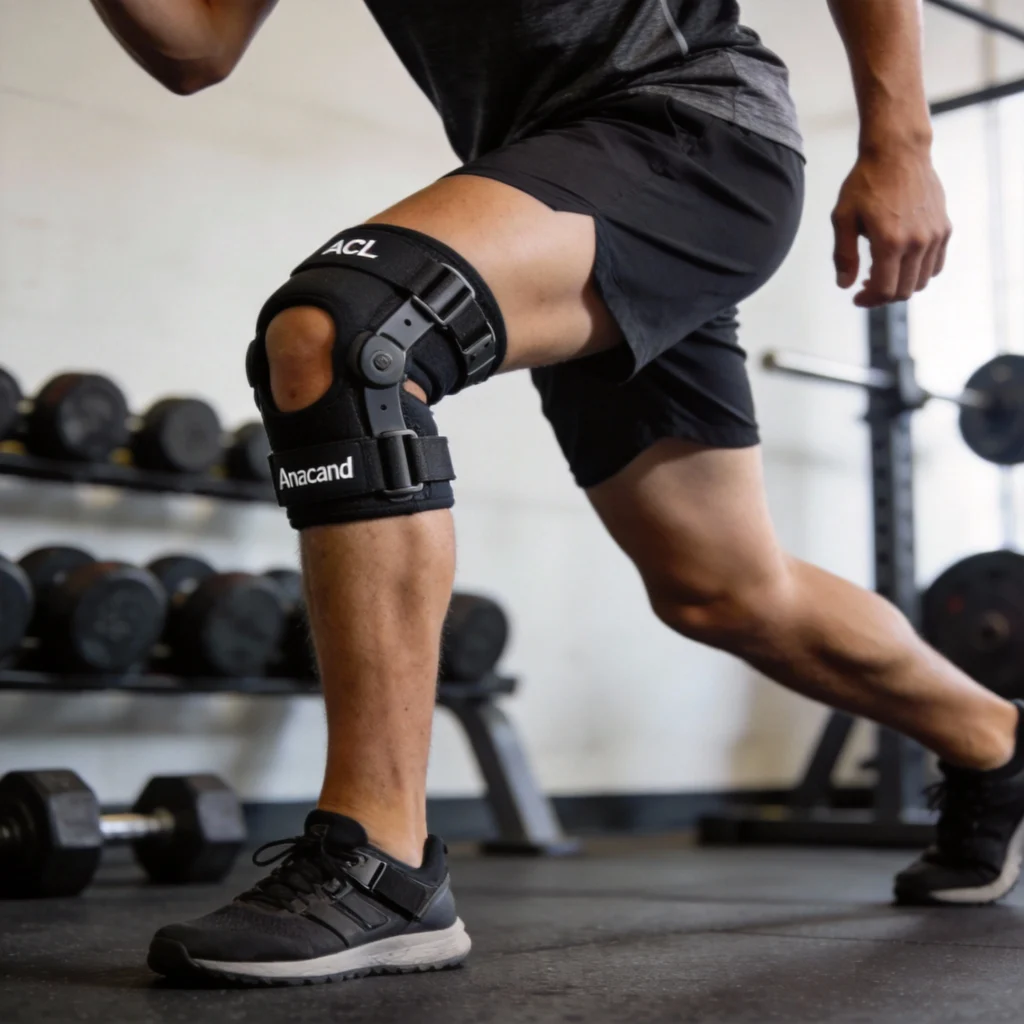
Integrating the Anaconda into ACL physical therapy requires matching brace stiffness to exercise intensity. In early rehab, when flexion is limited to 90 degrees and loads remain under bodyweight, the brace mainly serves as a confidence tool. As you progress to jogging at 10–12 km/h and plyometrics, the mechanical support becomes more relevant, especially when fatigue reduces fine neuromuscular control around the knee.

Using the Anaconda Knee Brace During ACL Physical Therapy and Sports

Rehab and Sports Use Comparison

The table below compares how the Anaconda functions across common rehab and sport scenarios versus typical recommendations for an acl knee brace for sports. These values reflect realistic usage patterns and help you decide whether a single brace can cover your entire recovery or if you should transition to a lighter model later.

Activity PhaseTypical DurationBrace RoleRecommended Wear TimeNotes on Performance
Early PT (Weeks 4–8)2–4 sessions/weekConfidence, basic stability4–6 hours/dayHelps during gait retraining and 30–60° squats.
Strength Phase (Weeks 8–16)3–5 sessions/weekControl under load3–5 hours/dayUseful for lunges, step-downs, light leg press.
Jogging Progression2–3 sessions/weekImpact support1–3 hours/dayReduces apprehension at 10–12 km/h treadmill speeds.
Non-contact Sports1–3 sessions/weekRotational control2–4 hours/daySupports recreational tennis, non-contact basketball drills.
Cutting/Contact SportsSeasonalSupplemental stabilityMatch or practice durationMay be insufficient alone for elite-level pivoting sports.

For many users, the Anaconda works as a bridge from early rehab to moderate-level sport, especially in non-contact settings. Competitive athletes in pivot-heavy sports might eventually transition to a stiffer, custom-fitted acl knee brace for sports. Discussing planned activity intensity with your physical therapist ensures the brace’s support profile matches the drills you perform each training block.

6

Pros, Cons, and Best Use Cases for the Anaconda Knee Brace

Pros, Cons, and Best Use Cases for the Anaconda Knee Brace

Weighing pros and cons clarifies whether the Anaconda fits your specific ACL scenario or if another brace better matches your needs. Because brace choice interacts with graft type, sport, and body size, the same model can feel ideal for a 70 kg recreational runner yet inadequate for a 105 kg competitive forward. A structured comparison helps you avoid simply copying another athlete’s decision.

Key Advantages and Drawbacks

The list below summarizes the main strengths and limitations observed when using the Anaconda as an acl brace for knee injuries and return-to-play preparation. Use it to match your priorities—comfort, stiffness, or cost—to what the brace actually delivers in daily movement, training sessions, and occasional higher-impact sports participation.

  • Rigid frame and dual hinges reduce anterior tibial translation several millimeters, especially around 30–45 degrees knee flexion.
  • Mid-range price, often around $250–$400, undercuts many custom braces costing $700–$1,000 or more.
  • Padding and strap design allow 4–8 hours of wear with manageable skin irritation when combined with thin under-sleeves.
  • Off-the-shelf sizing may not suit very muscular thighs or calves, causing migration during sprints or aggressive lateral cuts.
  • Frame stiffness may feel insufficient for heavy contact sports, particularly for athletes above roughly 100–105 kilograms bodyweight.
7

Anaconda Knee Brace Alternatives for ACL Support

Comparing alternatives helps determine whether the Anaconda is your primary solution or a stepping stone. Other braces vary in frame stiffness, customization, and cost, which directly influence how they perform in demanding environments. For example, custom carbon-fiber frames distribute forces more evenly but require casting and several weeks of fabrication, delaying your ability to train confidently during mid-rehab phases.

Anaconda Knee Brace Alternatives for ACL Support

Alternative ACL Braces Comparison

The table below contrasts the Anaconda with several commonly recommended ACL braces used in both rehabilitation and sports. Values reflect typical retail pricing and general design characteristics, offering a realistic view of how much more you pay for incremental stability or customization compared with a standard off-the-shelf option.

Brace ModelApprox. Price (USD)Frame MaterialCustomization LevelBest For
Anaconda$250–$400Aluminum/CompositeOff-the-shelf sizesGeneral ACL rehab, recreational sports participation.
DonJoy Defiance III$800–$1,000Carbon FiberFully customHigh-level pivoting sports and contact athletes.
Breg Fusion$500–$700Aluminum AlloySemi-customActive users needing strong support with moderate bulk.
Ossur CTi$700–$900Carbon CompositeCustom and off-the-shelfMotocross, skiing, and high-impact cutting sports.
Soft Neoprene Sleeve$40–$80NeopreneUniversalMild instability, late-stage rehab, proprioceptive feedback only.

For many patients, the Anaconda represents a sensible middle ground between simple sleeves and expensive custom frames, especially in the first 12–18 months after surgery. If you eventually return to collision sports or elite competition, upgrading to a stiffer, custom-fitted brace may be justified. Discussing long-term sport goals with your surgeon and therapist ensures today’s brace choice fits tomorrow’s performance demands.

Face, Neck, Head, Body, Back & Foot Massager
For a Relaxing & Relieving Lifestyle
14-day money back guarantee
Lowest Prices: 365 Days Discount
Safe & Secure online payment
Contact Us

Massagers Mart © 2025. All Rights Reserved

Massagers Mart
Logo
Compare items
  • Total (0)
Compare
0
Shopping cart