Back Massager for Chair Guide: Turn Any Seat Into a Relaxation Zone

Imagine finishing an eight-hour workday or a two-hour commute without that familiar knot between your shoulders. A back massager for chair quietly works while you type, drive, or stream a show, turning passive sitting time into active recovery without asking your hands to do anything.

A back massager for chair straps onto your office chair, car seat, or recliner and delivers continuous, targeted pressure while you stay productive. Instead of pausing to use a handheld back massager, you get rolling or kneading nodes working along your spine for 10–20 minutes per session, easing stiffness that builds from 6–10 hours of daily sitting.

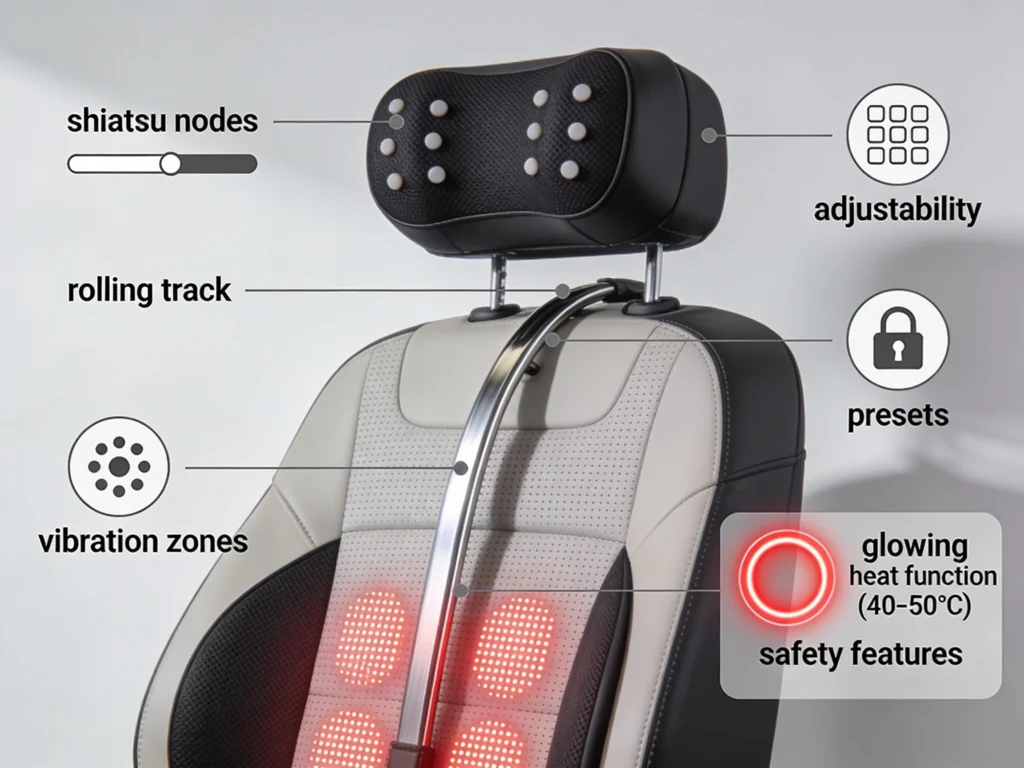
These devices typically combine mechanical massage heads, vibration motors, and optional heat elements around 40–50°C to increase blood flow. By cycling through preset programs, they mimic shiatsu, rolling, or tapping techniques. Over weeks, consistent use can reduce baseline muscle tension by 15–30%, which many users notice as fewer headaches and less evening fatigue.

Because chair-mounted massagers keep your hands free, they fit naturally into routines you already have: answering email, attending video calls, or watching TV. The key is choosing a model that matches your height, chair type, and sensitivity level, then using it in short, regular sessions rather than marathon runs that can irritate muscles instead of relaxing them.

1
back massager for chair

What Is a Back Massager for Chair?

What Is a Back Massager for Chair?

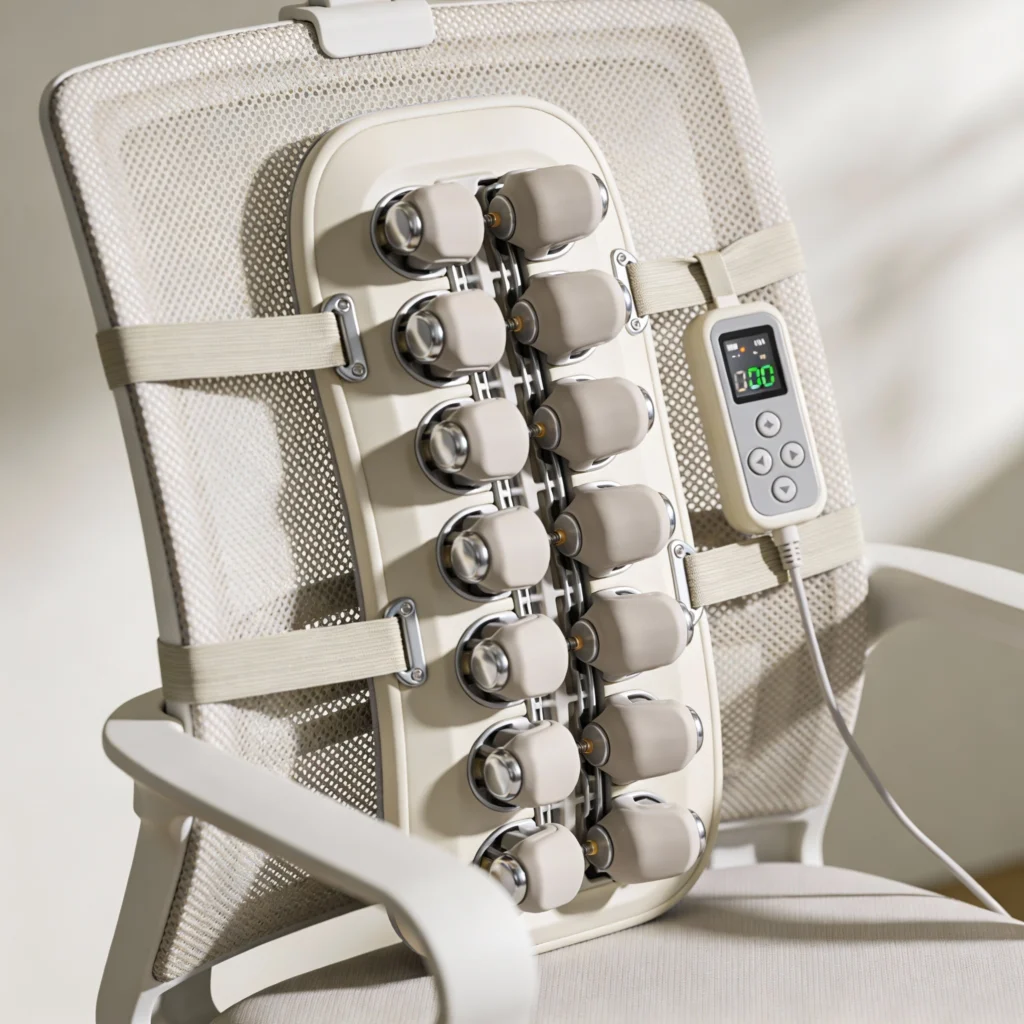
A back massager for chair is designed to strap securely onto most office or dining chairs, aligning its massage nodes with your spine. By delivering continuous, targeted pressure while you sit, it replaces the need to stop and use a handheld device, making relief part of your normal work routine.

Chair-mounted back massagers are powered cushions, pads, or full-seat units that attach to existing seating and deliver automated pressure along your spine. Unlike a handheld back and shoulder massager, they rely on your body weight and fixed massage nodes to maintain consistent contact, which is especially helpful if your hands or wrists already feel overworked from typing or driving.

Types of Chair Back Massagers

Most models fall into three categories: slim pads, cushioned seats, and full-back plus neck systems. Slim pads, usually 3–5 cm thick, suit firm office chairs, while cushioned versions add 5–8 cm of foam for softer recliners. Full systems extend 60–75 cm up the back, often including an adjustable neck panel to reach users between about 155–190 cm tall.

How They Differ from Handheld Tools

Handheld tools like a back hook massager or back massager stick need active positioning, which can fatigue shoulders within 5–10 minutes. Chair massagers instead use electric motors spinning at 20–35 rotations per minute, moving nodes up and down rails. This automation allows longer, more consistent sessions, particularly useful when you’re focused on spreadsheets, online meetings, or long highway stretches.

2
back massager

Key Features to Look For in a Chair Back Massager

Choosing the right back massager for chair means matching its capabilities to your body and routine. Features like adjustable intensity, heat, and zone control determine whether you get gentle relaxation or deep trigger-point work. Paying attention to technical details—such as motor wattage and node travel distance—helps you avoid underpowered devices that feel more like a phone vibration than a real massage.

Key Features to Look For in a Chair Back Massager

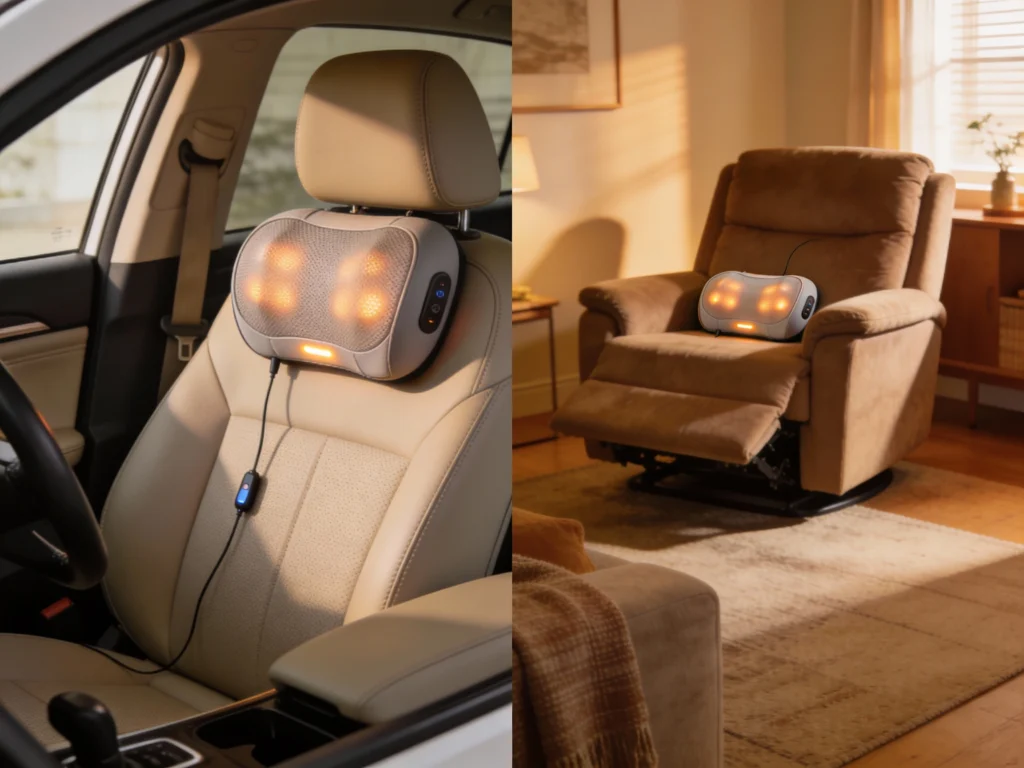
These massagers aren’t just for the office. A compact model can strap onto your car seat to ease tightness during commutes, while a larger version can live on your favorite recliner at home. Consistent use in both settings helps counteract the cumulative strain of hours spent sitting each day.

Essential Performance Features

Look for multiple massage modes, usually including rolling and shiatsu, so you can switch between broad stretching and focused kneading. Intensity levels matter: three or four settings let you start gently around sensitive areas, then increase as muscles warm. Heat functions should cap around 45–50°C to safely improve circulation without burning, especially if you plan 15–20 minute sessions twice daily.

  • Choose models with at least 4 massage nodes traveling 25–35 cm vertically to cover mid-back and lower thoracic regions.
  • Check power ratings between 24–60 watts; lower wattage often struggles to push through thicker clothing and winter layers.
  • Look for dedicated upper, lower, and full-back zones so you can avoid already sore areas after heavy workouts.
  • Timed auto-shutoff around 15 minutes prevents overuse, especially if you tend to work or watch shows for several hours.
  • For a back and neck massager combo, confirm the neck panel height adjusts at least 5–8 cm to fit different torso lengths.
3

Using a Back Massager for Chair at Work

Using a Back Massager for Chair at Work

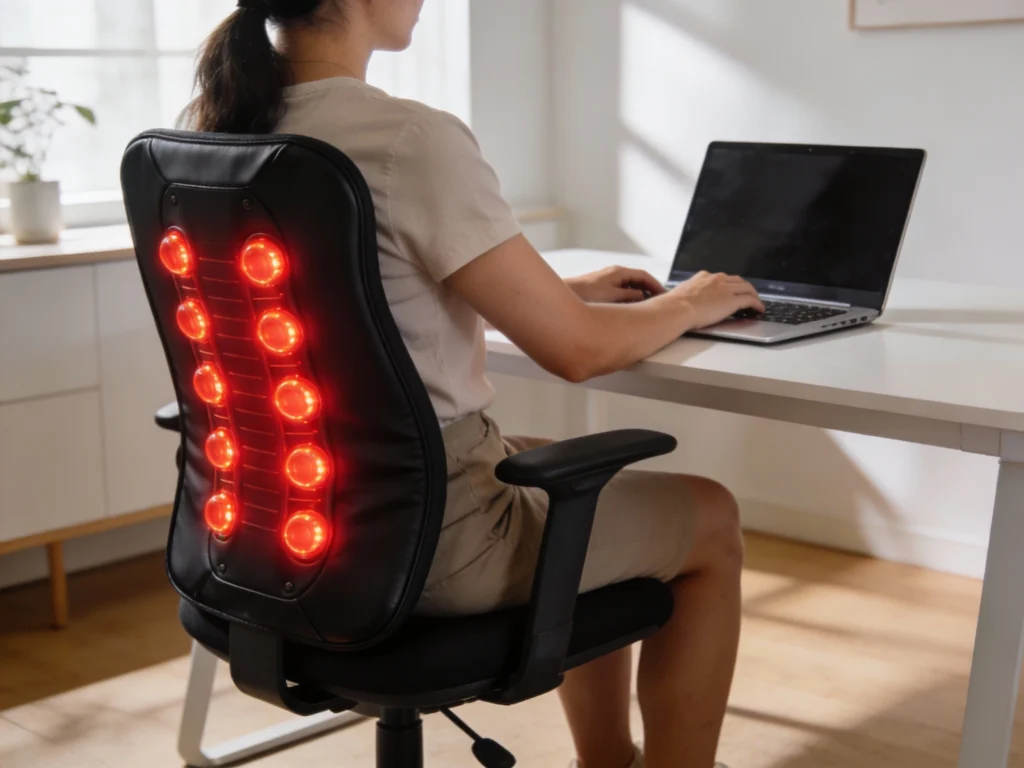
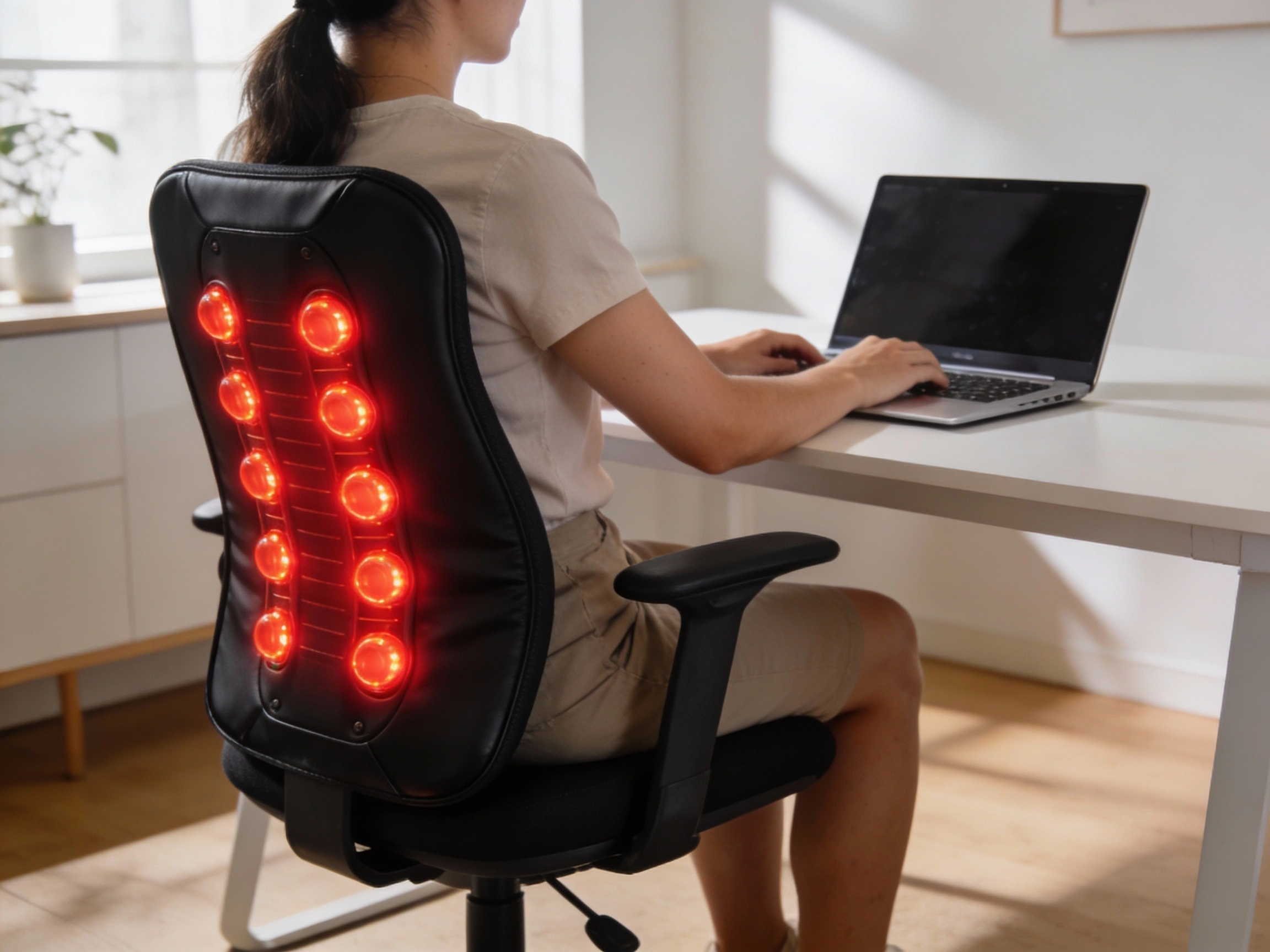
At work, a chair back massager can quietly tackle the stiffness that builds during long stretches at your desk. Short 10–20 minute sessions between meetings can ease muscle tension by around 15–30% over weeks, which many people notice as fewer tension headaches, better posture, and less late-day fatigue.

Integrating a back and shoulder massager into your workstation works best when you treat it as part of your ergonomics, not just a gadget. Proper setup ensures the nodes track your paraspinal muscles rather than your spine itself. This alignment allows you to enjoy 10–15 minute cycles during email blocks or virtual meetings without emerging more tense than when you started.

Desk Setup and Posture Strategy

Start by securing the straps firmly around your chair so the unit doesn’t slide when you lean back. Sit with your hips fully against the backrest and adjust seat height so knees rest at roughly 90 degrees. When you activate the massager, keep your core lightly engaged and avoid slumping; this distributes pressure across muscle tissue instead of compressing lumbar discs.

Fitting Sessions Around Productivity

Short, scheduled sessions work better than continuous use. Many office workers run the massager during two or three 15-minute blocks spaced every 2–3 hours, aligning them with calendar reminders.

Using the massager during low-cognitive tasks—like inbox triage or routine data entry—lets you relax physically without distracting from deep-focus work.

By treating it like a structured micro-break, you reduce stiffness while keeping your overall workflow predictable.

4

Using a Back Massager for Chair in the Car or at Home

Some back massagers include 12V adapters for car use, extending relief to long commutes and road trips. Others shine on couches and recliners, where you can lean more heavily into the nodes for deeper pressure. Matching the device to each environment—upright driving versus semi-reclined streaming—helps you stay comfortable without compromising safety or posture.

Using a Back Massager for Chair in the Car or at Home

When comparing models, it helps to understand the core features: mechanical massage heads that mimic shiatsu or rolling, vibration motors for broader relaxation, and optional heat in the 40–50°C range to boost circulation. Preset programs and adjustable intensities let you tailor each session to your comfort level.

Comparing Car and Home Chair Massager Setups

The table below compares common setups so you can decide where each type of back massager works best. Pay attention to power sources, recommended session lengths, and typical price ranges, since these factors influence how often you’ll realistically use the device across workdays, weekends, and vacations.

Use CasePower SourceTypical Price (USD)Recommended Session LengthSeat Type Compatibility
Office chair pad110–240V AC adapter60–12010–15 minutes, 2–3 times dailyHigh-back task chairs, mesh or fabric
Car seat massager12V DC cigarette lighter50–10010 minutes, only when stopped or cruisingStandard bucket seats, SUVs
Recliner full-seat unit110–240V AC adapter90–18015–20 minutes, eveningsRecliners, armchairs with tall backs
Sofa-compatible cushion110–240V AC adapter70–14010–15 minutes, alternate positionsFirm sofas, sectionals
Travel-friendly pad12V DC + AC combo80–15010–15 minutes, breaks on tripsRental cars, hotel chairs

At home, you can recline slightly to shift pressure toward stubborn knots between the shoulder blades, but in the car you should keep the intensity low and avoid adjusting settings while steering.

For driving, treat the massager as a brief comfort aid during long, straight stretches, never as a distraction when navigating traffic or complex intersections.

This mindset keeps safety ahead of relaxation.

5
back and shoulder massager

Back and Shoulder Massager Benefits for Sedentary Lifestyles

People who sit more than six hours daily often develop tight trapezius and rhomboid muscles, leading to headaches and burning between the shoulder blades. A chair-mounted back and neck massager targets these areas automatically, using slow kneading to break up trigger points. Over several weeks, this repeated mechanical stimulation can improve shoulder mobility by several degrees and reduce end-of-day pain scores.

Back and Shoulder Massager Benefits for Sedentary Lifestyles

How Chair Massagers Support Upper-Back Health

By placing massage nodes along the thoracic spine, chair units encourage micro-movements in joints that otherwise remain static during laptop work. Gentle rolling combined with warmth nudges blood flow toward fatigued tissue, delivering oxygen and clearing metabolites like lactate.

Many users notice they unconsciously breathe deeper during sessions, which further relaxes the nervous system and reduces perceived stress.

This combination makes the devices useful adjuncts to stretching and posture exercises.

Complementing Other Movement Habits

A back massager cannot replace walking breaks or strength training, but it can make both more accessible by lowering baseline discomfort. When your shoulders feel less locked, you’re more likely to perform band pull-aparts or doorway stretches correctly. Using the massager after 20–30 minutes of light movement also helps consolidate gains, as relaxed muscles adapt more readily to new, healthier postural patterns.

6
chair massager

Comparing Chair Massagers to Manual Tools Like Hooks and Sticks

Comparing Chair Massagers to Manual Tools Like Hooks and Sticks

Manual devices such as a back hook massager or back massager stick excel at pinpointing knots, while chair units provide broader, hands-free coverage. Understanding the trade-offs between them helps you build a toolkit instead of expecting one device to solve every problem. Cost, learning curve, and physical effort all differ, making some tools better for quick fixes and others for daily maintenance.

Hands-Free vs Manual Control

Chair massagers win for convenience: you can run a 15-minute cycle while answering emails, something impossible with a handheld hook. However, manual tools allow you to angle pressure precisely into a single 1–2 cm knot under the shoulder blade.

Many people use chair units for daily background relief, then reach for a hook or stick once or twice weekly for deep, targeted work.

This layered approach balances effort and effectiveness.

Cost, Portability, and Effort Comparison

Manual tools often cost 15–40 USD and weigh under 500 grams, making them easy to toss into a backpack. Chair massagers typically run 60–180 USD and are bulkier, but they save physical effort, which matters if your hands already ache from keyboard or phone use. Choosing both isn’t redundant; instead, each tool fills a different role in your pain-management routine.

7
back massagers

Care, Maintenance, and Safety Tips for Chair Back Massagers

Consistent care keeps your back massager operating safely and quietly for years. Because these devices combine fabric, foam, wiring, and moving parts, small habits—like unplugging after use or wiping sweat promptly—can significantly extend lifespan. Proper safety practices also reduce the risk of skin irritation, overheating, or aggravating existing back conditions during regular 10–20 minute sessions.

Care, Maintenance, and Safety Tips for Chair Back Massagers

Cleaning, Storage, and Longevity

Most covers are synthetic, so a weekly wipe with a damp cloth and mild soap removes sweat and skin oils without soaking internal components. Avoid harsh alcohol-based cleaners that can crack vinyl over 6–12 months. When storing, keep the unit flat or gently rolled, never sharply folded, since repeated creasing can damage internal wiring and shorten the motor’s service life.

Safe Usage Habits

Limit sessions to 15–20 minutes, allowing at least one hour between cycles for tissues to recover, especially on higher intensities.

If you notice increased soreness lasting more than 24 hours, reduce pressure or place a folded towel between your back and the nodes.

Never sleep on an active massager, as prolonged, unattended pressure can irritate nerves or overheat components, particularly in older or poorly ventilated models.

Before first use, inspect the power cord for kinks and avoid running it under chair wheels, which can crush insulation over time. Plug the adapter directly into a wall outlet rather than a crowded power strip to minimize electrical load. If you hear grinding, smell burning plastic, or feel inconsistent heating, discontinue use immediately and contact the manufacturer, since these signs often precede motor or wiring failure.

Face, Neck, Head, Body, Back & Foot Massager
For a Relaxing & Relieving Lifestyle
14-day money back guarantee
Lowest Prices: 365 Days Discount
Safe & Secure online payment
Contact Us

Massagers Mart © 2025. All Rights Reserved

Massagers Mart
Logo
Compare items
  • Total (0)
Compare
0
Shopping cart