Best Massage Gun for Athletes on a Budget: 2024 Buying Guide

Elite athletes swear by massage guns for faster recovery, but you don’t need a pro budget to get real results. By focusing on a few performance-critical specs instead of flashy marketing, you can buy a tool that genuinely speeds recovery, limits soreness, and keeps you training hard week after week.

The best massage gun for athletes combines strong percussion power, adequate stroke depth, and reliable battery life without wasting money on gimmicks. When you understand stall force, amplitude, and speed ranges, you can compare a $120 device to a $400 flagship and still get 80–90% of the performance. That value gap is where budget-conscious athletes can really win.

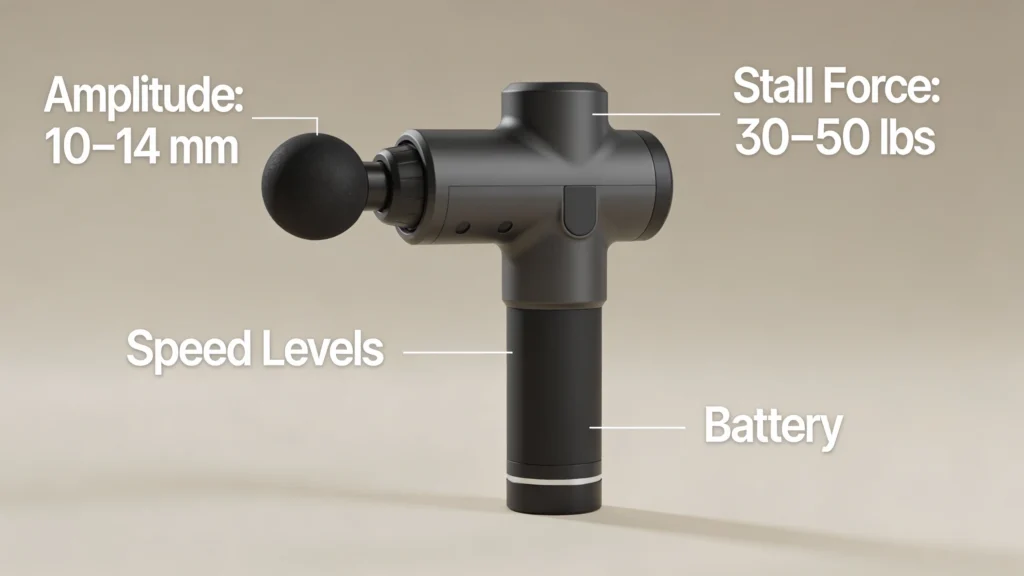
Instead of chasing the trendiest brand, think like a coach building a program: prioritize what actually improves performance. A good affordable massage gun should hit 10–14 mm amplitude, 30–50 lbs stall force, and at least 2–3 hours of real use per charge. Those numbers translate directly into deeper muscle penetration and more consistent recovery.

This 2024 guide breaks down which specs matter, how different sports benefit, and which settings mimic the best deep tissue massage gun sessions safely. You’ll see concrete examples, like how a runner’s calf routine differs from a powerlifter’s quad protocol, so you can plug massage gun work into your warm-ups, cooldowns, and off-day recovery with confidence.

1
best massage gun for athletes

Why Athletes Need the Best Massage Gun for Athletes (Even on a Budget)

Why Athletes Need the Best Massage Gun for Athletes (Even on a Budget)

Athletes don’t just want to feel relaxed; they need tools that speed up recovery between hard sessions. Using a massage gun after lifting or running can help reduce soreness, improve circulation, and keep tissues more resilient. This is especially valuable when you’re training frequently and can’t afford to lose days to tight, overworked muscles.

Consistent mechanical stimulation from a massage gun increases local blood flow by roughly 20–25%, which helps clear metabolic byproducts like lactate faster after intense sessions. For athletes training 4–6 days weekly, that improved circulation means less lingering soreness, better tissue quality, and more high-quality work sets across a mesocycle, even when spending under $150.

Recovery, Performance, and Training Frequency

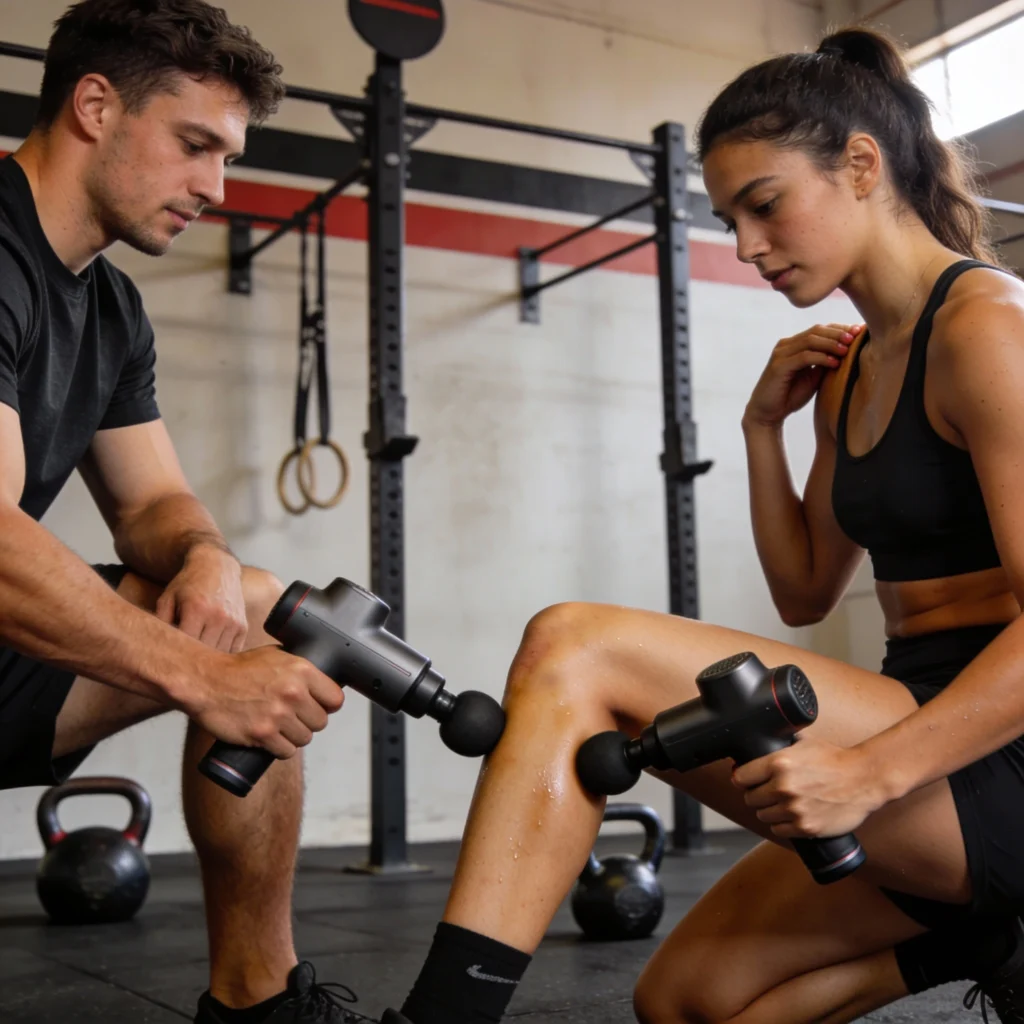
When you use a massage gun for 60–120 seconds per major muscle group post-workout, you reduce perceived soreness scores by around one point on a 10-point scale. That might sound small, but over eight to twelve weeks it often means you can maintain volume instead of cutting sets. More hard sets at full range and power usually translate into measurable strength or speed gains.

Injury Prevention and Tissue Quality

Many overuse injuries start with small restrictions in tissue glide and joint range. Targeting quads, calves, glutes, and lats with a massage gun three to four times weekly helps maintain soft-tissue extensibility between manual therapy sessions. Athletes who treat hotspots early—like tight IT bands or hip flexors—often avoid the compensations that eventually become knee or low-back pain during peak training blocks.
2

Key Features the Best Massage Gun for Athletes Must Have

Choosing the best affordable massage gun starts with understanding a few non-negotiable specs. Amplitude, stall force, and speed range determine how deeply the gun penetrates and whether it can handle dense muscle groups like glutes or hamstrings. Battery life, noise level, and build quality decide whether you’ll actually use it consistently during busy training weeks.

Key Features the Best Massage Gun for Athletes Must Have

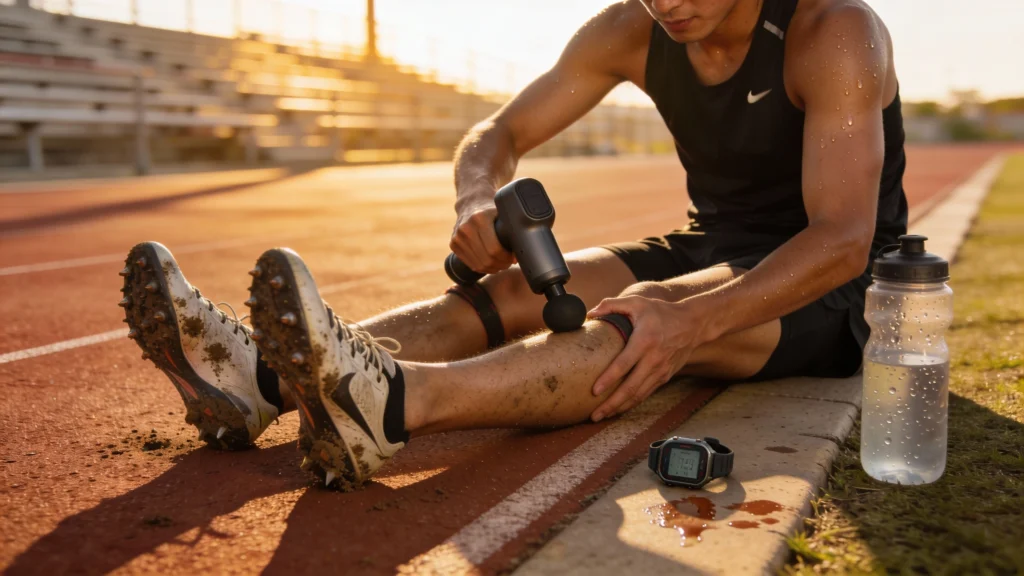
For endurance and running athletes, portability and targeted lower-body relief matter most. A lighter massage gun that still reaches 10–12 mm amplitude is ideal for calves, hamstrings, and hips after long runs. Keeping it in your track or race bag means you can start recovery immediately instead of waiting until you get home.

Performance Specs That Actually Matter

Amplitude between 10–14 mm allows the head to travel far enough to affect deeper tissue instead of just vibrating skin. Stall force above 30 lbs prevents the motor from stalling when you press into quads or glutes. A useful speed range spans roughly 1,600–3,000 percussions per minute, giving you lower settings for warm-ups and higher settings for post-session flushing or deep tissue-style work.

  • Look for 10–14 mm stroke depth to reach deeper muscle fibers, especially quads, glutes, and hamstrings under heavier pressure.
  • Aim for 30–50 lbs stall force so the motor doesn’t stall when treating dense areas like calves or upper traps.
  • Choose 1,600–3,000 ppm speed range to cover gentle warm-ups, moderate recovery, and more intense deep tissue sessions.
  • Prioritize 2–4 hours real battery life, meaning several full-body sessions per charge, not just marketing estimates.
  • Check noise levels under 55–60 dB so you can use it in shared spaces, locker rooms, or during team travel.
3

Best Massage Gun for Athletes in Strength and Power Sports

Best Massage Gun for Athletes in Strength and Power Sports

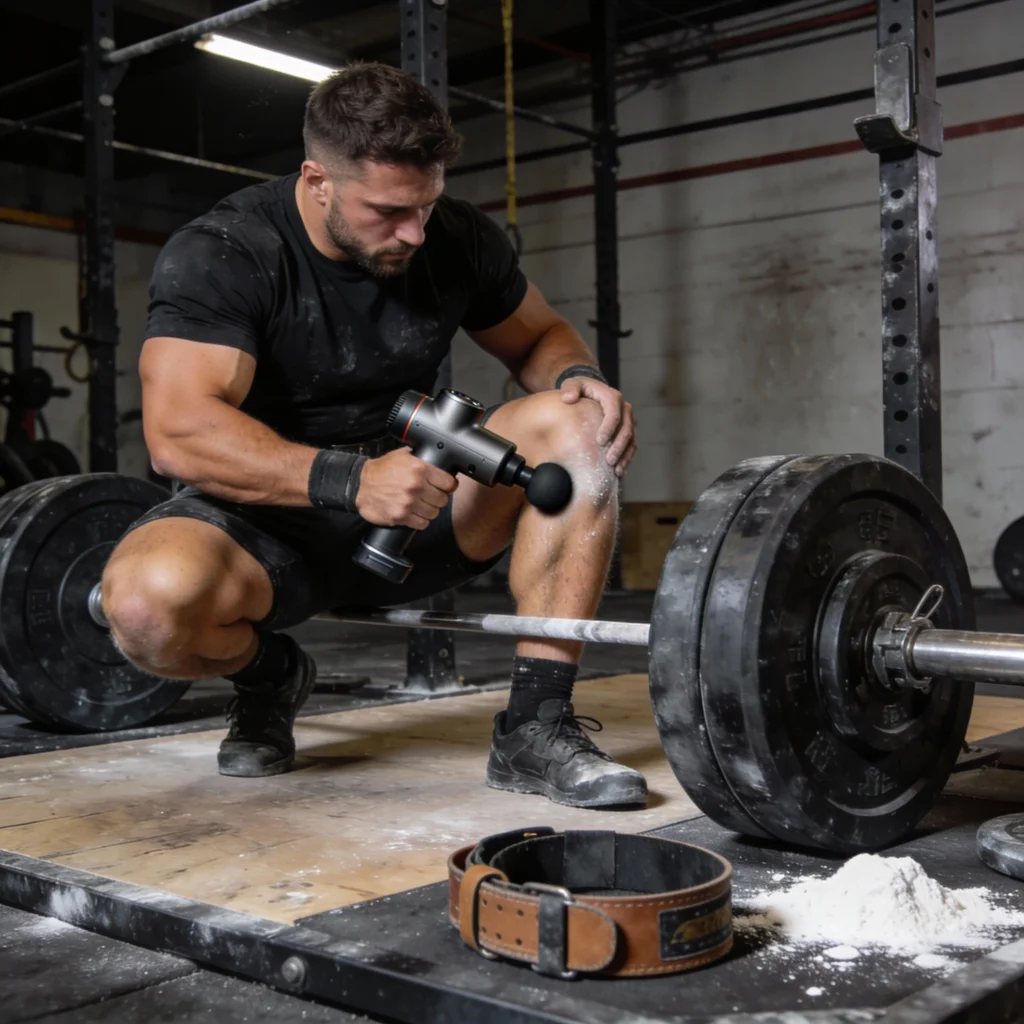
Strength and power athletes put massive stress on quads, glutes, and backs, so they need a massage gun that won’t stall when digging into dense muscle. A model with higher stall force and decent amplitude helps them warm up faster between heavy sets and recover better after intense squat, deadlift, or Olympic lifting sessions.

Lifters, CrossFit athletes, and power athletes need massage guns that can drive through thick muscle bellies and handle heavy daily use. The best massage gun 2024 options in the budget category often match mid-tier pro models on amplitude and stall force while skipping app integrations or fancy screens that don’t add performance value.

Deep Penetration for Heavy Lifters

Strength athletes benefit from 12–14 mm amplitude and at least 40 lbs stall force for quads, glutes, and spinal erectors. For example, the Ekrin B37 (around $230 but often discounted near $160) offers 12 mm amplitude and 56 lbs stall force, which rivals high-end devices. Using it on hip flexors before squats can improve depth and reduce hip pinch during heavy sessions.

CrossFit, Olympic Lifting, and Mixed Demands

CrossFit and functional fitness athletes rotate between heavy barbell work, gymnastics, and conditioning, so versatility matters. Models like the Bob and Brad D6 Pro or Lifepro Sonic LX Professional often deliver 12 mm amplitude, multiple heads, and 3–5 speed settings under $200. That combination lets you hit shoulders after snatches, calves after box jumps, and forearms after high-volume pull-ups efficiently.

4

Best Massage Gun for Athletes in Endurance and Running Sports

Endurance athletes rely on repetitive motion, so small asymmetries or tightness can accumulate into overuse injuries. The best affordable massage gun for runners, cyclists, and triathletes should excel at lower-body coverage—calves, quads, hamstrings, and glutes—while staying light enough for daily use. Slightly lower stall force is acceptable if amplitude and ergonomics are solid.

Best Massage Gun for Athletes in Endurance and Running Sports

When comparing massage guns, the numbers matter more than the logo. Amplitude in the 10–14 mm range, stall force between 30–50 pounds, and 2–3 hours of real battery life per charge are the benchmarks that actually affect muscle penetration and consistency. Understanding these specs lets you spot true value at lower price points.

Lower-Body Focus for Runners and Cyclists

For runners logging 30–60 miles weekly, focusing 60–90 seconds per leg on calves and quads post-run can reduce next-day stiffness. Models like the Renpho R3 or Recoverfun Mini, usually under $130, offer around 8–10 mm amplitude and 20–30 lbs stall force. That’s enough for leaner endurance builds, especially when combined with stretching and occasional foam rolling.

Endurance athletes get more value treating frequently loaded chains—calves, quads, hip flexors—daily for short bouts than doing rare, marathon recovery sessions. Think five to ten minutes after key workouts instead of thirty minutes once weekly, which aligns better with how tissues adapt to consistent, moderate mechanical input.

5

Best Massage Gun for Athletes Who Travel to Competitions

Travel compresses tissue, disrupts routines, and often spikes stress before big events. A compact massage gun that fits in a backpack or carry-on keeps your warm-up and cooldown consistent on the road. The best massage gun for athletes who travel balances size, weight, and power so you don’t sacrifice meaningful recovery for portability.

Best Massage Gun for Athletes Who Travel to Competitions

Compact Options Compared

Mini massage guns typically weigh 0.5–1 lb and measure under 6 inches tall, making them easy to pack. While amplitude often drops to 7–10 mm, that’s still enough for pre-race calf and glute activation. The table below compares popular travel-friendly models that many athletes use as their dedicated meet-day or race-week tools.

ModelApprox. Price (USD)WeightAmplitudeBattery Life
Theragun Mini 2.0$1991.0 lb12 mm120 min
Hyperice Hypervolt Go 2$1291.5 lb10 mm180 min
Renpho R3 Mini$990.75 lb10 mm180 min
Recoverfun Mini$790.95 lb8 mm300 min
Bob and Brad Q2 Mini$890.95 lb7 mm180 min

For most athletes prioritizing budget, models like the Recoverfun Mini or Renpho R3 deliver enough amplitude and 3–5 hour batteries at under $100. Use them for five-minute airport or hotel-room sessions targeting calves, hip flexors, and upper back after flights to offset stiffness from prolonged sitting and improve readiness for pre-event shakeout sessions.

6
best deep tissue massage gun

Best Deep Tissue Massage Gun Settings for Different Sports

Best Deep Tissue Massage Gun Settings for Different Sports

Dialing in settings correctly turns a budget device into the best deep tissue massage gun for your needs. Intensity, attachment choice, and session length should change based on sport, body region, and timing relative to training. Overdoing pressure or duration can irritate tissue, while under-dosing won’t produce noticeable recovery or mobility improvements.

Sport-Specific Intensity and Attachment Choices

Power athletes often tolerate higher speeds—2,400–3,000 ppm—with a flat or ball head on quads, glutes, and pecs. Runners and cyclists usually respond better to moderate speeds—1,800–2,400 ppm—on calves and hip flexors using a smaller ball or bullet head. Training-day timing matters: use lighter settings pre-session and reserve deeper, slower passes for post-workout or off-days.

  • Use lower speeds and softer heads near bony landmarks like knees, shins, and ankles to avoid irritation or bruising.
  • Limit any single spot to 30–45 seconds when using high speeds to prevent excessive soreness or nervous system overstimulation.
  • Pick bullet heads for small trigger points in glutes or rotator cuff muscles, keeping pressure moderate and controlled.
  • Reserve fork attachments for either side of the spine, never directly on vertebrae, and keep sessions under two minutes.
  • Schedule deeper sessions at least six to eight hours away from maximal strength or speed efforts to avoid performance dips.
7

How to Use the Best Massage Gun for Athletes Safely and Effectively

Even the best massage gun 2024 options can cause issues if used aggressively or randomly. Effective use follows a simple structure: short, light passes before training to wake tissues up; longer, slower passes after training to down-regulate tension; and brief, targeted sessions on off-days to manage hotspots without creating extra fatigue or soreness.

How to Use the Best Massage Gun for Athletes Safely and Effectively

Warm-Up, Cooldown, and Off-Day Protocols

Before training, spend five to eight minutes total: 30–45 seconds per muscle group at low to moderate speed, focusing on quads, glutes, calves, and upper back. After sessions, extend to 60–90 seconds per area at slightly higher speed, then follow with stretching. On off-days, limit work to stubborn spots, keeping total time under fifteen minutes to avoid overloading sensitive tissues.

Safety Guidelines and Red Flags

Avoid using any massage gun directly on joints, spine, or areas with decreased sensation, varicose veins, or acute swelling. Discomfort should stay under 4–5 on a 10-point scale; sharper pain means backing off immediately. If bruising, numbness, or increased swelling appears after sessions, reduce intensity, shorten duration, and consider consulting a physical therapist or sports medicine professional.

Think of your massage gun as a scalpel, not a hammer: targeted, consistent, and moderate use produces better long-term results than occasional, aggressive sessions that leave tissues irritated and nervous system overstimulated.

Face, Neck, Head, Body, Back & Foot Massager
For a Relaxing & Relieving Lifestyle
14-day money back guarantee
Lowest Prices: 365 Days Discount
Safe & Secure online payment
Contact Us

Massagers Mart © 2025. All Rights Reserved

Massagers Mart
Logo
Compare items
  • Total (0)
Compare
0
Shopping cart