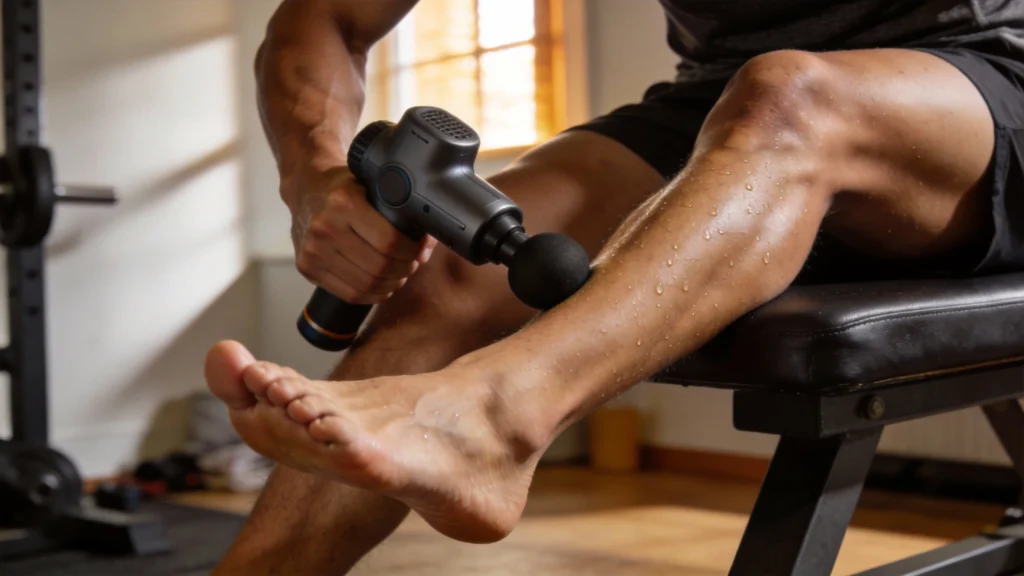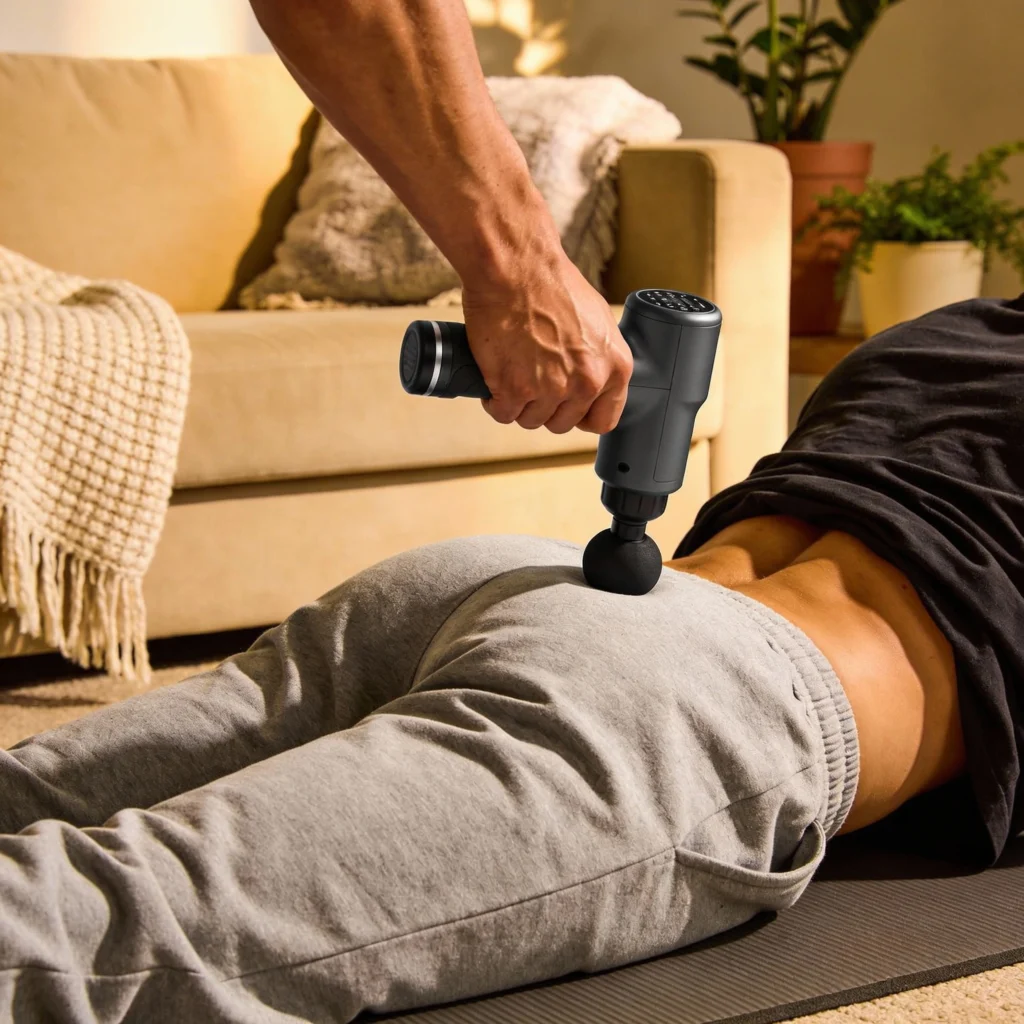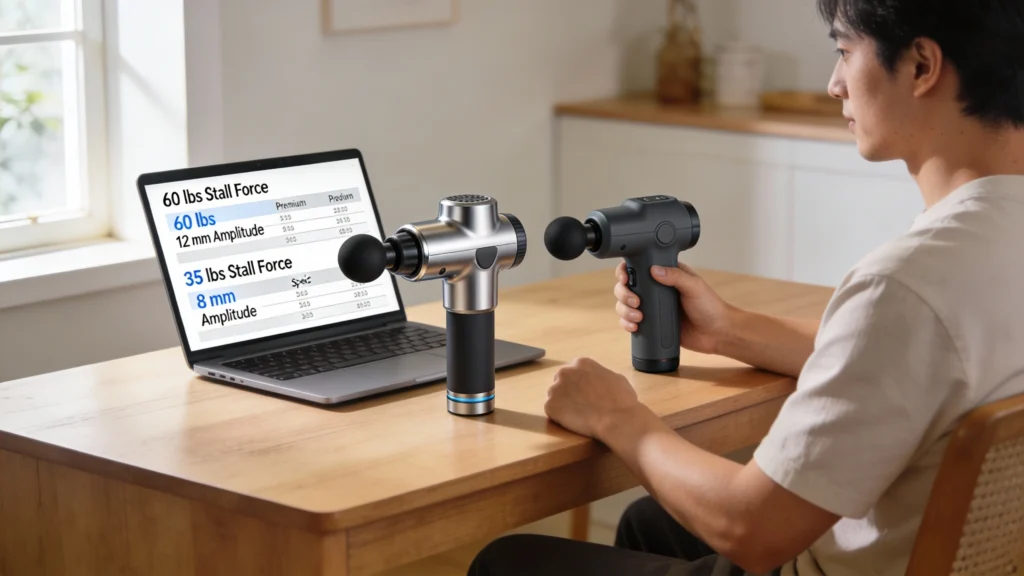
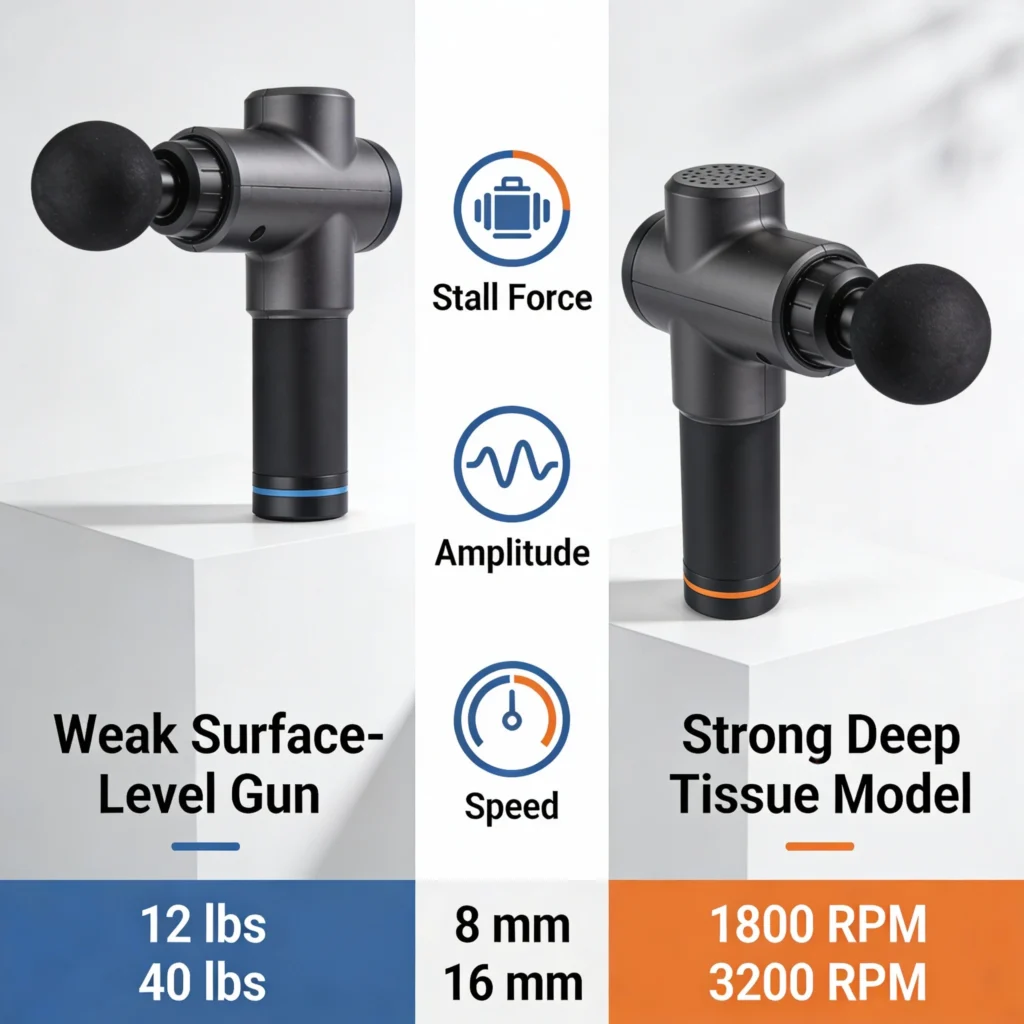
The biggest difference between a surface-level massager and a true deep tissue massage gun comes down to measurable specs. Stall force determines how hard you can press before the motor stops, while amplitude and speed dictate how far and how fast the head travels, together controlling how deeply the treatment actually penetrates muscle.
Deep tissue massage guns are defined less by marketing labels and more by three numbers: stall force, amplitude, and speed. Stall force is how much pressure the motor tolerates, amplitude is how far the head travels, and speed is how many percussions per minute. When all three align, the device can displace tissue instead of just vibrating the skin’s surface.
Stall Force and Amplitude: The Real Deep Tissue Duo
Stall force above 35–40 lbs lets you lean into quads, glutes, and hamstrings without the motor stopping. Amplitude around 12–16 mm allows the head to drive forcefully through superficial layers into deeper fascia. For comparison, many budget guns advertise 3,000 rpm but only have 8–10 mm amplitude, which feels buzzy rather than punchy, especially on thicker muscle groups.
Speed, Frequency, and Perceived Intensity
Speed settings around 1,600–2,400 percussions per minute are usually enough for most users. Higher speeds, like 3,000 ppm, feel intense but don’t compensate for weak stall force or short amplitude. A well-balanced deep tissue device lets you start at 1,600 ppm for sensitive areas, then ramp up while maintaining pressure. That controlled escalation matters more than chasing the highest rpm number.