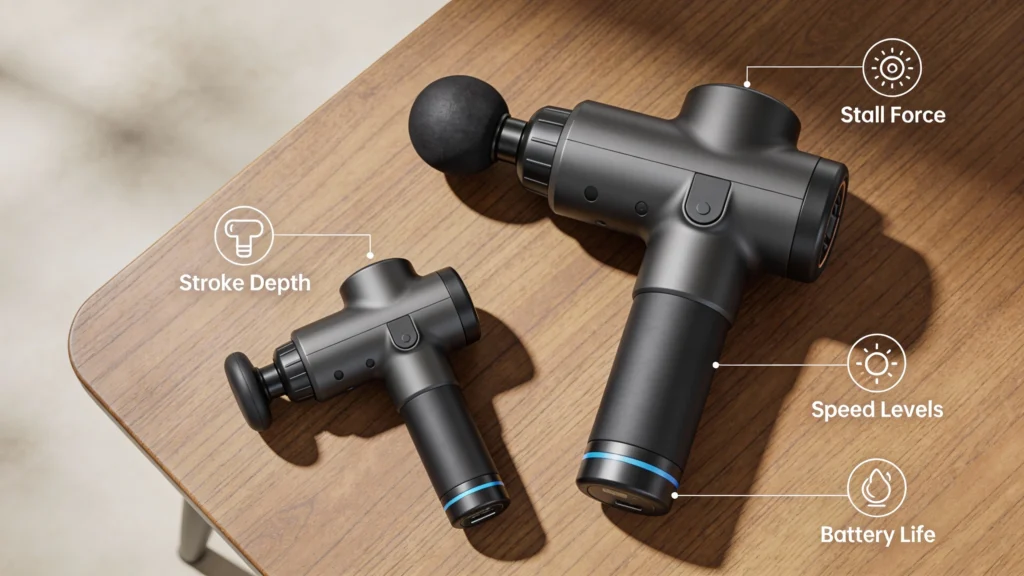
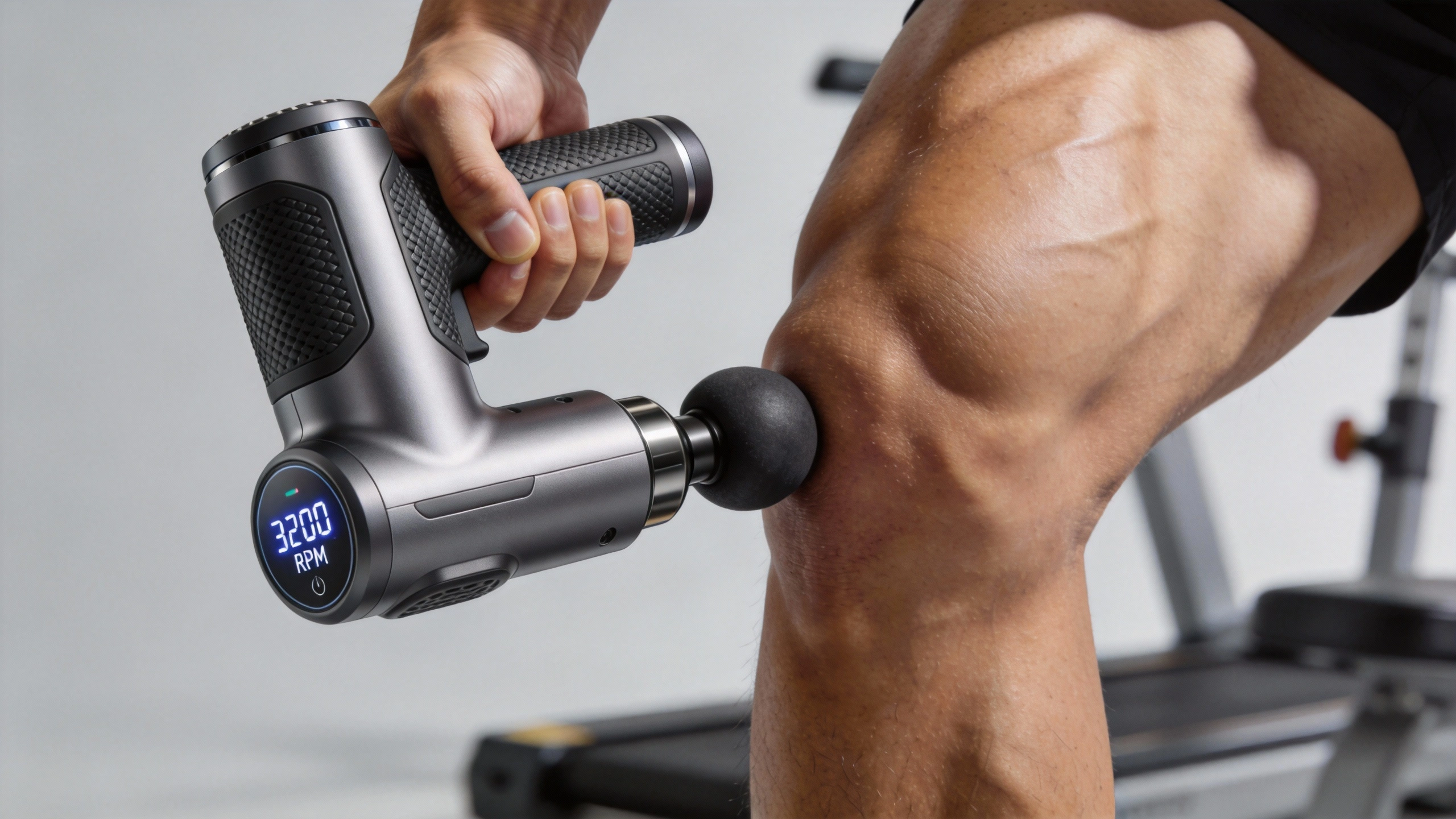
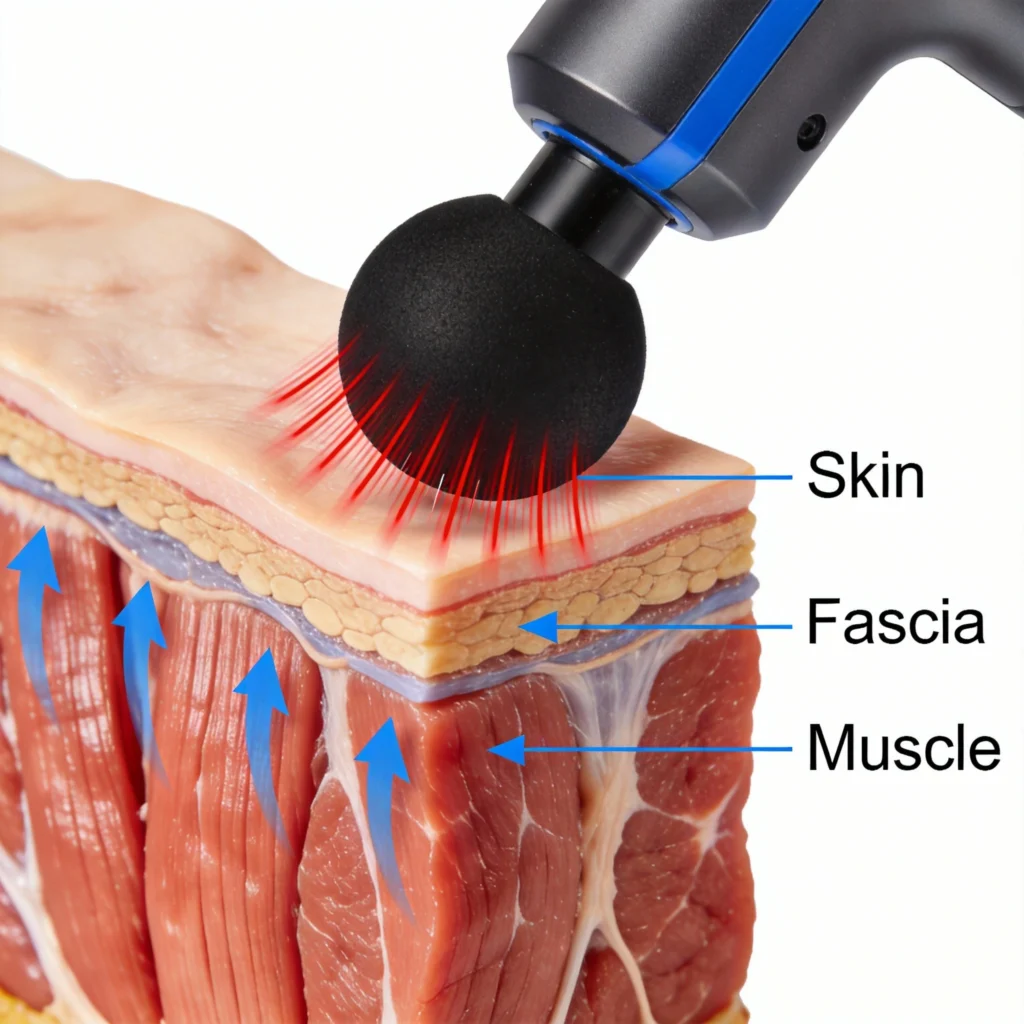
A percussion massager works by driving rapid, repetitive pulses into muscle tissue, reaching deeper layers than simple vibration. Visualizing how the head moves through skin and fascia into the muscle helps explain why stroke depth and stall force matter so much for relieving tightness, improving circulation, and supporting recovery after intense training.
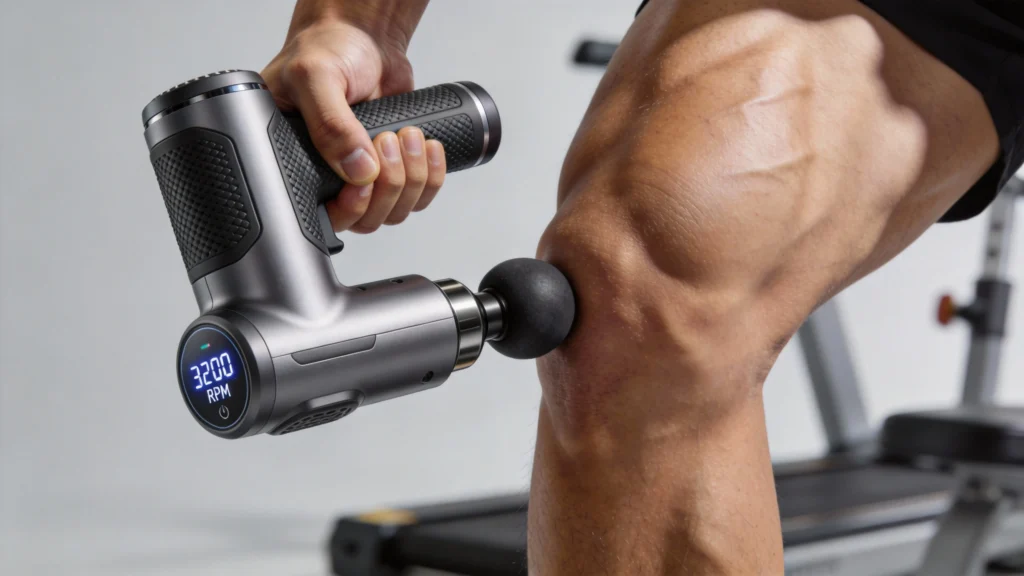
A percussion massager uses a motor-driven arm to drive a massage head in and out of the muscle at high speed. Instead of just shaking on the surface, the head travels a specific amplitude, usually 10–16 mm, delivering rapid, repeated blows that briefly deform muscle fibers and fascia, improving circulation and reducing protective tension.
Deep percussion works by creating short, controlled mechanical stress that stimulates mechanoreceptors in muscle and fascia, signaling the nervous system to reduce tone. This can increase short-term range of motion by 10–20% and decrease perceived soreness scores within minutes, especially when combined with active movement afterward.
Percussion vs. Vibration and Rolling
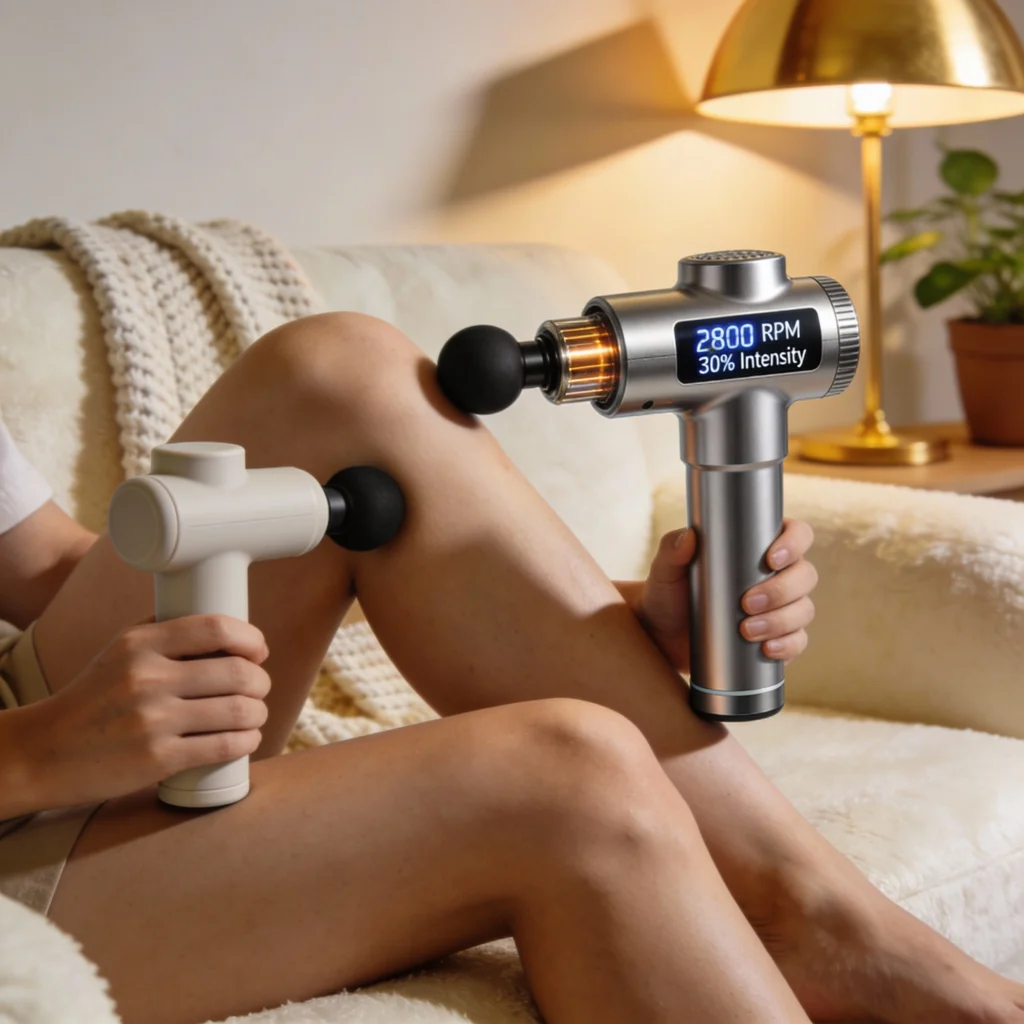
Vibration plates and low-amplitude guns mainly oscillate side to side, often under 5 mm of movement. They feel buzzy but rarely reach deeper trigger points or thick glutes. Foam rollers compress tissue over a broad area but depend heavily on body weight and technique. True percussion combines vertical depth and speed, typically 1,600–3,200 percussions per minute, giving focused intensity with less effort.
Who Benefits Most from Percussion Therapy?
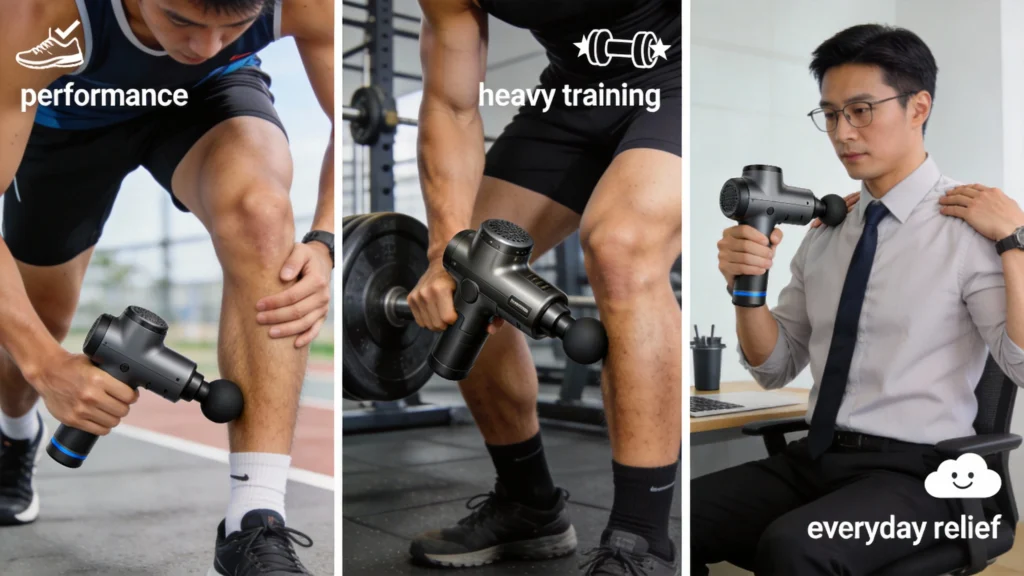
Athletes doing heavy lifting or running 30–60 miles weekly often prefer deeper percussion because quads and calves tolerate more force. Desk workers with chronic neck tightness usually need lower speeds and softer heads to avoid guarding. Seniors or people with fibromyalgia may benefit from gentler, adjustable devices, using shorter sessions to prevent overstimulation and post-treatment soreness.