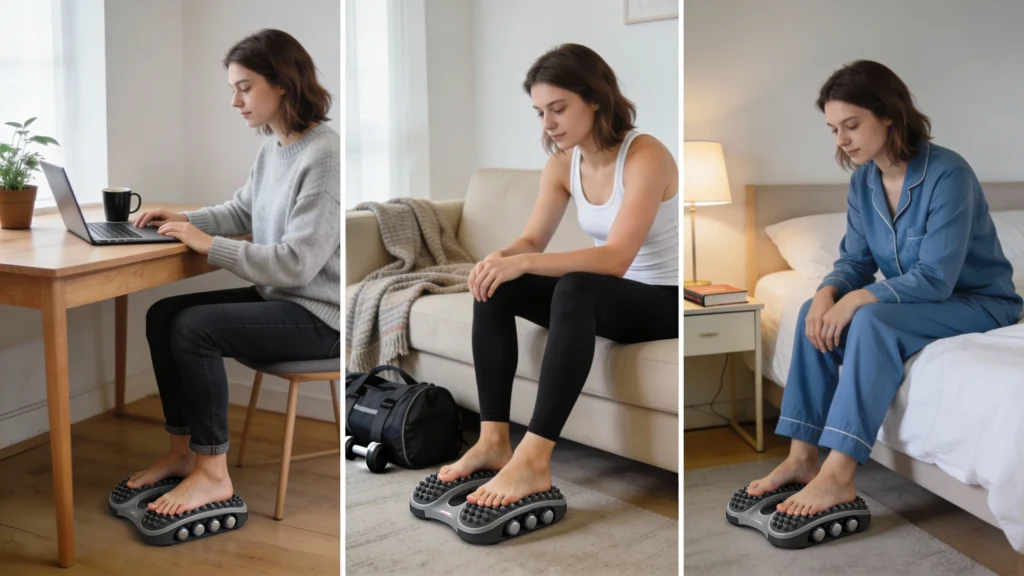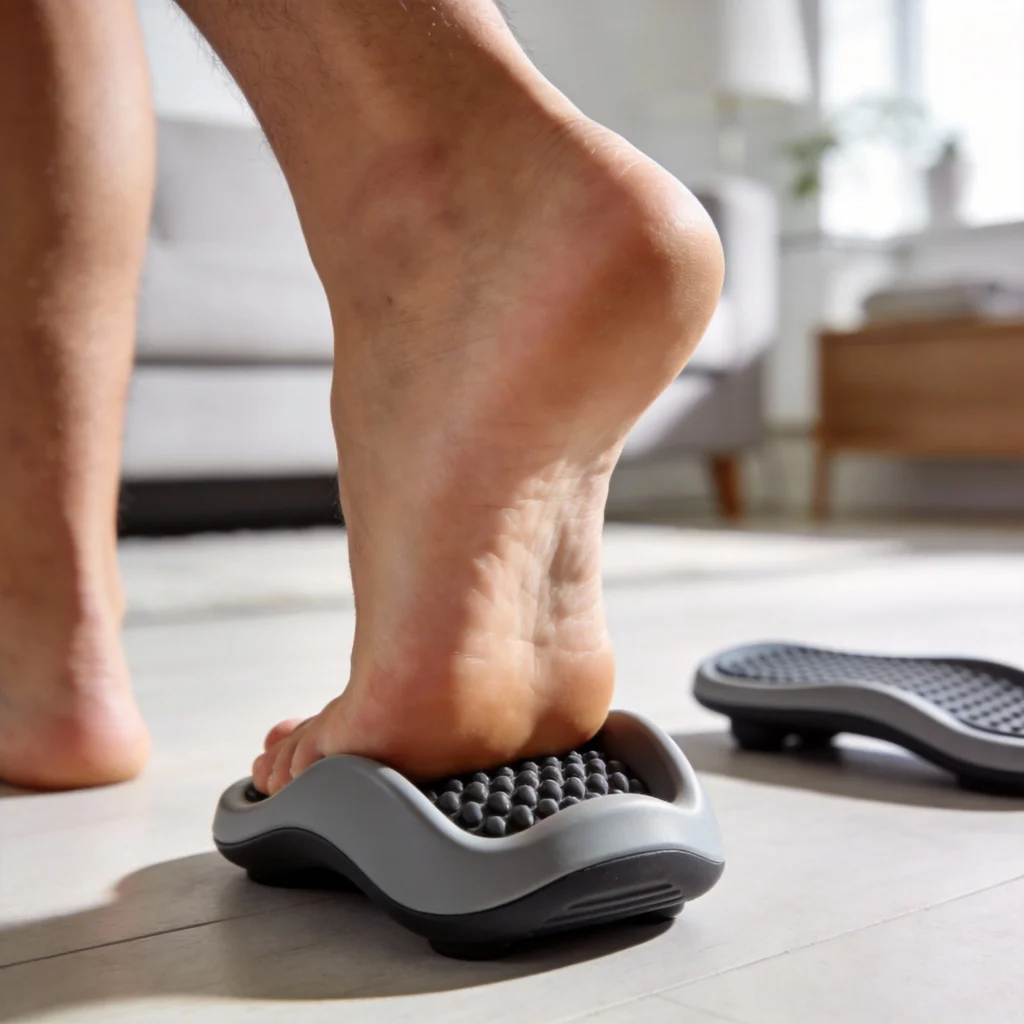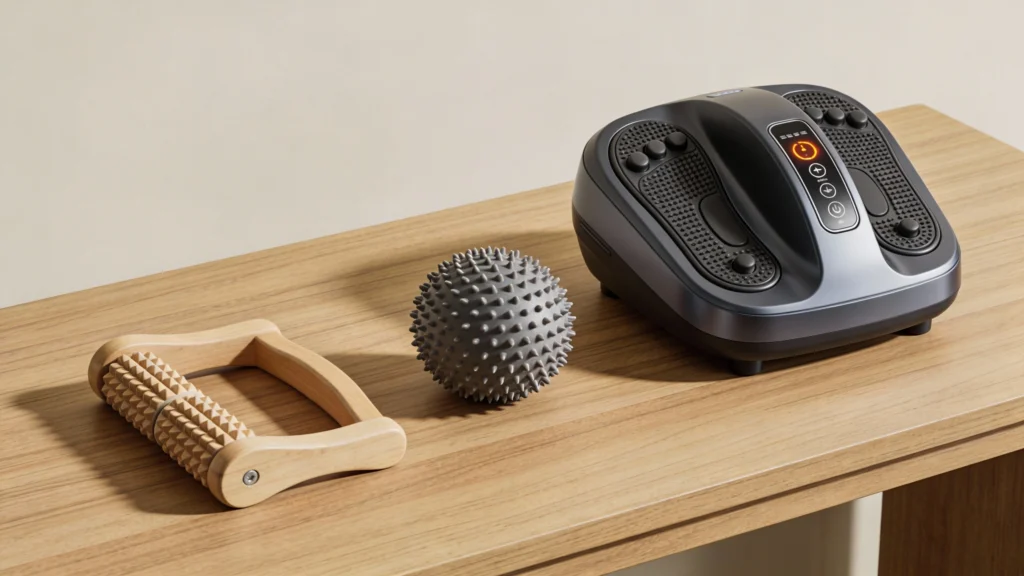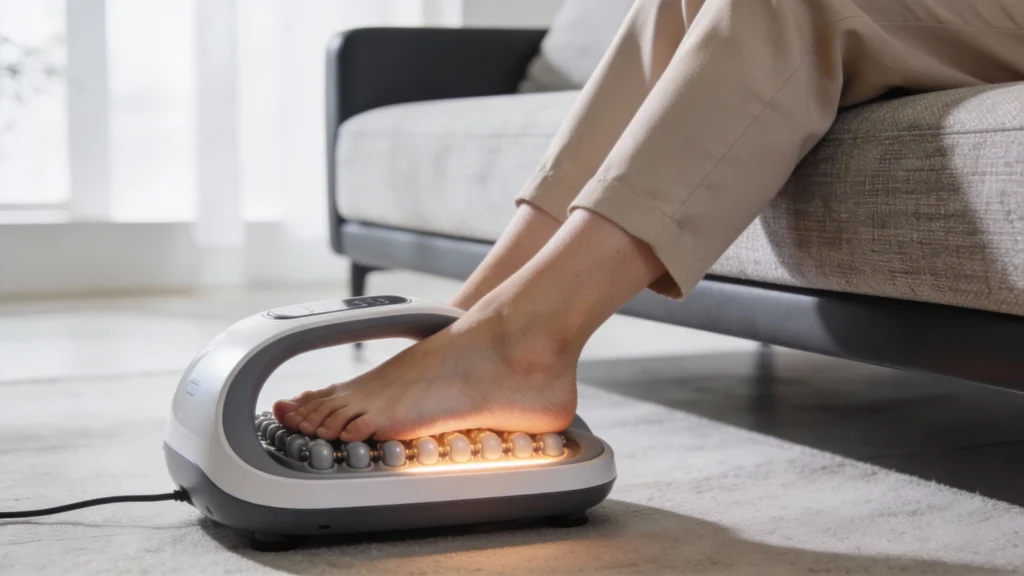
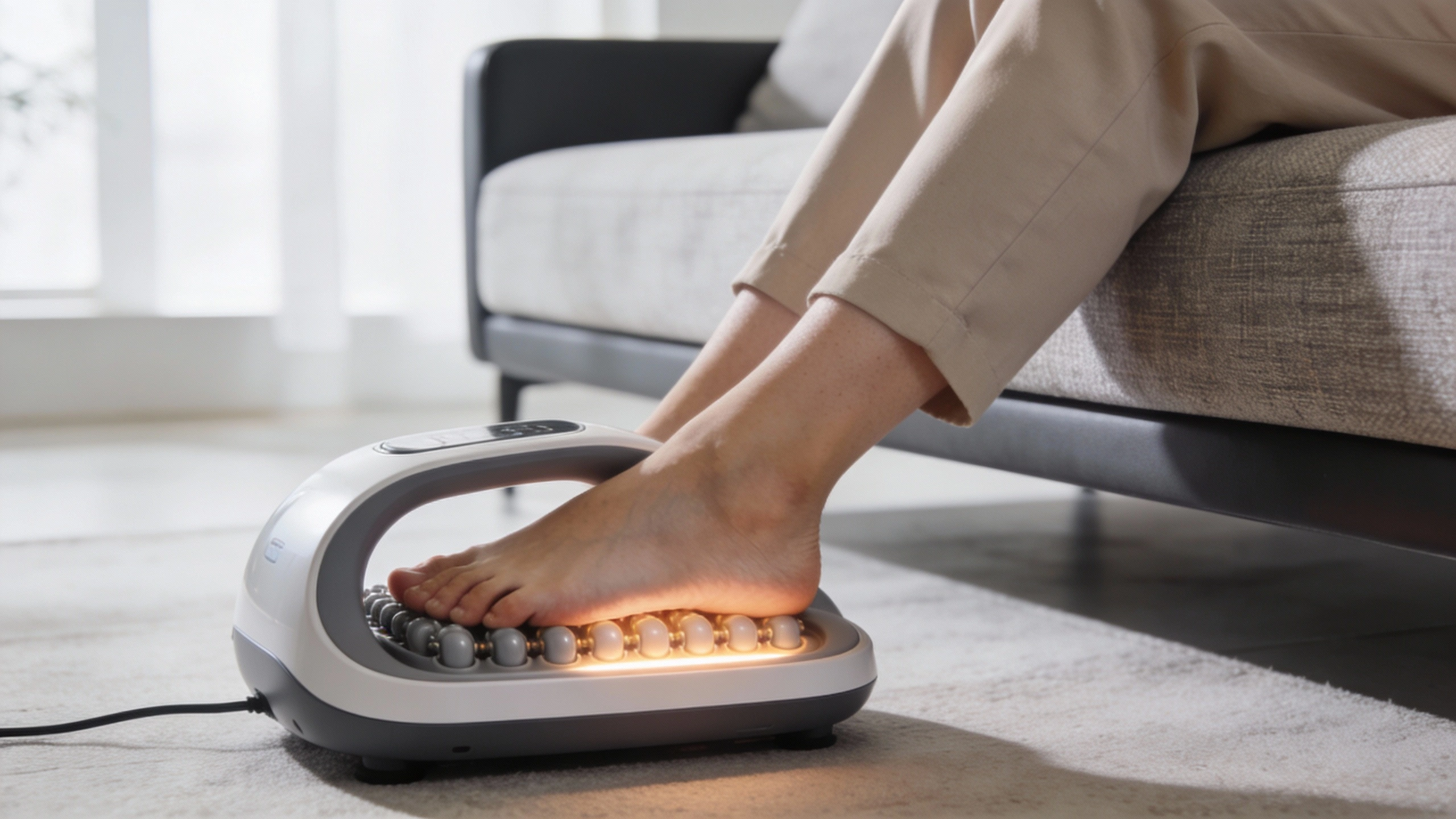
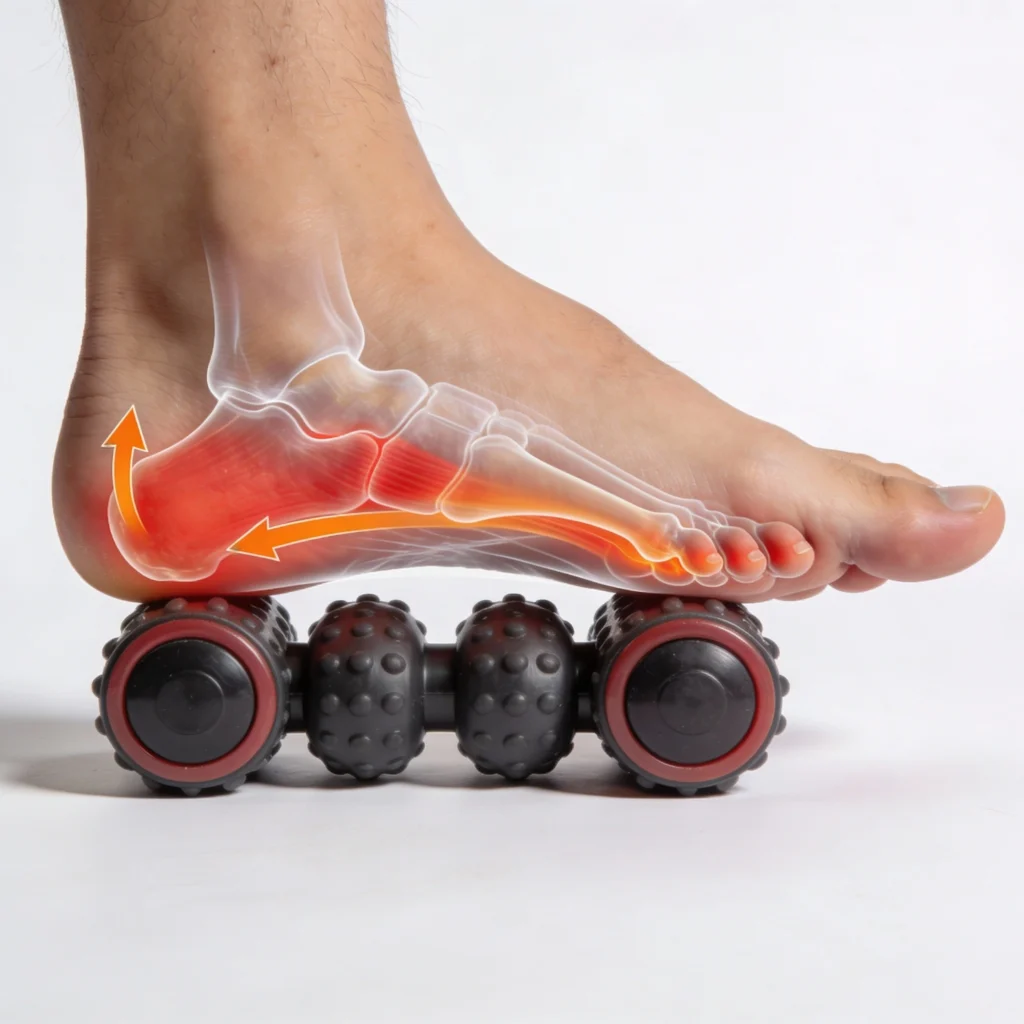
Targeted heel and arch massage focuses directly on the plantar fascia, the thick band of tissue running from the heel to the toes. When a massager concentrates pressure along this line, it can help loosen tight fibers, reduce morning stiffness, and gradually decrease the sharp, localized pain common with plantar fasciitis.
Plantar fasciitis involves microscopic tears and inflammation in the band of tissue running from your heel bone to your toes. When this fascia tightens overnight, those first steps stretch irritated fibers, creating the classic stabbing heel pain. A well-designed foot massager uses pressure, rolling, or vibration to gently mobilize this tissue, encouraging circulation and reducing morning stiffness.
Understanding Plantar Fascia Mechanics
The plantar fascia acts like a tension cable, supporting your arch and absorbing impact with every step. When overloaded by standing eight to ten hours daily, rapid mileage increases, or unsupportive shoes, it stiffens and develops trigger points near the heel. Massagers mimic hands-on myofascial release, slowly deforming the tissue over 30–90 seconds per spot, which helps reset tension and reduce painful pulling on the heel bone.
Why Targeted Pressure Helps Heel Pain
Devices marketed as the best foot massager for plantar fasciitis typically concentrate force along the medial arch and just in front of the heel. By focusing on a two to three centimeter band where most tenderness sits, they stimulate mechanoreceptors that compete with pain signals, a mechanism called gate control. Over time, regular five to ten minute sessions can reduce sensitivity, making walking, squatting, and climbing stairs more tolerable.