Best Back Massager: Complete Guide to Relieving Everyday Back Pain

Hours at a desk, long commutes, and scrolling in bed all add up: nearly 80% of adults experience back pain at some point. A well-chosen back massager can turn dead time on a chair or sofa into real relief, but only if you match the device to your body and routine.

Finding the best back massager starts with clarifying your main problem: tight shoulders from laptop work, nagging lower back stiffness, or widespread muscle fatigue. Different devices target muscles, fascia, or nerves in specific ways, using kneading, vibration, or percussion. When you understand these mechanisms, you can avoid gimmicks and invest in a tool that consistently reduces pain instead of collecting dust.

Price alone rarely predicts effectiveness. A $40 vibrating cushion can outperform a $200 chair pad if its shape fits your spine and its motors reach the right trigger points. Thinking in terms of intensity range, adjustability, and ergonomics helps you compare models objectively, rather than chasing brand hype or random online reviews that may not match your body type.

The goal of this guide is to help you choose the best massager for back pain that fits your lifestyle, whether you need something for an office chair, a living room recliner, or quick standing breaks. You’ll learn how each type works, what features matter, how to use them safely, and when self-massage should give way to professional evaluation.

1
best back massager

What Makes the Best Back Massager for Modern Lifestyles?

What Makes the Best Back Massager for Modern Lifestyles?

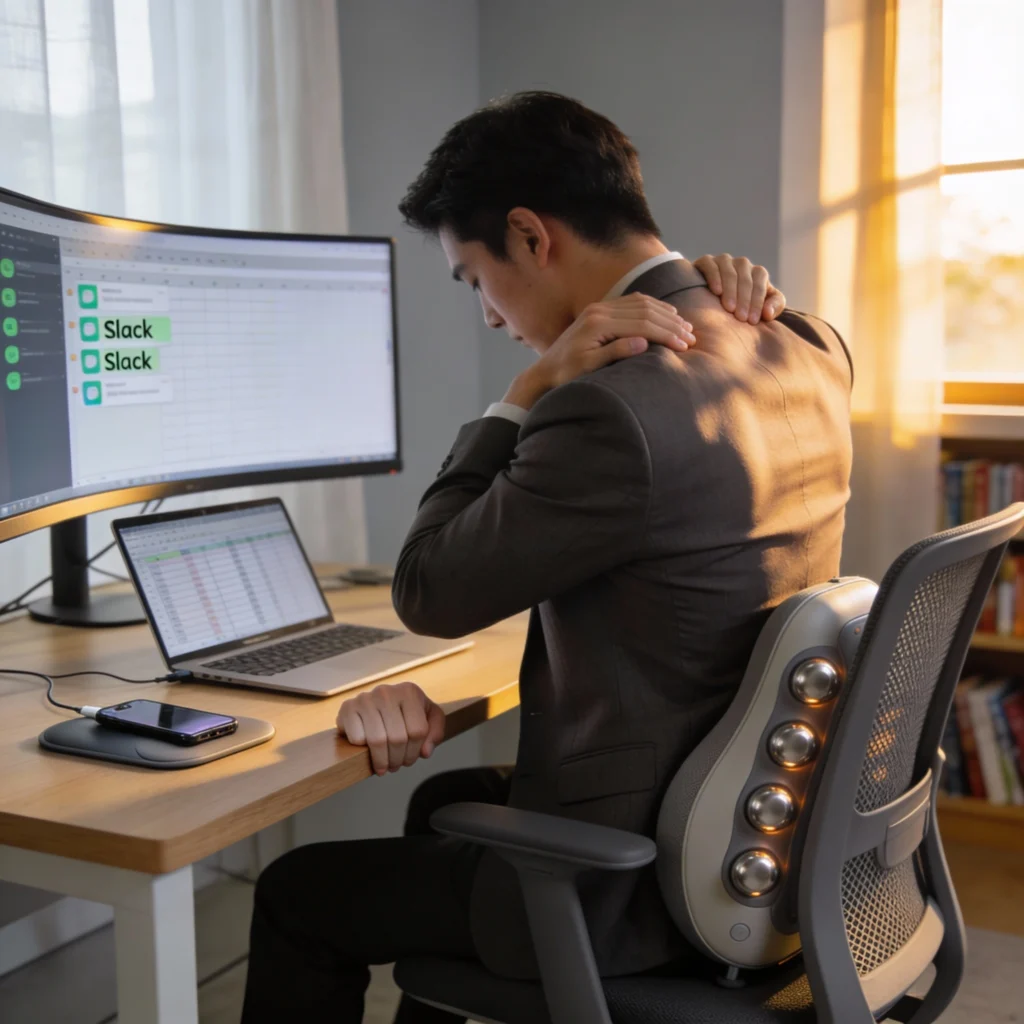
Modern work habits are tough on the spine. Hours hunched over a laptop, texting, or driving gradually overload the muscles that stabilize your back. The right massager helps offset this by loosening tight spots before they become chronic pain, fitting naturally into quick breaks between meetings or at the end of the workday.

For modern routines built around screens and sitting, the best back massager delivers targeted relief in short, repeatable sessions without disrupting work or sleep. That means quick setup, intuitive controls, and enough power to reach deep muscles through clothing. Devices that combine 10–20 minute auto programs with adjustable intensity fit better into real schedules than complex, rarely used settings.

Balancing Pain Relief, Convenience, and Consistency

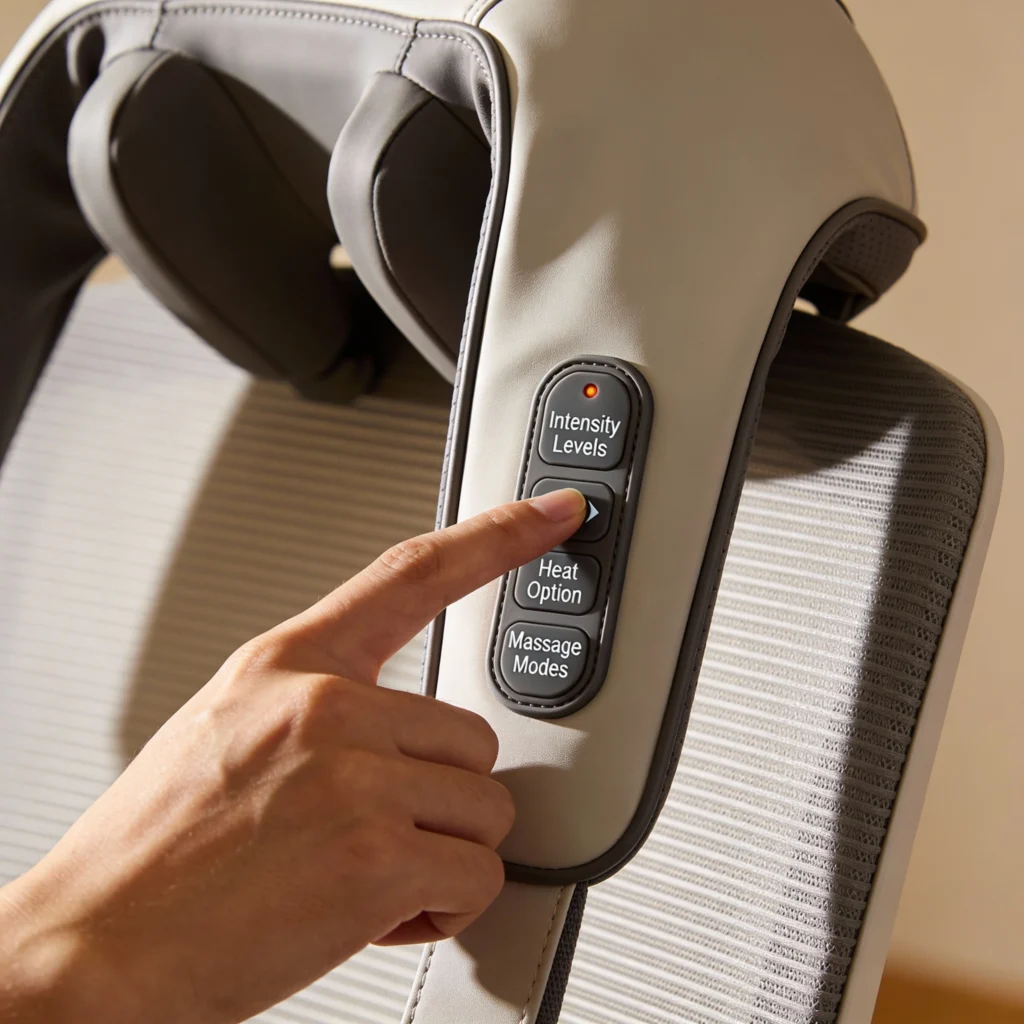
Effective pain relief depends less on a single intense session and more on consistent, moderate use several times per week. A back massager that lives on your office chair or sofa armrest is more likely to be used than one stored in a closet. Look for plug-and-play units with simple buttons, clear labels, and memory functions that recall your preferred mode and intensity each time you switch them on.

Safety, Auto Shut-Off, and Body Awareness

Safety features matter because overuse can irritate nerves or worsen inflammation, especially in the lower back. Timers that shut off after 15 or 20 minutes prevent accidental marathon sessions while you answer emails. Overheat protection sensors cut power if motors run too hot. The best massager for back pain also allows you to quickly reduce pressure by shifting your weight, helping you respond immediately to sharp or radiating discomfort.
2
back massager

Types of Back Massager Devices and Which Is Best for You

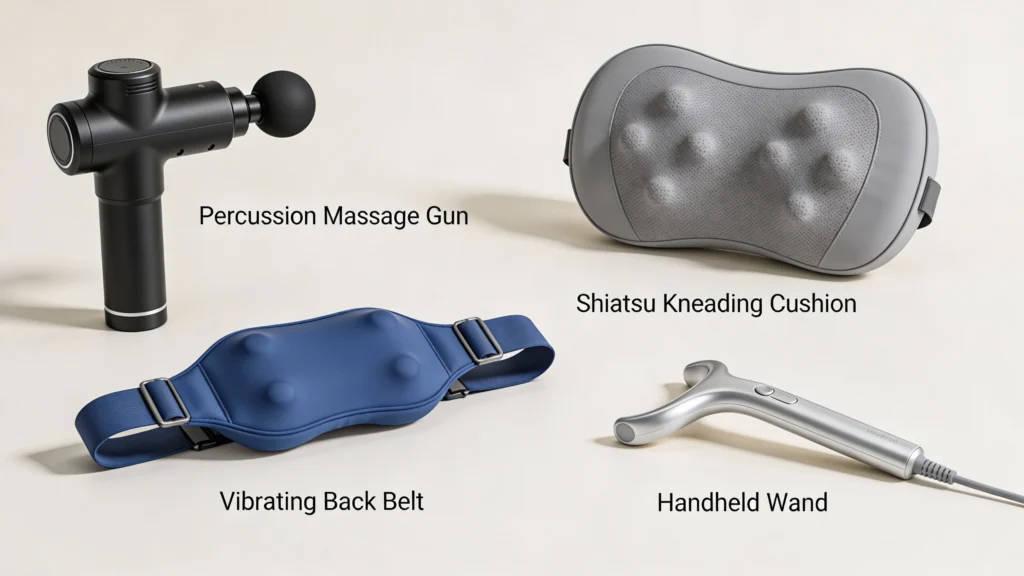
Back massagers fall into a few main categories: handheld percussion guns, chair cushions and pads, wearable belts, and simple tools like hooks or balls. Each type interacts with muscles differently. For example, percussion guns deliver rapid, deep pulses, while cushion-style Shiatsu units mimic kneading thumbs. Matching the mechanism to your pain pattern determines whether you feel relaxed or more irritated afterward.

Types of Back Massager Devices and Which Is Best for You

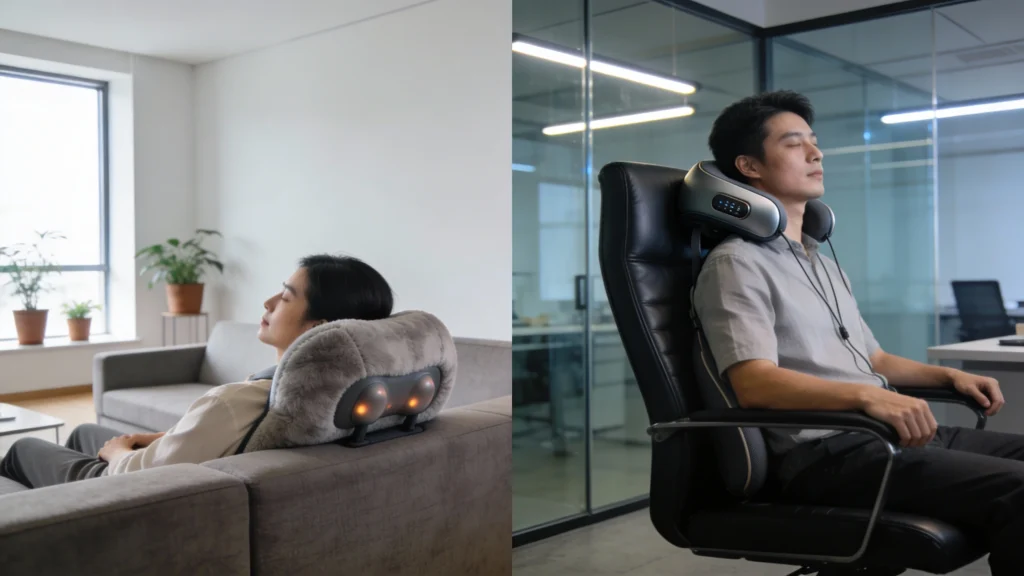
Where you’ll use your back massager matters. Bulky cushions and chair pads are ideal for home, where you can unwind on the sofa. For the office, a compact, quieter device that fits easily in a bag is more practical, letting you ease stiffness discreetly between tasks without disrupting your workspace.

Comparing Common Back Massager Formats

Chair pads with rotating nodes suit people who sit for several hours and want hands-free relief across the entire back. Handheld devices excel at targeting knots near the shoulder blades that chair pads often miss. Wearable belts wrap around the lumbar area, combining vibration and heat to reduce stiffness from prolonged driving. Simpler tools like massage balls cost under $20 yet can reach deep glute muscles linked to lower back pain.

  • Chair pads with Shiatsu nodes cover 16–24 inches of spine length, ideal for desk workers needing broad, passive relief.
  • Handheld percussion guns reach 10–14 millimeters depth, better for athletes or very dense upper-back muscles.
  • Vibrating lumbar belts focus on L3–L5 region, helpful for drivers or office workers with localized lower back tension.
  • Massage balls and hooks allow precise pressure on trigger points between shoulder blades and along the spine.
3

Key Features to Look for in the Best Back Massager

Beyond basic form factor, specific features determine whether a back massager matches your pain tolerance and daily habits. Intensity range, number of modes, heat capability, power source, and ergonomics all influence comfort and long-term use. Devices with at least three intensity levels and multiple patterns accommodate both sensitive users and those needing deep, vigorous work on stubborn knots.

Key Features to Look for in the Best Back Massager

Key features like adjustable intensity, heat, and massage modes make the difference between a gadget you love and one you abandon. Being able to start gently, then increase pressure as your muscles relax, helps prevent soreness while still delivering real relief. Intuitive controls also encourage you to use the device consistently.

Core Specifications That Actually Affect Relief

Intensity should adjust from gentle (around 1,500 pulses per minute on percussion models or low-amplitude vibration) to robust (up to 3,200 pulses per minute). For chair pads, look at the number of massage nodes and their travel distance; a vertical track of 14–18 inches better fits taller users. Heat elements typically reach 104–113°F, warm enough to increase blood flow without risking burns when used over clothing.

Comparing Features Across Different Back Massagers

Because spec sheets can feel abstract, comparing real numbers side by side helps clarify trade-offs between price, power, and convenience. Devices with built-in rechargeable batteries cost more upfront but avoid cord clutter, while plug-in chair pads deliver continuous power for long workdays. The table below summarizes typical ranges you’ll see when shopping for the best massager for back pain.

TypePrice Range (USD)Intensity / StrokeHeat Range (°F)Power Source
Shiatsu chair pad60–180Rotating nodes, 2–3 speeds104–113AC wall plug
Percussion gun80–3001,500–3,200 ppm, 8–14 mmNoneRechargeable battery
Vibrating lumbar belt40–1203–5 vibration modes104–109USB or battery
Massage cushion40–1004–8 motors, 3 intensitiesOptional 104–113Car adapter + AC
Massage ball / hook10–40Manual pressure onlyNoneHuman-powered

Choosing among these features means weighing your primary setting and pain type. If you mainly hurt after commuting, a 12-volt car-compatible cushion with lumbar focus makes sense. For home workouts, a battery percussion gun with 3–5 heads targets calves, glutes, and upper back. People sensitive to heat or with neuropathy may prefer non-heated models and rely on separate warm packs when needed.

4

Choosing the Best Back Massager for Home vs Office Use

Back pain rarely cares whether you’re at home or under fluorescent office lights, but your environment changes which device works best. Home setups allow bulkier chair pads, recliner-compatible cushions, and louder percussion guns. Office use demands quieter motors, discreet profiles, and easy storage so you can treat stiffness without distracting coworkers or violating workplace norms.

Choosing the Best Back Massager for Home vs Office Use

Not all back massagers work the same way. Percussion guns target deep knots, kneading cushions mimic thumb pressure along the spine, vibrating belts offer gentle, broad stimulation, and handheld wands reach tricky angles. Understanding how each style interacts with muscles and fascia helps you choose a device that matches your specific discomfort.

Optimizing for Desk and Office Chair Use

For office chairs, slim vibration cushions with straps and low-noise motors under 50 decibels blend into your workday. USB-powered units can plug into a laptop dock, avoiding extra wall adapters under already crowded desks. Look for auto shut-off around 15 minutes so short massage sessions align with email breaks, reducing the risk of sitting in one posture for hours while the device runs continuously.

Short, frequent 10–15 minute sessions during the workday often reduce stiffness more than a single 40-minute massage at night, because they interrupt the cycle of static sitting that compresses discs and tightens postural muscles.

Designing a Relaxation-Focused Home Setup

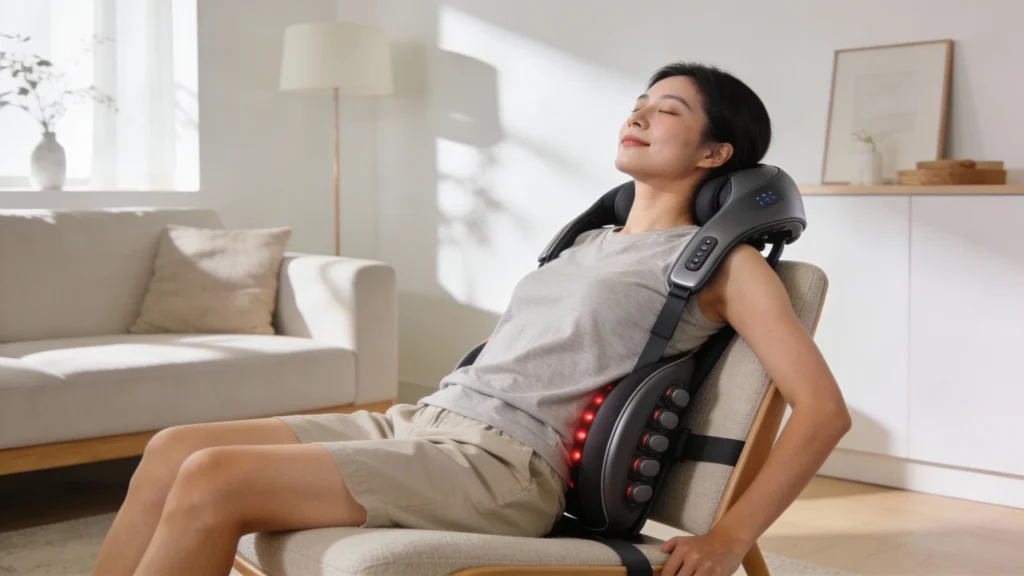
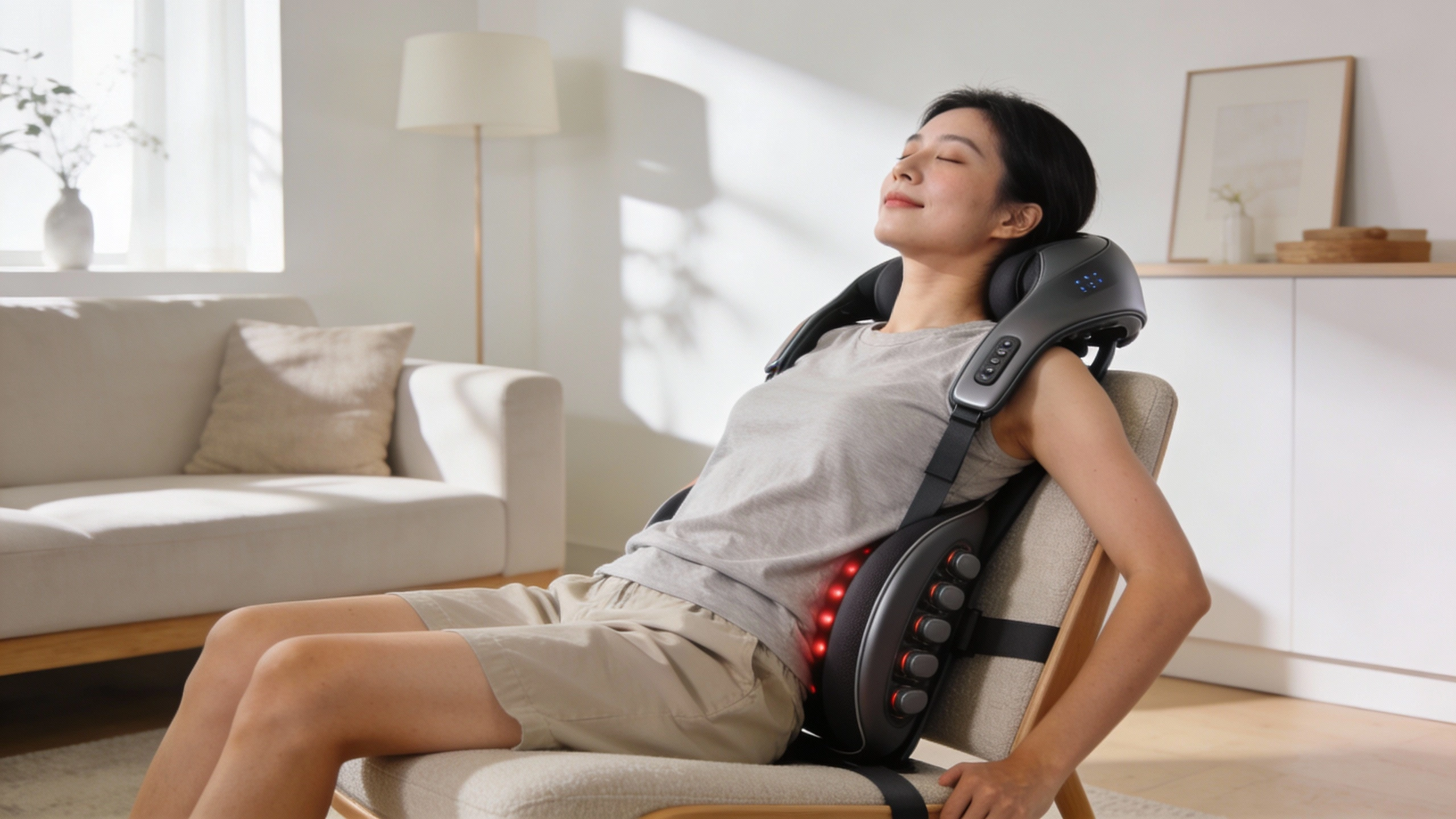
At home, you can prioritize depth and coverage over subtlety. Full-length Shiatsu chair pads that strap to recliners or dining chairs can work from the base of the skull to the sacrum. Pairing heat with dim lights and 20-minute timers encourages parasympathetic activation, lowering heart rate and muscle tone. A dedicated storage basket nearby keeps cords untangled, making it easy to use daily.

5

How to Use a Back Massager Safely for Maximum Benefit

Even the best back massager can aggravate pain if used too long, too hard, or on the wrong areas. Safe use revolves around three variables: session length, pressure, and frequency. Most adults tolerate 10–20 minute sessions on a single region, one to three times daily, as long as discomfort remains in the “hurts good” range rather than sharp, stabbing, or electrically radiating.

How to Use a Back Massager Safely for Maximum Benefit

Session Length, Positioning, and Pressure Control

Start at the lowest intensity for at least three minutes, letting tissues warm and blood flow increase before ramping up. When using chair pads, shift your body slightly every few minutes so rotating nodes don’t press the same vertebra repeatedly. For handheld devices, keep the head at a shallow angle and glide slowly along muscle fibers, avoiding direct pressure on the spine or bony prominences like shoulder blades.

When to Avoid or Limit Back Massager Use

Certain conditions require extra caution. Avoid using strong vibration or percussion over recent surgical sites, fresh injuries, or suspected fractures. People with uncontrolled diabetes, severe osteoporosis, or implanted devices such as spinal cord stimulators should consult a clinician first. Stop immediately if you feel numbness, tingling spreading down a leg or arm, or pain that lingers more than 24 hours after a typical session.

  • Limit initial sessions to 10 minutes per region, increasing by 2–3 minutes only if soreness stays mild.
  • Keep at least one layer of clothing between skin and device to reduce friction and minor burn risk.
  • Avoid using heated modes before bed if heat consistently triggers headaches, flushing, or restless sleep.
  • Skip massage directly over bruises, open wounds, or areas with unexplained swelling or visible deformity.
6

Best Back Massager Maintenance and Care Tips

Best Back Massager Maintenance and Care Tips

Regular maintenance keeps your back massager safe, hygienic, and effective over years rather than months. Skin oils, sweat, and dust gradually clog vents and degrade upholstery, especially on chair pads used daily. A simple routine of wiping, checking cords, and storing devices correctly reduces overheating risk and preserves motor performance, so intensity stays consistent instead of fading over time.

Cleaning, Disinfecting, and Protecting Surfaces

For cushions and pads, unplug the device and wipe vinyl or PU leather surfaces with a slightly damp cloth and mild soap weekly. Avoid soaking seams or letting moisture drip into zippers or control panels. On fabric covers, use a vacuum with a brush attachment, then spot-clean stains with diluted detergent. Disinfect hand-contact areas, like handles and buttons, using 70% isopropyl alcohol on a soft cloth.

Storage Habits That Extend Device Lifespan

Cord strain is a common failure point, especially where cables meet control boxes or plugs. When storing, coil cords loosely in 6–8 inch loops rather than tight wraps, and avoid hanging devices by their cables. Keep massagers in a dry space between 50–77°F, away from direct sunlight that can crack plastics. Recharge battery-powered units every one to two months to prevent deep discharge damage.

Spending five minutes once a week on cleaning and careful cord management often adds one to two years of life to frequently used back massagers, saving far more than the time invested in basic upkeep.

7

When the Best Back Massager Isn’t Enough: When to See a Professional

Back massagers excel at relieving muscular tension and mild mechanical pain, but they cannot fix structural problems like significant disc herniations, spinal instability, or serious nerve compression. Recognizing when self-care has reached its limit prevents months of worsening symptoms. If pain persists beyond six weeks despite regular, sensible use, it’s time to involve a medical or rehabilitation professional.

When the Best Back Massager Isn’t Enough: When to See a Professional

Red-Flag Symptoms That Need Medical Evaluation

Certain warning signs mean you should stop using your back massager and seek urgent care rather than another session. These include new bowel or bladder incontinence, progressive leg weakness, saddle numbness around the inner thighs, unexplained fever with back pain, or a history of cancer plus new, unrelenting night pain. These patterns can signal serious conditions like cauda equina syndrome or spinal infection.

Combining Back Massager Use with Professional Care

When cleared by a physician or physical therapist, a back massager becomes one tool in a broader plan that may include targeted exercises, posture training, and ergonomic changes. For example, therapists often recommend 10 minutes of gentle heat and vibration before stretching hamstrings or hip flexors. This sequencing improves flexibility gains by warming tissues, while supervised strengthening addresses root causes rather than just symptoms.

Think of your back massager as a helpful assistant, not the whole solution: it can reduce pain enough to let you move, but long-term improvement usually comes from consistent exercise, better ergonomics, and professional guidance when symptoms don’t follow a simple, improving pattern.

Face, Neck, Head, Body, Back & Foot Massager
For a Relaxing & Relieving Lifestyle
14-day money back guarantee
Lowest Prices: 365 Days Discount
Safe & Secure online payment
Contact Us

Massagers Mart © 2025. All Rights Reserved

Massagers Mart
Logo
Compare items
  • Total (0)
Compare
0
Shopping cart