Back Massager Stick and Massage Gun: Are Stomach Sessions Safe?

Many people wonder if they can use a massage gun on the stomach or a back massager stick across the torso to ease tightness or bloating. The abdomen feels softer than the back or legs, so it is natural to question whether vibration or deep pressure could harm internal organs or sensitive tissues.

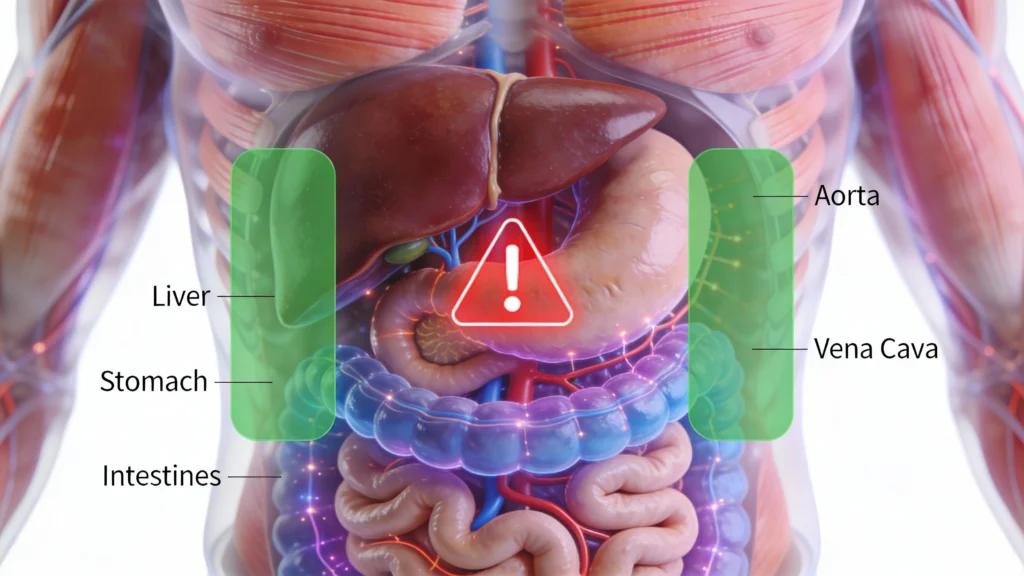
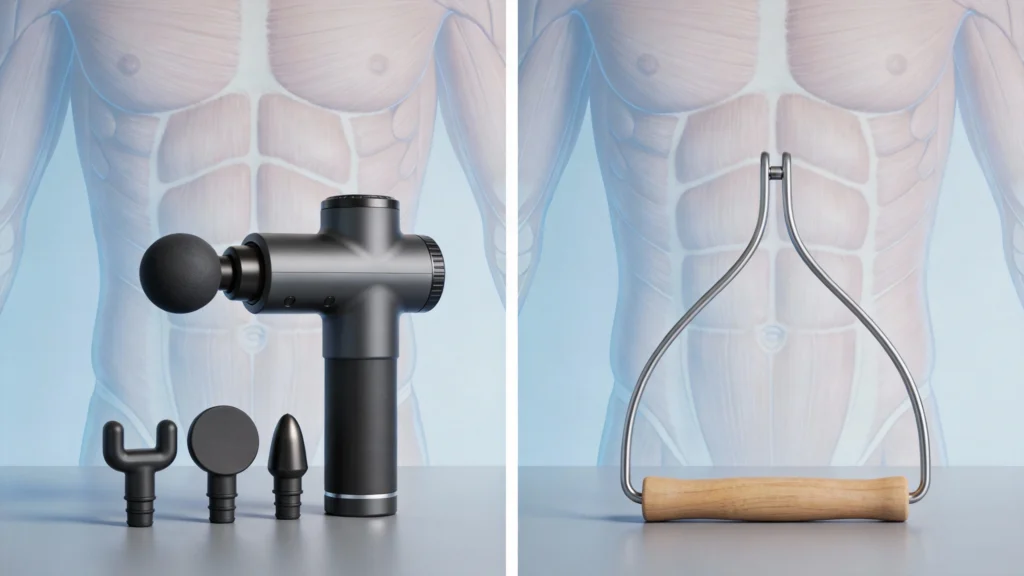
Using a massage gun or back massager stick around the core can help with mild muscle tightness, especially near the ribs, obliques, and lower back. However, the abdomen also protects delicate structures like the liver, intestines, and major blood vessels, which do not tolerate heavy percussion. Understanding where muscles end and organs begin is crucial before applying any device.

Manufacturers usually design massage guns for large muscle groups such as quadriceps, glutes, and upper back, not for direct use over the stomach. Some physical therapists cautiously use gentle vibration around the abdomen for relaxation or breathing work, but they control intensity carefully. Home users rarely have that training, so learning conservative techniques and clear red flags reduces the risk of bruising or internal irritation.

Before experimenting with any device on the torso, you should consider medical conditions, medications, and recent procedures. Factors like blood thinners, hernias, pregnancy, or unexplained abdominal pain can turn a seemingly harmless session into a genuine hazard. A safer approach is to treat the core indirectly by working on surrounding muscles, stretching the hips, and supporting better posture rather than hammering the soft belly directly.

1
massage gun on stomach

Benefits of Massage Gun on Stomach: What the Science Suggests

Benefits of Massage Gun on Stomach: What the Science Suggests

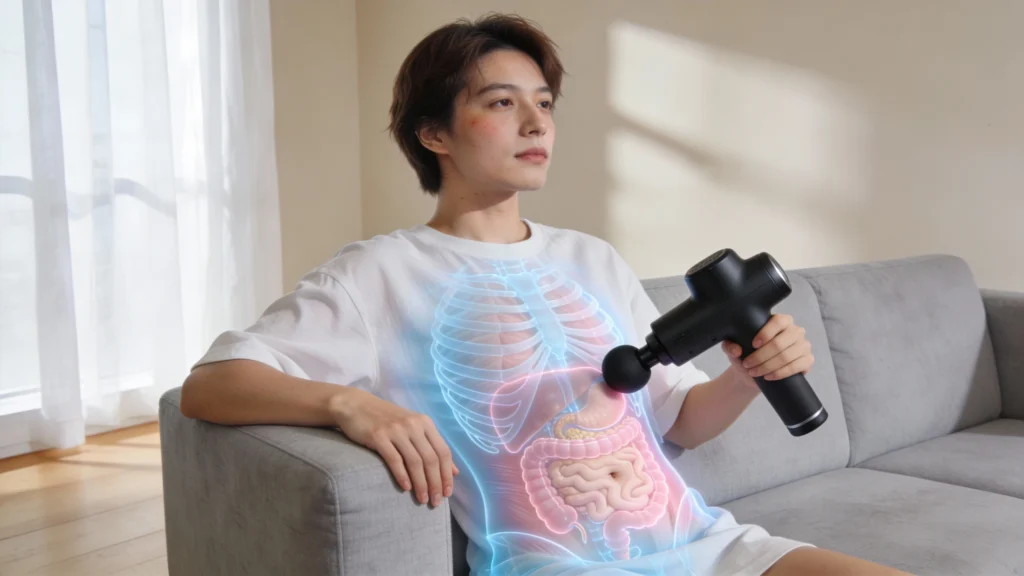
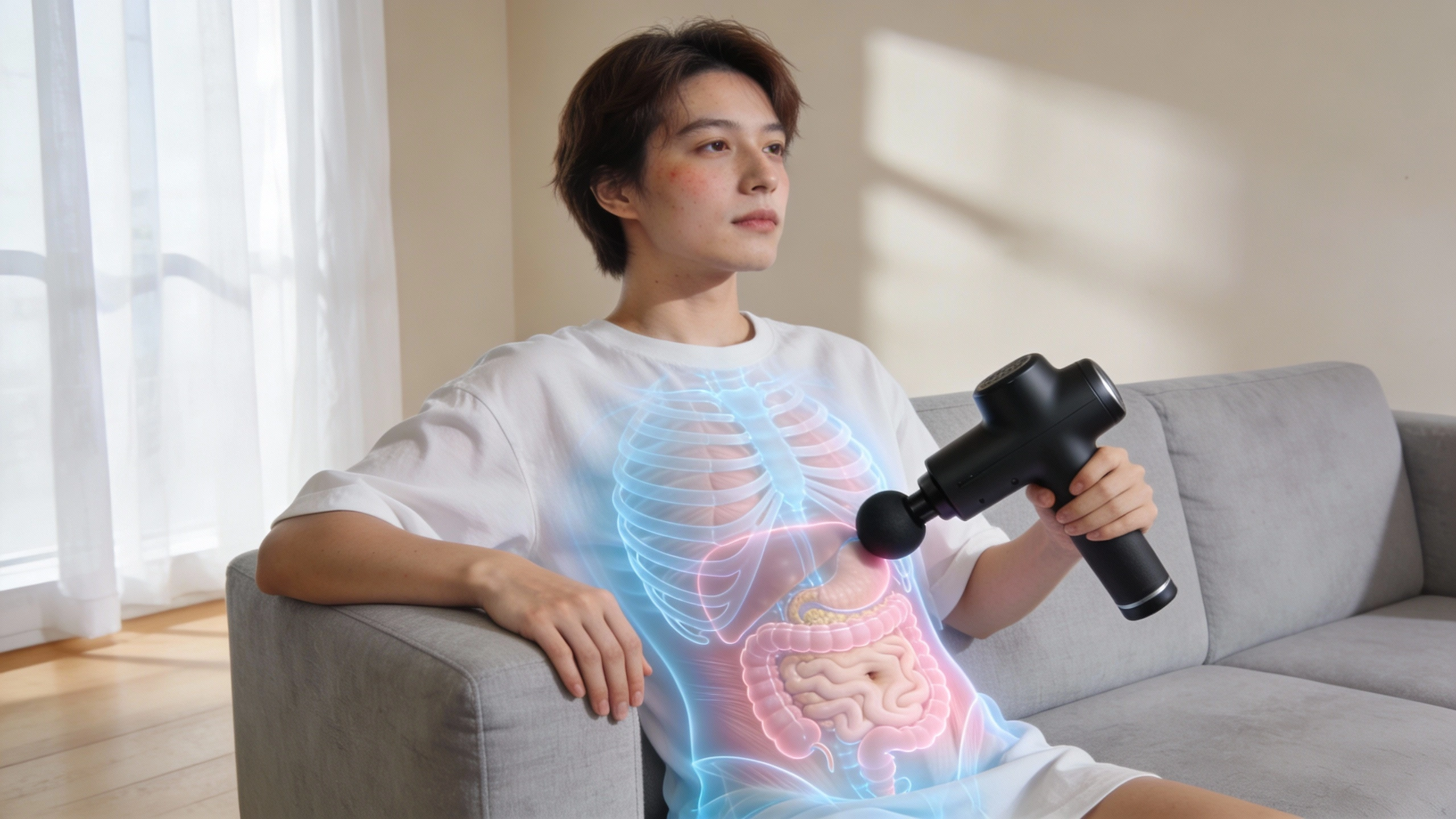
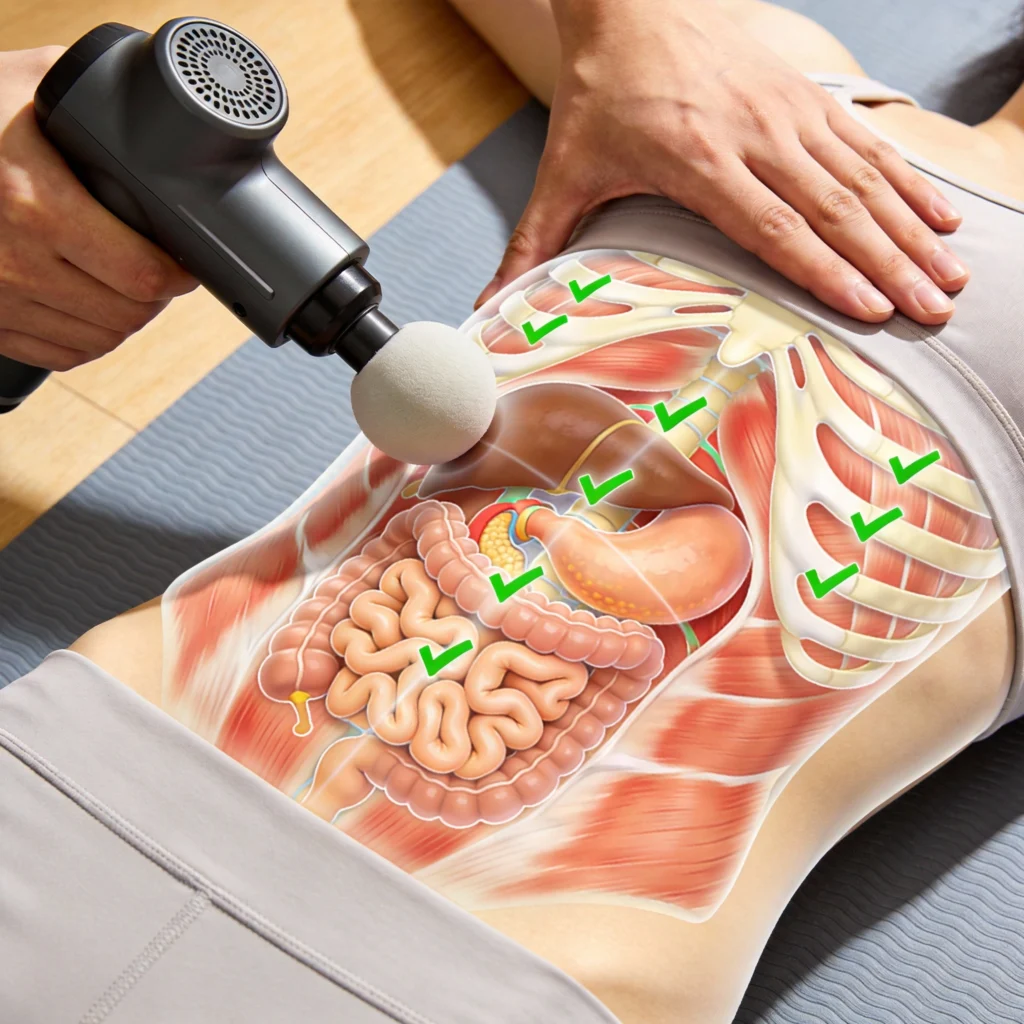
Gentle use of a massage gun on the upper abdomen and along the lower ribs may help ease mild muscle tightness, especially in the rectus abdominis and obliques. Keeping intensity low and staying in clearly muscular areas, rather than pressing deeply into the soft belly, reduces the chance of irritating underlying organs or blood vessels.

Research on massage guns specifically used on the stomach is limited, but we can extrapolate from studies on vibration therapy and manual abdominal massage. Low-frequency vibration, generally between 20 and 40 Hz, may stimulate superficial blood flow, reduce perceived muscle soreness, and help people relax their breathing pattern, especially after intense core training sessions.

Potential digestive and relaxation benefits

Gentle abdominal massage has been studied for constipation relief, especially in older adults and post-surgical patients. Trials using light circular strokes for 10 to 15 minutes showed modest improvements in bowel frequency and discomfort scores. A massage gun set to its lowest setting might mimic some vibration effects, but it lacks the nuanced, directional control of trained hands working along the colon’s natural path.

Muscle tension and breathing mechanics

Many athletes develop tight obliques and rectus abdominis from heavy lifting, planks, and rotational sports. Mild vibration near the rib margins can help desensitize overworked trigger points and encourage deeper diaphragmatic breathing. When the diaphragm can descend more freely, lung capacity measurements sometimes improve by 5 to 10 percent, which indirectly benefits endurance and recovery between high-intensity intervals.
2

When Benefits of Massage Gun on Stomach May Be Outweighed by Risks

Even though some people report relief using a massage gun on the stomach, the potential downsides can be significant. The abdomen shields organs like the spleen, pancreas, and kidneys, which are not designed to absorb repeated percussion. Excessive force, especially above 30 pounds of pressure, can bruise internal tissues without leaving obvious surface marks.

When Benefits of Massage Gun on Stomach May Be Outweighed by Risks

When comparing a massage gun and a back massager stick for core relief, the main differences are intensity and control. Massage guns deliver rapid percussion that can quickly become too strong for the abdomen, while sticks provide slower, more targeted pressure. Choosing the right tool depends on your sensitivity, health status, and ability to apply gentle, precise force.

Situations where abdominal percussion is unsafe

Several conditions make stomach sessions particularly risky. Pregnancy, especially after the first trimester, increases blood flow and uterine sensitivity; even mild percussion could trigger cramping. Recent abdominal surgery, including C-sections, hernia repairs, or laparoscopic procedures, leaves healing tissues vulnerable for at least six to twelve weeks, depending on surgeon guidance and individual recovery speed.

Medications and underlying diseases

People taking anticoagulants such as warfarin, apixaban, or high-dose aspirin have a higher risk of internal bleeding from minor trauma. Liver diseases, abdominal aneurysms, inflammatory bowel disease, and active ulcers also increase vulnerability. If you experience sharp pain, visible bruising, dizziness, or nausea during or after using a massage gun on the torso, you should stop immediately and seek medical advice.

3
back massager stick

How to Use a Back Massager Stick Safely on the Torso and Sides

How to Use a Back Massager Stick Safely on the Torso and Sides

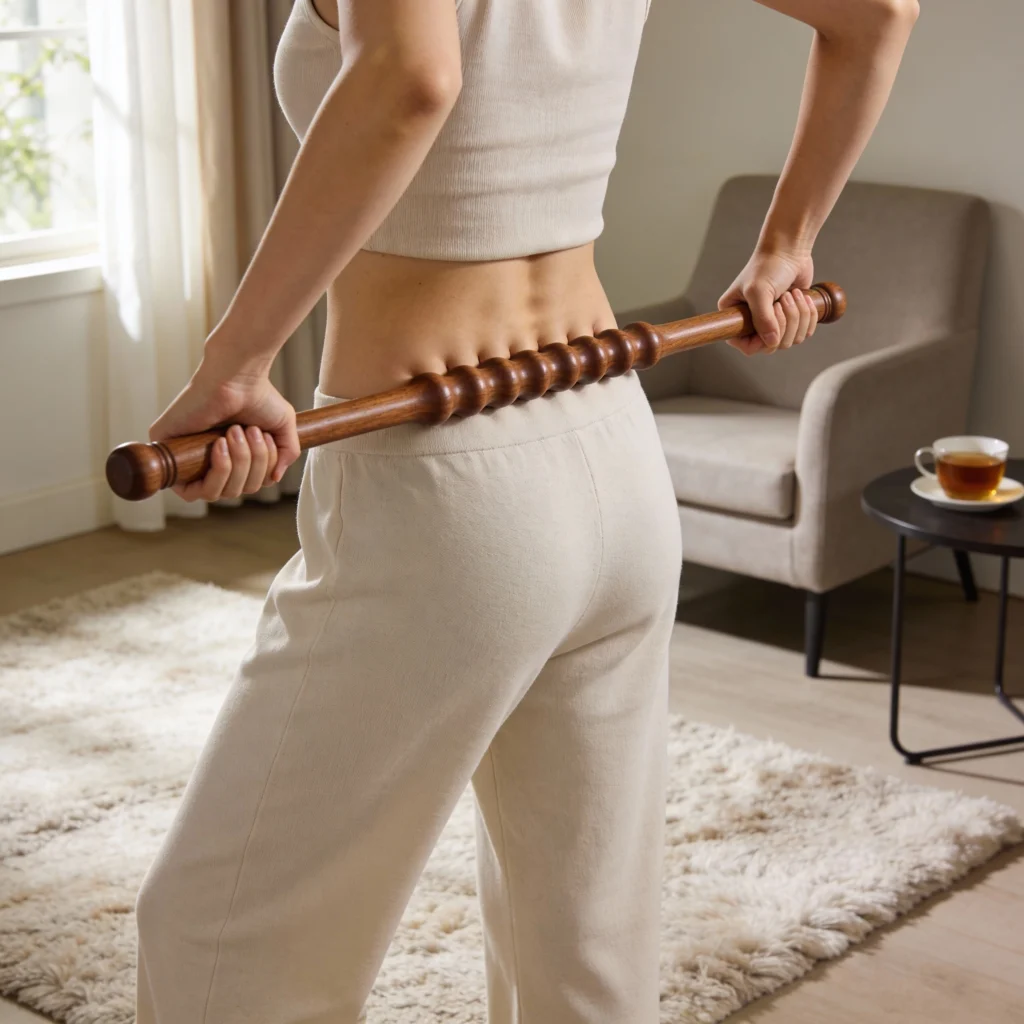
A back massager stick can be a safer option for the torso because it allows controlled, sweeping pressure along the sides and lower ribs rather than pounding one spot. Guiding the stick over the obliques and mid-back muscles, while avoiding direct pressure into the soft center of the abdomen, supports comfort without overloading internal tissues.

A back massager stick offers more precise control than a powered massage gun because you generate the pressure manually. This makes it better suited for working around the torso, particularly along the sides of the rib cage, lower back, and upper glutes. However, the same caution applies: avoid deep pressure directly over the soft central abdomen where organs lie closest to the surface.

Safe zones and pressure guidelines

Focus the back massager stick on bony landmarks and thick muscles rather than the midline belly. You can trace along the lower ribs, staying at least two to three finger widths away from the front edge, then glide toward the spine. Aim for mild discomfort rather than sharp pain, roughly a 3 or 4 out of 10 intensity, and limit each area to 30 to 60 seconds.

Techniques to avoid sensitive structures

When working near the obliques, angle the back massager stick so it slides along muscle fibers instead of pressing straight inward. This reduces compressive load on organs while still mobilizing tight tissue. You can combine this with slow breathing, inhaling for four seconds and exhaling for six, which encourages the nervous system to downshift from sympathetic arousal toward a more parasympathetic, relaxed state.

4

Comparing a Back Massager Stick and Massage Gun for Core Muscle Relief

Both a massage gun and a back massager stick can target muscles supporting the core, yet they behave differently under your hands. A massage gun delivers rapid percussive strokes, often between 1,800 and 3,200 per minute, which can quickly overwhelm sensitive regions if not carefully controlled. A stick relies entirely on your grip strength and leverage, making it slower but more predictable.

Comparing a Back Massager Stick and Massage Gun for Core Muscle Relief

Despite potential benefits, there are situations where using a massage gun on the stomach can be risky. Conditions like pregnancy, hernias, recent surgery, or blood-thinning medications make deep vibration especially unsafe over the central abdomen. Understanding where organs and major vessels lie helps you avoid areas that should not be exposed to strong percussion.

Key differences in control and intensity

Because a massage gun maintains its amplitude and speed regardless of tissue response, it is easier to accidentally press too hard on the torso. In contrast, a back massager stick immediately reflects any resistance you feel, prompting you to ease off naturally. This feedback loop is valuable around the rib cage and flanks, where nerves and small blood vessels sit closer to the skin.

Comparison of features and typical use cases

The table below compares common specifications and ideal uses for each tool around the midsection and lower back. These values reflect typical mid-range consumer devices sold online between 2023 and 2024, not medical-grade instruments. Understanding these differences helps you choose the right device for your specific goals and tolerance levels.

ToolTypical Price (USD)Intensity RangeBest Target AreasRecommended Session Length
Massage gun80–20020–60 Hz percussionGlutes, quads, lower back muscles15–30 seconds per spot
Back massager stick15–40Manual, user-controlledObliques, mid-back, upper glutes30–90 seconds per region
Mini massage gun60–13025–50 Hz, shorter strokeHip flexors, lateral torso edges10–20 seconds per spot
Curved stick massager20–45Leverage-based pressureThoracic paraspinals, rib attachments45–120 seconds per line
Foam-handled stick roller25–60Light rolling compressionAbdominal wall edges, IT band60–180 seconds continuous

Choosing between these tools depends on your sensitivity and goals. If you want aggressive recovery for dense muscles like the glutes, a massage gun works well when kept away from the soft belly. For nuanced work around the torso and sides, a back massager stick or curved manual tool usually offers safer, more precise pressure control.

5

Step-by-Step: Gentle Benefits of Massage Gun on Stomach for Athletes

Athletes often feel tightness around the core after heavy lifting, sprinting, or rotational sports such as tennis and baseball. Instead of placing a massage gun directly over the navel, the safest strategy is to work the surrounding structures: hip flexors, obliques, and lower ribs. This approach supports trunk mobility while minimizing risk to internal organs and delicate vascular structures.

Step-by-Step: Gentle Benefits of Massage Gun on Stomach for Athletes

Conservative routine for obliques and hip flexors

You can follow a short, structured session two to three times weekly after training. Always choose the softest attachment head and set the massage gun to its lowest speed. Keep contact light enough that the skin barely dimples, then glide slowly along each muscle group while monitoring for any sharp or radiating pain that suggests nerve irritation.

  • Spend 20–30 seconds on each hip flexor, starting two finger widths below the front hip bone, avoiding direct groin pressure.
  • Trace the obliques from the lower ribs toward the pelvis for 20–25 seconds per side, staying off the central abdomen.
  • Work the lower back muscles next to the spine for 25–30 seconds per segment, never pressing directly over the vertebrae.
  • Finish with 60–90 seconds of deep breathing, lying on your back, letting the abdomen rise naturally without any device contact.
6

Who Should Avoid Using a Massage Gun on the Stomach Entirely

Who Should Avoid Using a Massage Gun on the Stomach Entirely

Some people should not use a massage gun on the stomach at all, regardless of intensity or attachment choice. In these cases, even gentle vibration might aggravate existing conditions or mask symptoms that require prompt medical evaluation. Identifying yourself within these groups is more important than chasing temporary relief from bloating, cramps, or tightness around the torso.

High-risk medical conditions and scenarios

Pregnant individuals, especially after twelve weeks, should avoid abdominal percussion to reduce the chance of uterine irritation or placental stress. Anyone with a known abdominal aortic aneurysm, liver cirrhosis, or active inflammatory bowel disease also faces heightened risk. Recent trauma, unexplained bruising, or persistent abdominal pain lasting more than a few days warrants medical evaluation instead of self-treatment with mechanical devices.

Medications that increase bleeding or bruising risk

Blood thinners such as warfarin, rivaroxaban, and clopidogrel reduce clotting capacity, making even modest internal trauma more dangerous. High-dose nonsteroidal anti-inflammatory drugs, including ibuprofen above 2,400 milligrams daily, can also weaken stomach lining and raise bleeding potential. If you take these medications, limit massage gun use to distant muscle groups like calves or shoulders, keeping all percussion away from the abdomen.

7

Safer Alternatives to Back Massager Stick and Massage Gun for Core Tension

When the stomach or torso feels tight, you can often get better, safer results from non-percussive methods. These alternatives emphasize slow stretching, controlled breathing, and gentle manual contact rather than forceful impact. They are especially appropriate for people who fall into higher-risk categories or simply dislike the intense sensation of a massage gun or firm back massager stick.

Safer Alternatives to Back Massager Stick and Massage Gun for Core Tension

Low-risk options for abdominal and core relief

Several strategies can reduce core tension without placing direct mechanical stress on internal organs. Many require only a yoga mat, a small pillow, or a soft ball, making them accessible at home. The key is consistency: performing these techniques for five to ten minutes daily often outperforms sporadic, aggressive device use applied only after pain spikes.

  • Supine diaphragmatic breathing, five minutes daily, focusing on slow nasal inhalation and extended exhalation to reduce muscle guarding.
  • Gentle trunk rotations lying on your back, knees bent, moving side to side for ten to fifteen controlled repetitions.
  • Child’s pose and thread-the-needle stretches, holding each position for twenty to thirty seconds to lengthen thoracic and lumbar tissues.
  • Soft ball abdominal release using a partially deflated ball under the ribs, applying only bodyweight for thirty to sixty seconds.

When discomfort persists despite these measures, consulting a physical therapist or manual therapist is wiser than escalating device intensity. A clinician can assess posture, breathing patterns, and core strength, then design a targeted plan using hands-on techniques, graded exercises, and education. This collaborative approach addresses root causes of tension rather than temporarily numbing symptoms with vibration or pressure.

Face, Neck, Head, Body, Back & Foot Massager
For a Relaxing & Relieving Lifestyle
14-day money back guarantee
Lowest Prices: 365 Days Discount
Safe & Secure online payment
Contact Us

Massagers Mart © 2025. All Rights Reserved

Massagers Mart
Logo
Compare items
  • Total (0)
Compare
0
Shopping cart