Best EMS Foot Massager for Neuropathy: What to Know Before You Buy

Nerve pain, burning, and numbness in the feet can make every step feel risky, especially at night. Many people now look beyond pills toward the best EMS foot massager for neuropathy as a home-based, drug‑free option. Understanding how these devices work and who they actually help prevents wasted money and unnecessary setbacks.

Choosing the best EMS foot massager for neuropathy is more than picking a highly rated gadget on Amazon. Neuropathy can involve damaged sensory nerves, altered circulation, and fragile skin, particularly in people with diabetes over age 50. A poorly chosen device may overstimulate numb areas or miss problem zones entirely, giving little benefit despite daily sessions.

Unlike a generic vibrating foot pad, EMS units send controlled electrical impulses through the soles and sometimes up the calves. These impulses can recruit dormant muscle fibers, improve venous return, and modulate pain signaling. However, intensity, waveform, pad placement, and session length all determine whether you feel gentle tingling relief or aggravating zaps.

Before buying, you’ll want to compare EMS to the best foot massager for neuropathy that uses rollers or air compression, and consider any medical conditions like pacemakers or active ulcers. This guide walks through how EMS works, who might benefit, safe setup at home, and the red flags that mean you should stop and call your clinician.

1
best EMS foot massager for neuropathy

How the Best EMS Foot Massager for Neuropathy Uses Electrical Stimulation

How the Best EMS Foot Massager for Neuropathy Uses Electrical Stimulation

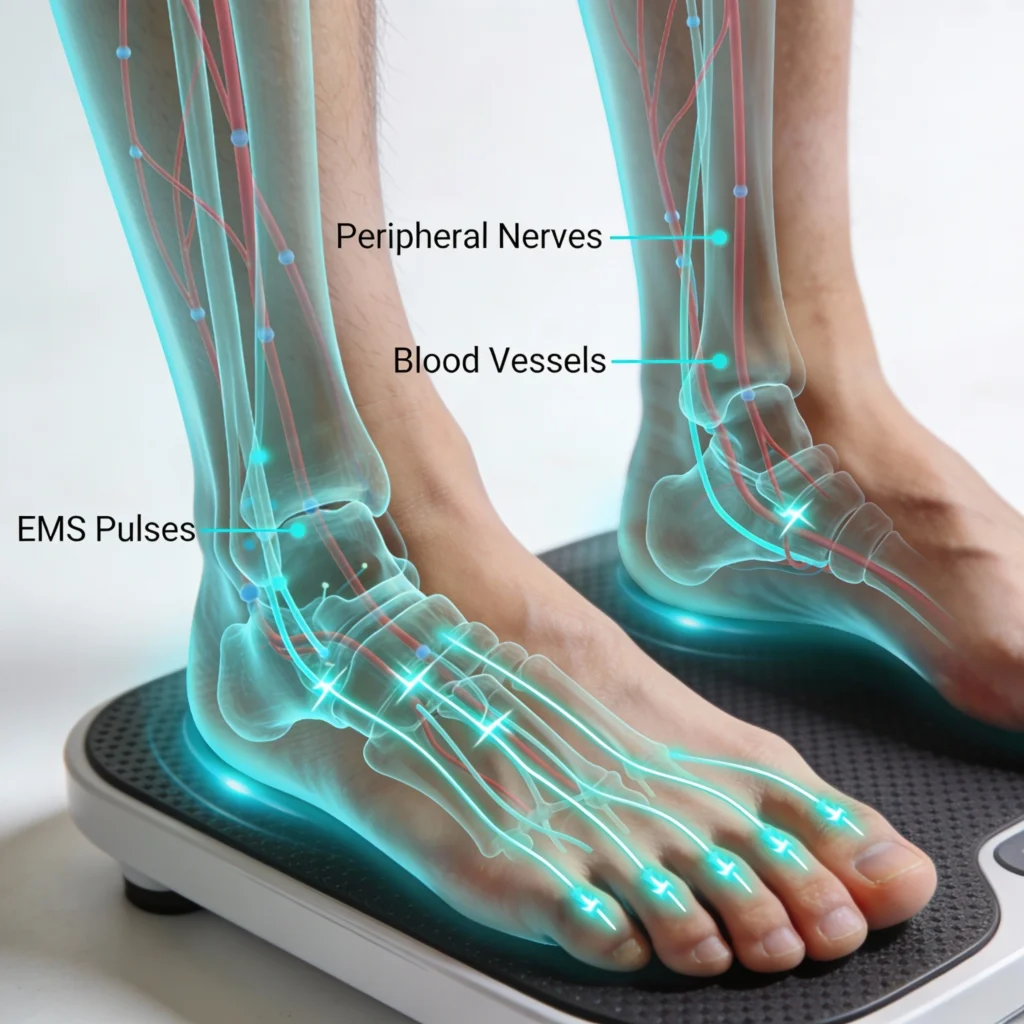
EMS foot massagers work by sending low-level electrical pulses through the soles of the feet, targeting nerves and sometimes muscle groups in the lower legs. This gentle stimulation may help improve nerve signaling and circulation in some users, which is why understanding how the technology interacts with damaged or sensitive nerves is so important.

Electrical muscle stimulation devices designed for feet use low‑voltage currents, typically between 1–100 mA, to activate nerves in the soles and lower legs. When you place bare feet on the conductive pads, current travels between electrodes, triggering small muscle contractions and tingling sensations. For neuropathy, the goal is to encourage circulation and modulate pain without overwhelming already irritated nerves.

What EMS Does Inside Nerves and Muscles

EMS units target motor and sensory nerves by depolarizing cell membranes, which temporarily changes how pain signals travel toward the spinal cord. At comfortable intensities, this can boost endorphin release and reduce perceived burning or stabbing sensations for 30–90 minutes. Repeated use, such as 20‑minute sessions twice daily, may also maintain calf‑muscle pumping, helping venous return in people with reduced daily walking.

Why Neuropathy Requires Extra Caution with EMS

Peripheral neuropathy often dulls sensation in the toes and soles, meaning you might not feel early signs of overstimulation or skin irritation. Someone without neuropathy usually backs off when tingling becomes sharp; a person with diabetic neuropathy may feel nothing until redness or blisters appear. Because of this, EMS intensity should start extremely low, and sessions should be supervised initially if balance or sensation is severely impaired.

2
best foot massager for neuropathy

Best EMS Foot Massager vs Traditional Best Foot Massager for Neuropathy

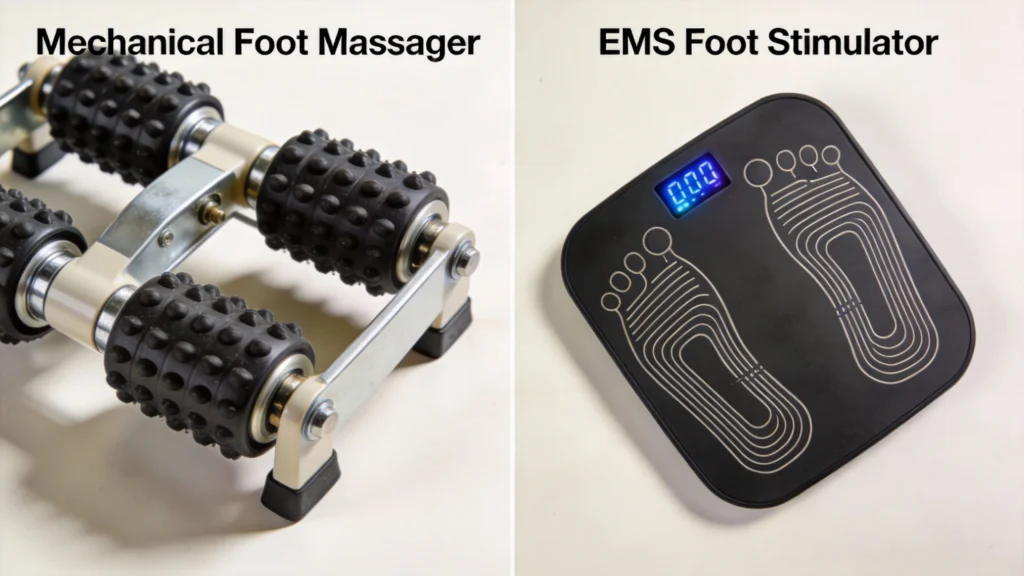
When comparing the best EMS foot massager for neuropathy with a traditional mechanical model, you’re really weighing electrical currents against physical pressure. Mechanical units rely on rollers, vibration, or air compression to knead tissue, often at forces between 10–30 kPa. EMS, by contrast, works through nerve depolarization rather than direct squeezing, which can be gentler on fragile joints but riskier for insensitive skin.

Best EMS Foot Massager vs Traditional Best Foot Massager for Neuropathy

Not everyone with neuropathy is a good candidate for EMS foot massagers. People with open sores, severe circulation problems, implanted electronic devices, or poorly controlled diabetes need medical guidance first. Discussing your symptoms, medications, and skin condition with a clinician helps determine whether at-home electrical stimulation is appropriate and how to use it safely.

How EMS and Mechanical Massage Differ in Action

Mechanical foot massagers, such as the RENPHO Shiatsu or Cloud Massage unit, compress muscles and fascia, stimulating mechanoreceptors that can override pain signals. EMS devices like Revitive or Circulation Booster recruit muscles electrically, causing rhythmic contractions without heavy external pressure. For someone with plantar fasciitis plus neuropathy, mechanical rollers may aggravate heel pain, whereas EMS can engage calf muscles while keeping plantar tissues relatively untouched.

Pros and Cons for People with Diabetic Neuropathy

For the best foot massager for diabetics, mechanical models offer intuitive feedback because discomfort is felt quickly if pressure is excessive. However, they may bruise thin skin or compress bony prominences in older adults. EMS provides adjustable intensity in 1–5 mA increments, allowing fine tuning, yet numb users may overshoot safe levels. Many clinicians recommend combining low‑intensity EMS with mild air compression rather than deep kneading for advanced diabetic neuropathy.

3
EMS foot massager

Key Features in the Best EMS Foot Massager for Neuropathy and General Use

Key Features in the Best EMS Foot Massager for Neuropathy and General Use

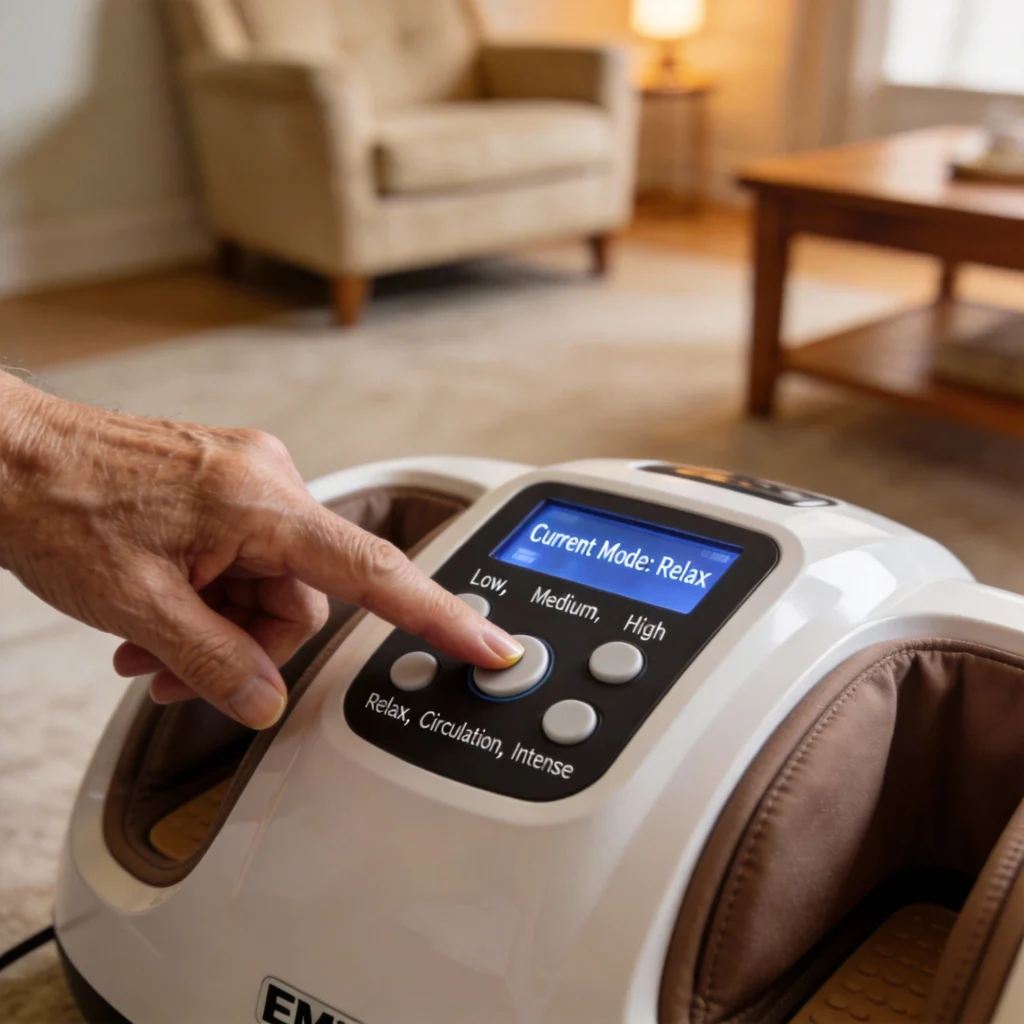
Key features to look for include clearly labeled intensity settings, multiple stimulation modes, and an easy-to-read display. People with neuropathy often need very gradual control over strength to avoid overstimulation. Simple controls, a stable foot platform, and options for session length can make daily use safer and more comfortable over time.

When evaluating an EMS unit, you’re really matching technical specifications to your specific symptoms and limitations. Devices vary widely in maximum output, program variety, and accessories. A model that reaches 99 intensity levels may sound impressive, but someone with severe neuropathy might only safely tolerate levels 5–20. Paying for unused power or complex displays can distract from essentials like clear electrodes and stable, non‑slip surfaces.

Essential EMS Specifications and Controls

Look for devices with at least 10–20 intensity steps, allowing gradual progression rather than big jumps that shock sensitive nerves. Multiple programs—such as pulsed, continuous, and ramped waveforms—help you experiment with comfort. A large, backlit display is valuable if you’re over 60 or have retinopathy, since tiny icons are hard to see. Footplate size should comfortably fit up to men’s US size 12–13 to avoid toes hanging off conductive areas.

Electrode Pads and Extra Channels

Some EMS foot massagers include adhesive electrode pads that connect via leads, letting you treat calves, shins, or even thighs. This versatility matters if foot sensation is too diminished but calf cramps are severe at night. Ensure the unit provides at least two independent channels, so foot intensity can differ from calf settings. Replacement pad cost—often $10–$20 for a 4‑pad pack—should be factored into long‑term budgeting.

4

Who Is a Good Candidate for the Best EMS Foot Massager for Neuropathy

The best candidates typically have stable, chronic neuropathy rather than rapidly worsening symptoms or unexplained sudden numbness. People with mild to moderate diabetic neuropathy, chemotherapy‑related nerve pain, or idiopathic small‑fiber neuropathy often report short‑term relief from tingling and burning. However, the best foot massager for neuropathy is not a substitute for glucose control, medication adjustments, or proper footwear prescribed by your clinician.

Who Is a Good Candidate for the Best EMS Foot Massager for Neuropathy

Traditional foot massagers focus on physical pressure, kneading, and vibration, which can feel soothing but may be too intense or imprecise for numb or hypersensitive areas. EMS devices, by contrast, rely on electrical signals rather than strong mechanical force, offering a different option for people whose neuropathy doesn’t tolerate deep pressure well.

Neuropathy Patterns That May Benefit

Length‑dependent neuropathy, where symptoms start in the toes and slowly climb toward the shins, often responds well because calf muscle pumping can still be improved. Those with nighttime burning rated 4–7 on a 10‑point scale may notice improved sleep after 20‑minute evening sessions. People who can still feel light touch with a 10‑gram monofilament test are generally safer candidates than those with complete numbness below the ankle.

  • Mild diabetic neuropathy with intact protective sensation, confirmed by monofilament or vibration testing within the past 12 months.
  • Chemotherapy‑induced neuropathy causing burning and pins‑and‑needles but no open sores, ulcers, or active skin infections on feet.
  • Chronic low‑grade edema around ankles, where calf pumping from EMS can support venous return when walking is limited.
  • Office workers sitting over eight hours daily, experiencing cold, tingly feet but able to stand safely after each EMS session.
5

How to Use the Best EMS Foot Massager for Neuropathy Safely at Home

Safe home use starts with a quick foot inspection every single time, even if you feel nothing unusual. Use good lighting to check for redness, cracks between toes, calluses, or blisters, especially if you have diabetes. If anything looks suspicious, skip the session and call your podiatrist. Only when the skin appears intact should you place bare, clean feet on the EMS footplate or pads.

How to Use the Best EMS Foot Massager for Neuropathy Safely at Home

Step‑by‑Step Setup and First Sessions

Begin sitting in a stable chair with armrests, ensuring your knees are at roughly 90 degrees and both feet rest fully on the device. Start at the lowest intensity, often level 1 or 2, and increase by one step every 30–60 seconds until you feel gentle, non‑painful tingling. Keep initial sessions to 10–15 minutes, once daily for the first week, before progressing to 20–25 minutes as tolerated.

Monitoring Sensation and Skin During Use

During each session, glance at your feet every five minutes, looking for patchy redness, mottling, or unusual swelling. If you live alone and have severe neuropathy, set a phone timer to remind you to check rather than zoning out completely. After the session, re‑inspect the soles and between toes. Any lingering redness lasting more than 30 minutes suggests intensity or duration should be reduced next time.

6

When to Avoid a Best EMS Foot Massager or Stop Sessions

Certain medical situations make EMS devices unsafe, even when marketed as the best foot massager for diabetics or for circulation. Pacemakers, implanted defibrillators, and deep brain stimulators can be disrupted by stray electrical currents. Pregnancy, especially in the first trimester, is another common exclusion in manufacturer manuals. Active foot infections, ulcers, or recent surgical incisions also mean you should avoid placing electrodes or footplates on the area.

When to Avoid a Best EMS Foot Massager or Stop Sessions

Major Contraindications and Red Flags

Most reputable manufacturers list contraindications clearly, but people often skip the manual and head straight to the power button. If you have severe peripheral arterial disease, characterized by ankle‑brachial index below 0.5, EMS may worsen ischemic pain. Similarly, uncontrolled arrhythmias or recent deep vein thrombosis require physician clearance. Any sudden increase in numbness, weakness, or color change during a session is a signal to stop immediately.

ConditionEMS Use RecommendationReason for CautionTypical Next Step
Pacemaker or ICDAvoid EMS on legs/feetElectrical currents may interfere with sensing or pacing functionsConsult cardiologist before any stimulation device
Active foot ulcerDo not place electrodes near woundMoist wounds increase burn and infection risk from electrodesUse wound care plan; reconsider EMS after healing
Severe PAD (ABI < 0.5)EMS generally not recommendedRisk of worsening ischemic pain and tissue damageVascular specialist evaluation, supervised therapies only
PregnancyUsually contraindicatedSafety of peripheral EMS not well studied in pregnant populationsDiscuss alternative pain relief with obstetric provider
Uncontrolled arrhythmiaAvoid until rhythm stabilizedAutonomic effects of stimulation could trigger symptomatic episodesCardiology review, potential Holter monitoring first

If you ever notice blistering, intense burning, or new weakness after a session, discontinue use and contact your clinician within 24 hours. People with diabetes should also alert their podiatrist if redness or swelling persists beyond a day, as this could signal early infection. When in doubt, it’s safer to pause EMS for a week and seek medical review than to push through concerning symptoms at home.

7

Maximizing Results with the Best EMS Foot Massager for Neuropathy

To get real value from an EMS unit, consistency matters more than chasing the highest intensity. Research on neuromuscular stimulation for circulation often uses 20–30 minute sessions, five to seven days per week, over at least eight weeks. Sporadic sessions once every few days rarely produce noticeable changes in pain or swelling. Treat EMS as part of a broader neuropathy management plan, not a standalone cure.

Maximizing Results with the Best EMS Foot Massager for Neuropathy

Combining EMS with Exercise and Tracking Progress

Pair EMS sessions with short, safe walking bouts—such as five‑minute walks before and after stimulation—to reinforce improved circulation. Simple ankle pumps and toe curls during EMS can further activate muscles without adding joint load. Keep a symptom log rating pain, tingling, and sleep quality on a 0–10 scale twice weekly. Over a month, look for small improvements of one to two points rather than dramatic overnight changes.

When to Adjust Programs or Upgrade Devices

If you notice no change in symptoms after six to eight consistent weeks, re‑evaluate intensity, pad placement, and program choice. Sometimes switching from continuous to pulsed modes reduces adaptation and restores benefit. If your current unit lacks calf electrodes or enough intensity steps, upgrading may be reasonable. However, always revisit basics—foot inspection, glucose control, footwear—before assuming a more expensive device will solve persistent neuropathy discomfort.

Face, Neck, Head, Body, Back & Foot Massager
For a Relaxing & Relieving Lifestyle
14-day money back guarantee
Lowest Prices: 365 Days Discount
Safe & Secure online payment
Contact Us

Massagers Mart © 2025. All Rights Reserved

Massagers Mart
Logo
Compare items
  • Total (0)
Compare
0
Shopping cart