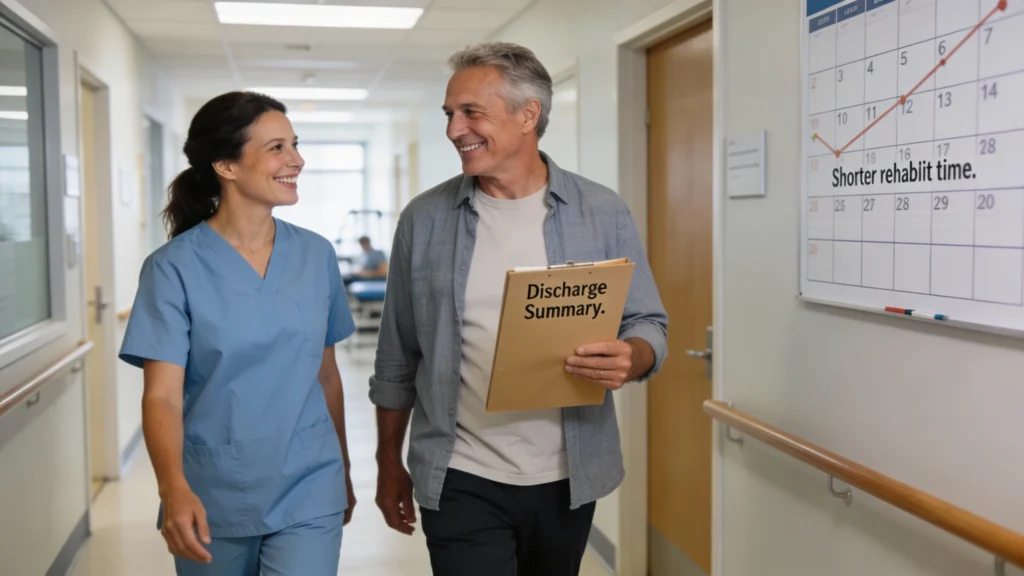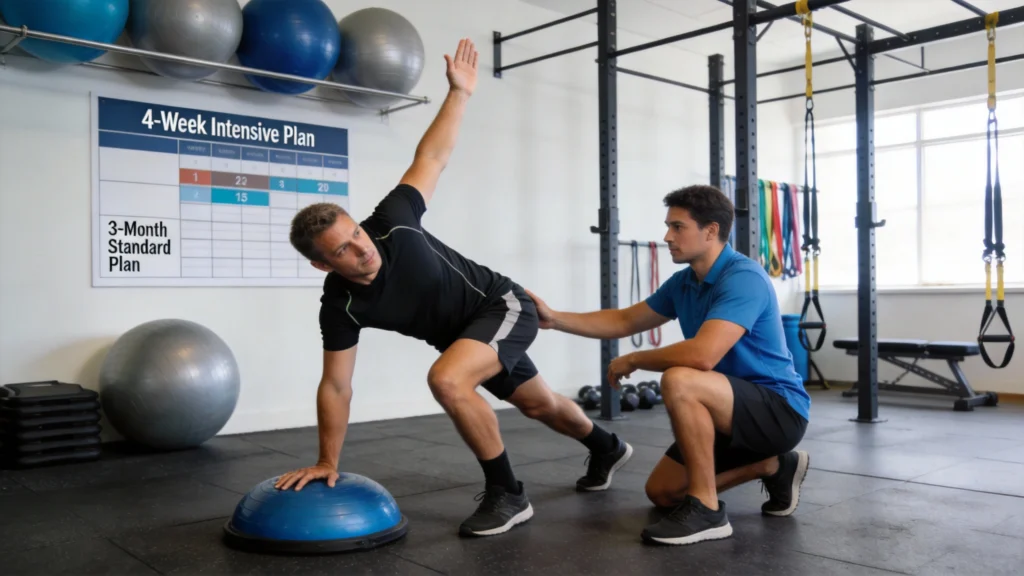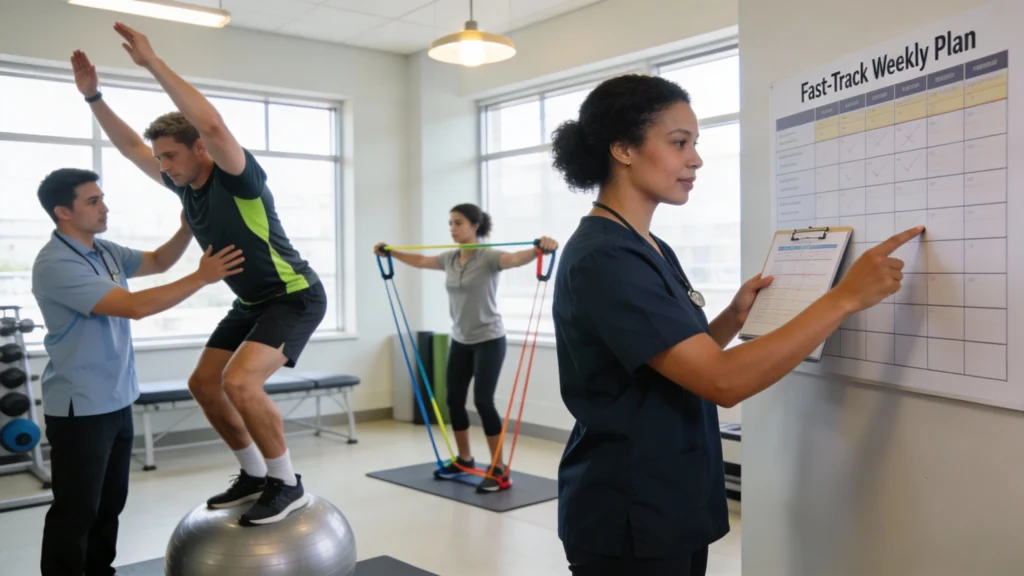
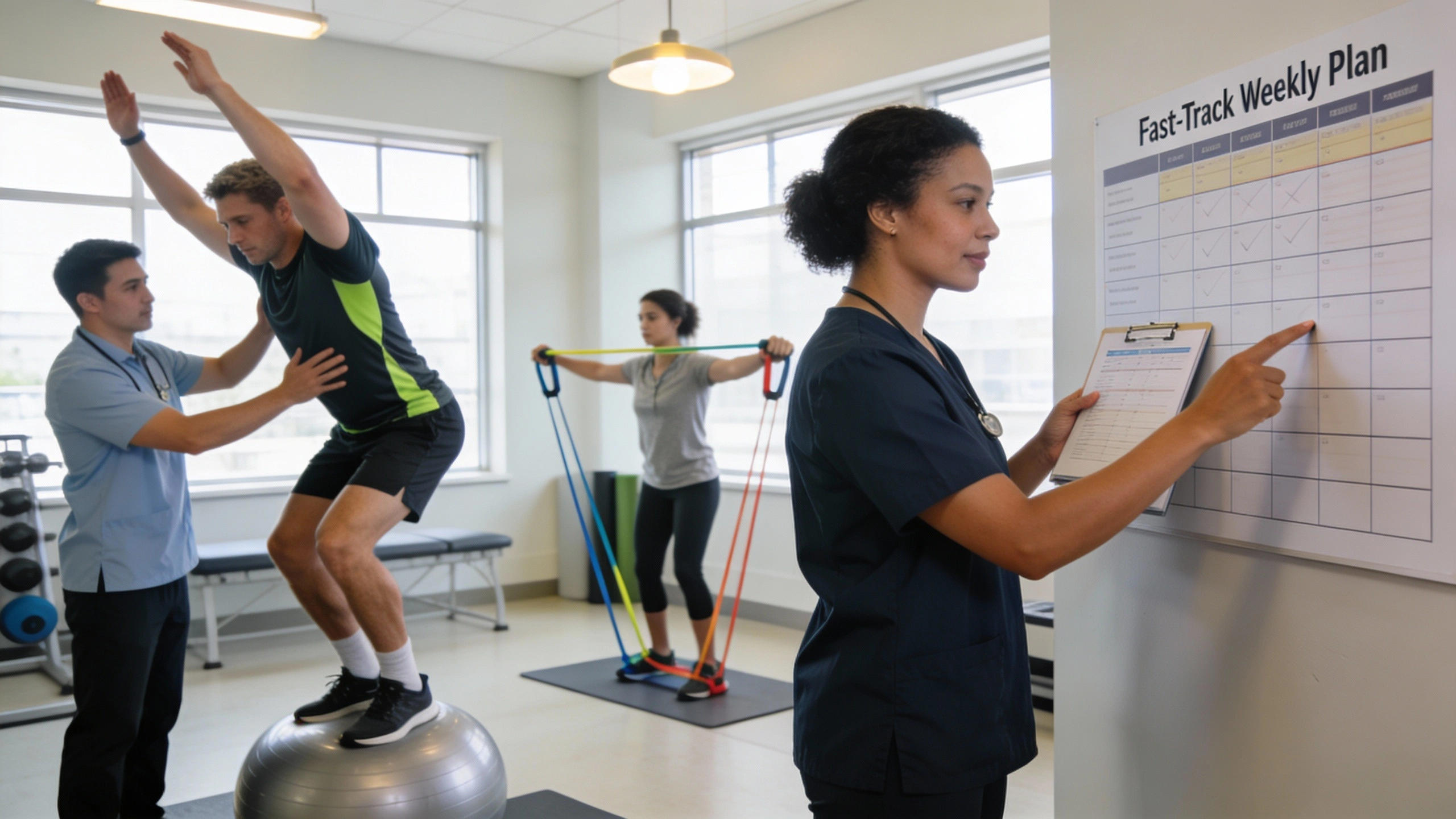
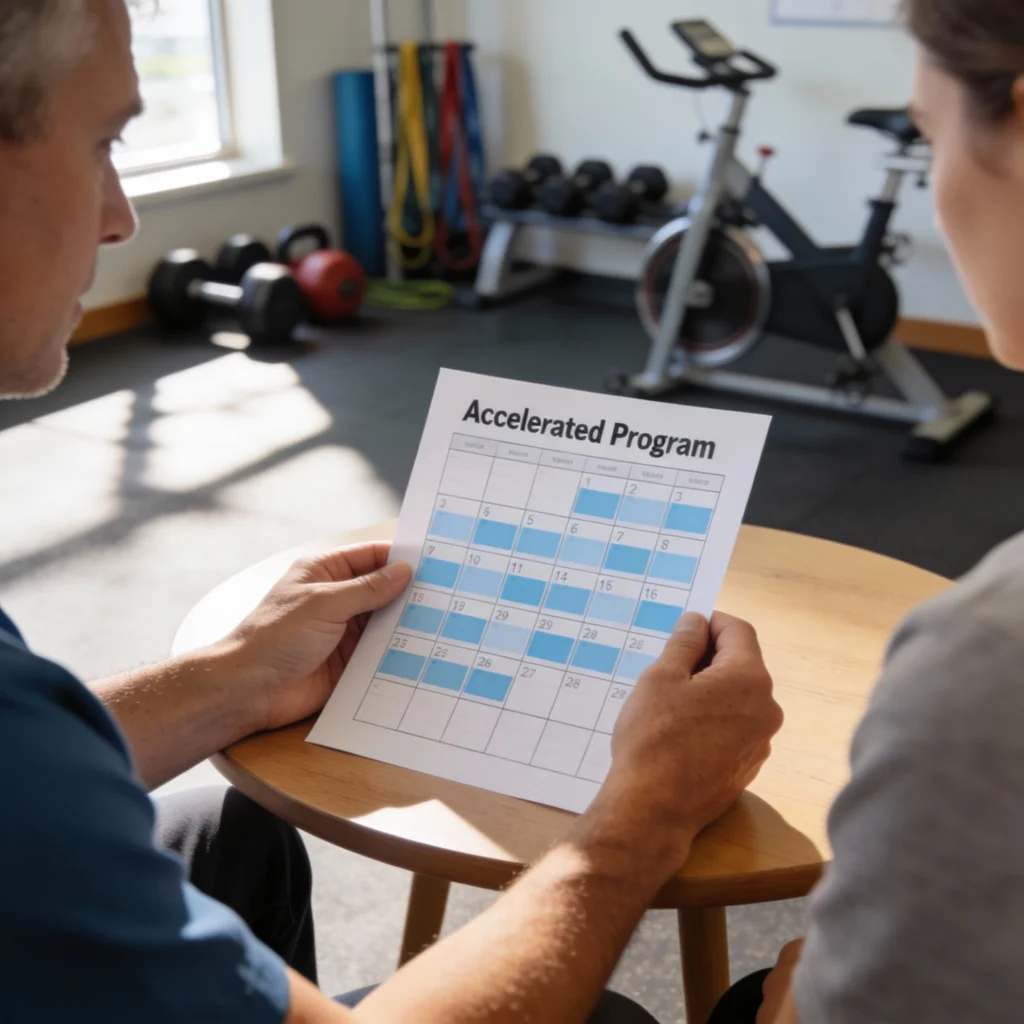
At their core, accelerated physical therapy programs are about compressing the usual pace of care into a tighter, more intentional plan. Instead of once-weekly visits, patients might attend three to five sessions each week. This structured intensity can help maintain momentum, reinforce exercises, and keep treatment goals front and center throughout the process.
Accelerated physical therapy programs shorten the time needed to reach specific rehab or educational milestones by increasing intensity, frequency, or course load. In clinics, this often means more frequent visits, longer sessions, or structured home programs. Academically, it usually involves year-round semesters, heavier credit loads, and combined degree pathways that remove redundancies between undergraduate and graduate coursework.
Clinical Fast-Track Rehab Models
In clinical settings, accelerated physical therapy programs might schedule four 60-minute visits per week for the first two postoperative weeks, instead of one or two. Therapists use objective milestones, such as achieving 110 degrees of knee flexion by week three after total knee replacement, to justify faster progression. These models rely heavily on patient adherence to daily home exercises and close monitoring to avoid overloading healing tissues.
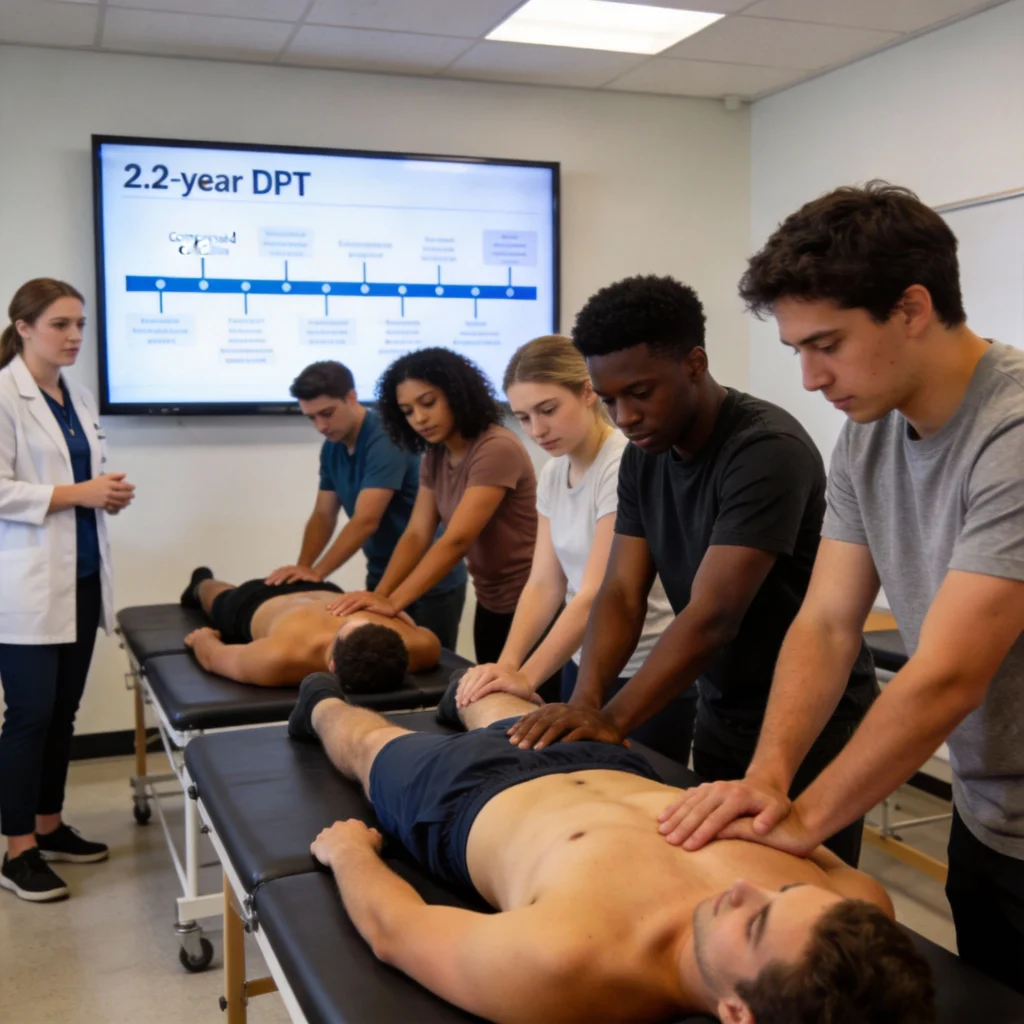
Accelerated Academic Pathways
Academic fast-track options compress prerequisite and professional coursework into fewer calendar years. A common structure is a 3+3 or 3+2.5 BS/DPT pathway, where students complete around 90 undergraduate credits in three years, then start DPT courses early. Summer terms become mandatory, and students may carry 18–20 credits per semester, compared with the typical 12–15, which significantly increases weekly study hours.