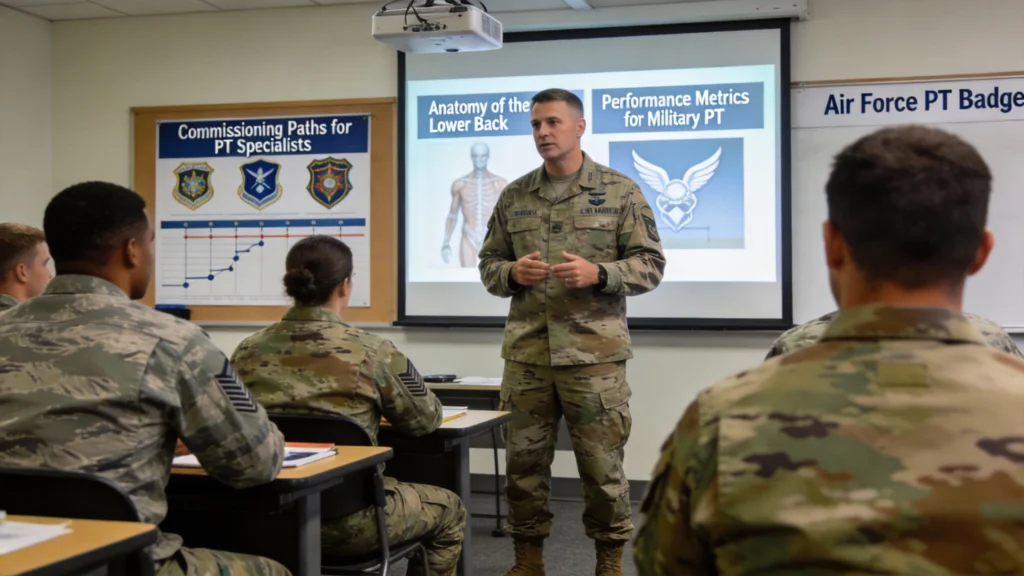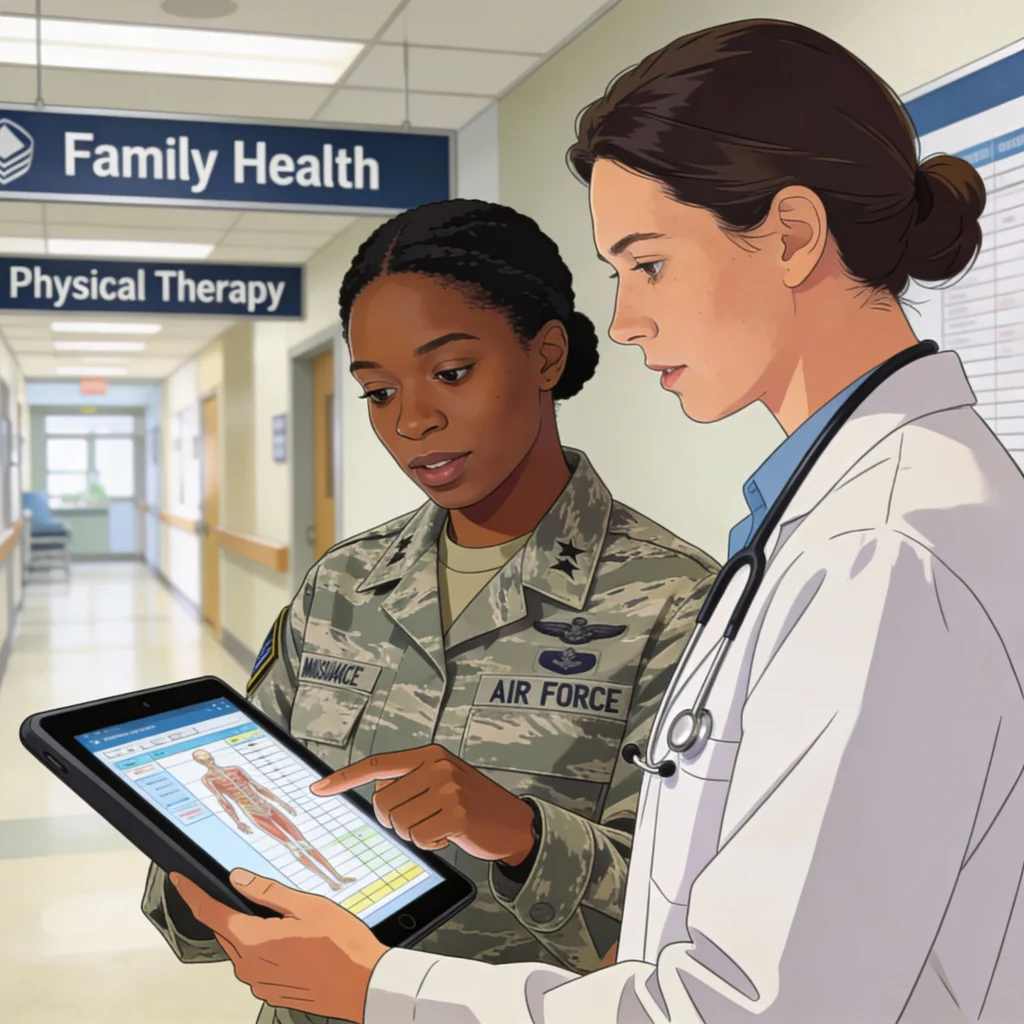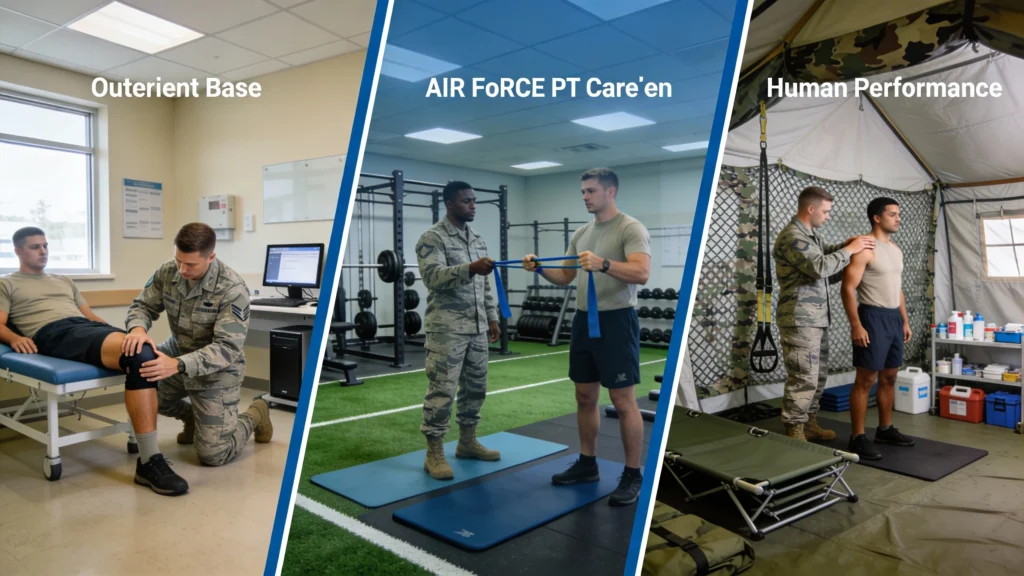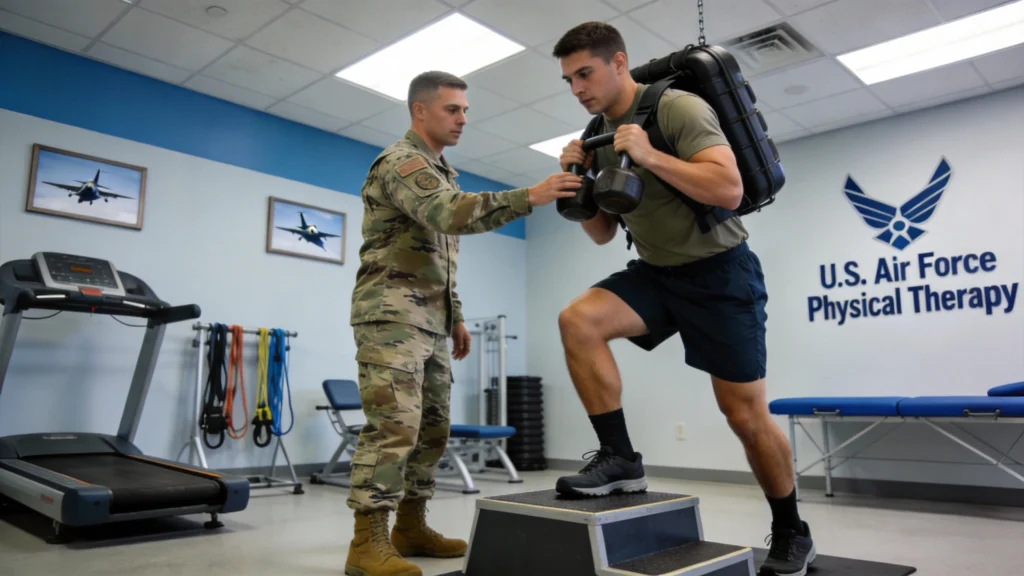
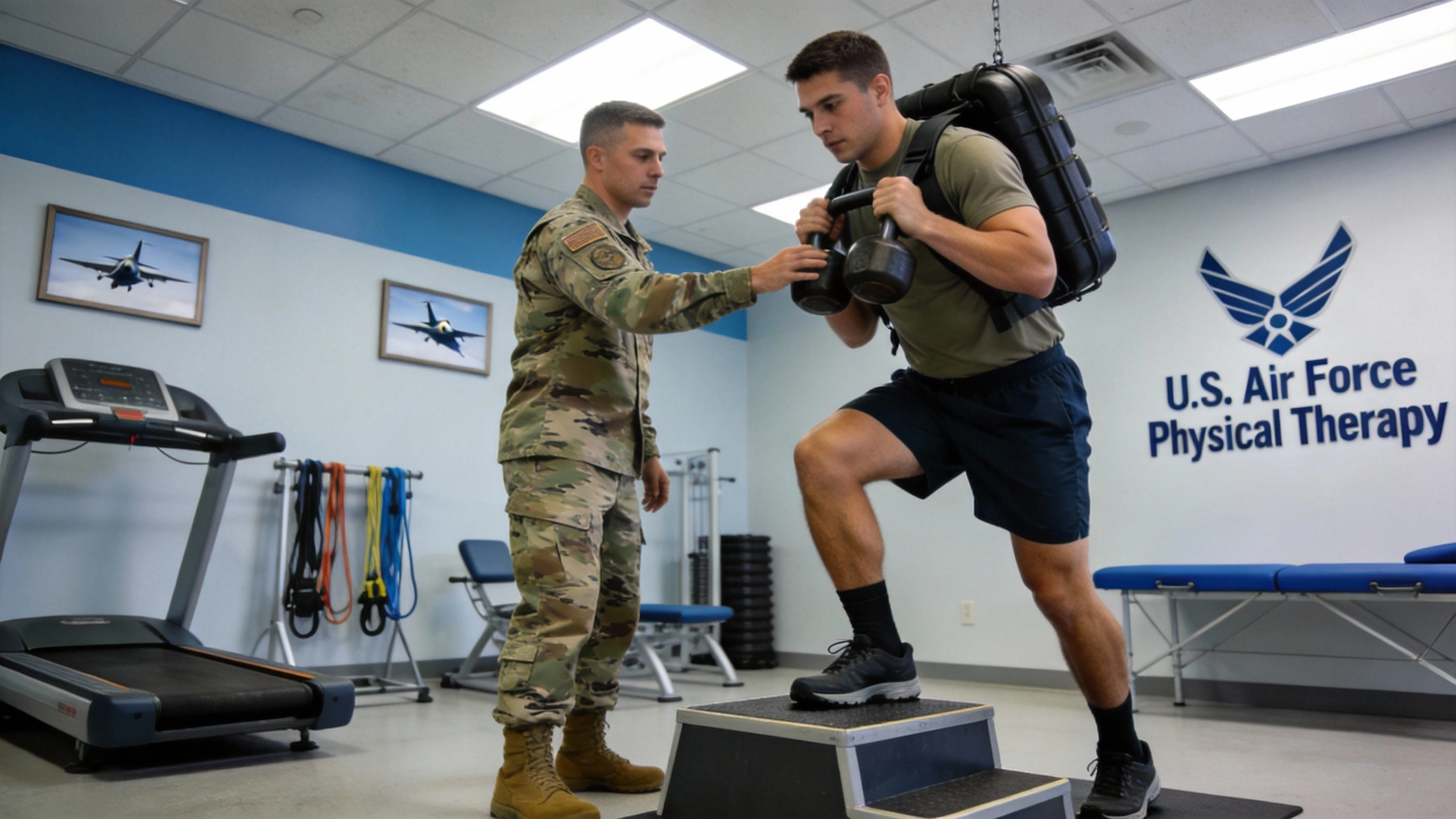
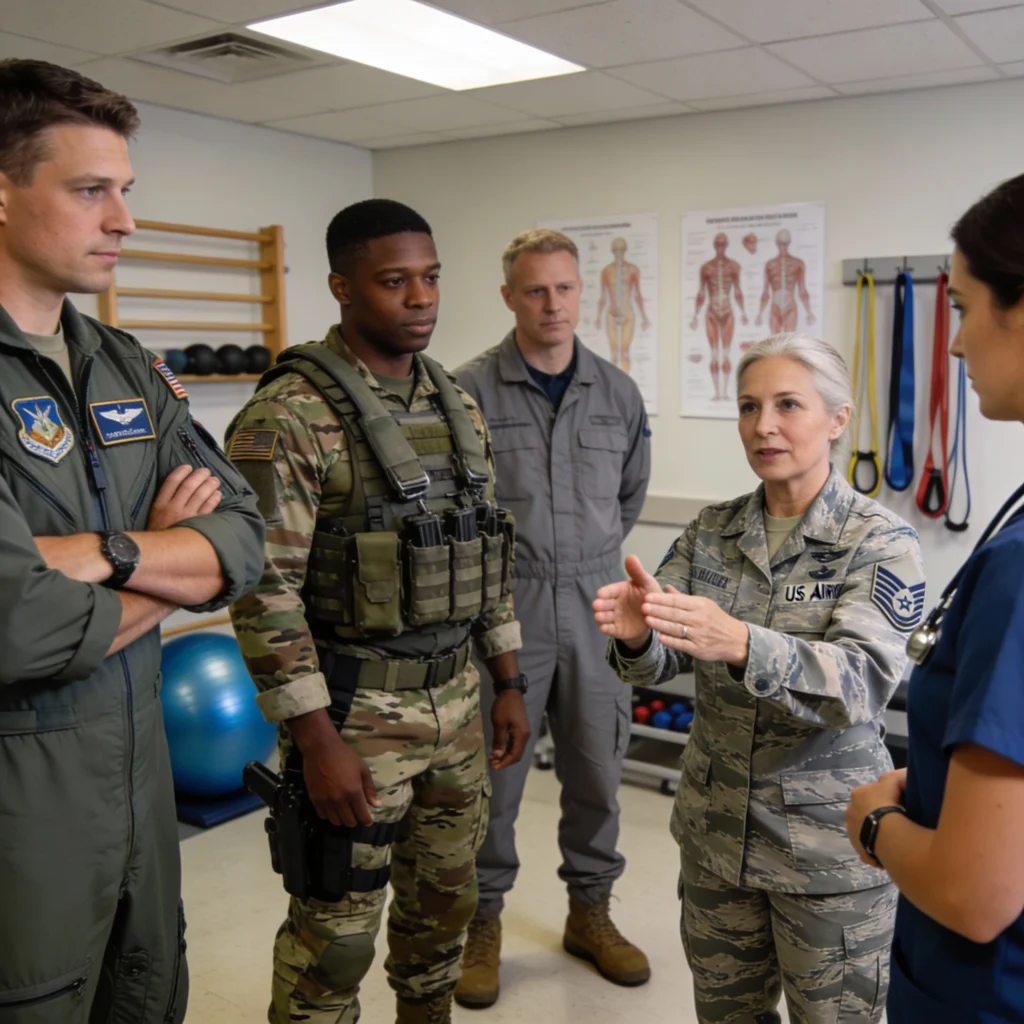
Air Force physical therapy serves a wide spectrum of patients, from pilots and security forces to maintainers, support staff, and sometimes family members and retirees. Each group brings unique physical demands and injury patterns, so therapists tailor assessments and treatment plans to the specific mission profile, duty requirements, and deployment expectations of each patient.
Air Force physical therapy is a specialty service inside military treatment facilities focused on optimizing musculoskeletal health for operational readiness. Clinicians evaluate everything from ankle sprains after fitness tests to chronic low back pain in pilots logging 200–300 flying hours annually. Instead of only restoring basic function, they design programs that meet physical training standards and specific occupational demands.
Populations Served Across the Air Force System
Most Air Force PT clinics treat three primary groups: active-duty members, dependents enrolled in TRICARE, and retirees eligible for space-available care. Active-duty airmen typically receive priority scheduling, often within 72 hours for acute injuries, because delayed rehabilitation can jeopardize deployment rosters. Dependents and retirees may experience longer waits, especially at smaller bases with only one or two full-time PTs.
Mission and Readiness-Focused Goals
The mission of Air Force physical therapy extends beyond symptom relief to preserving unit readiness metrics, such as deployable strength and fitness pass rates. PTs collaborate with commanders, public health, and human performance teams to reduce limited duty days. They track outcomes like time-to-return-to-duty, profile duration, and re-injury rates, using these data to refine screening protocols and targeted prevention programs.