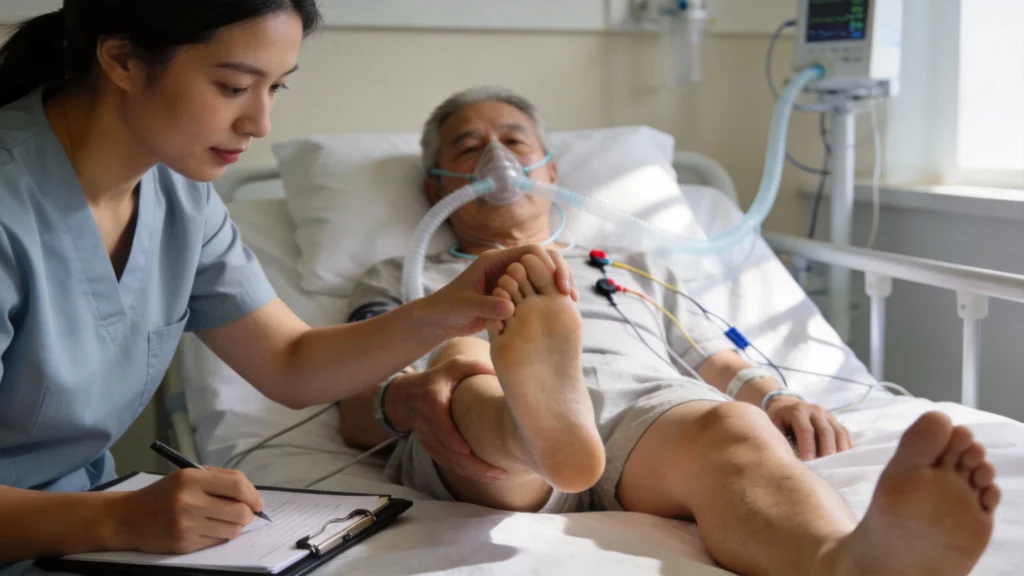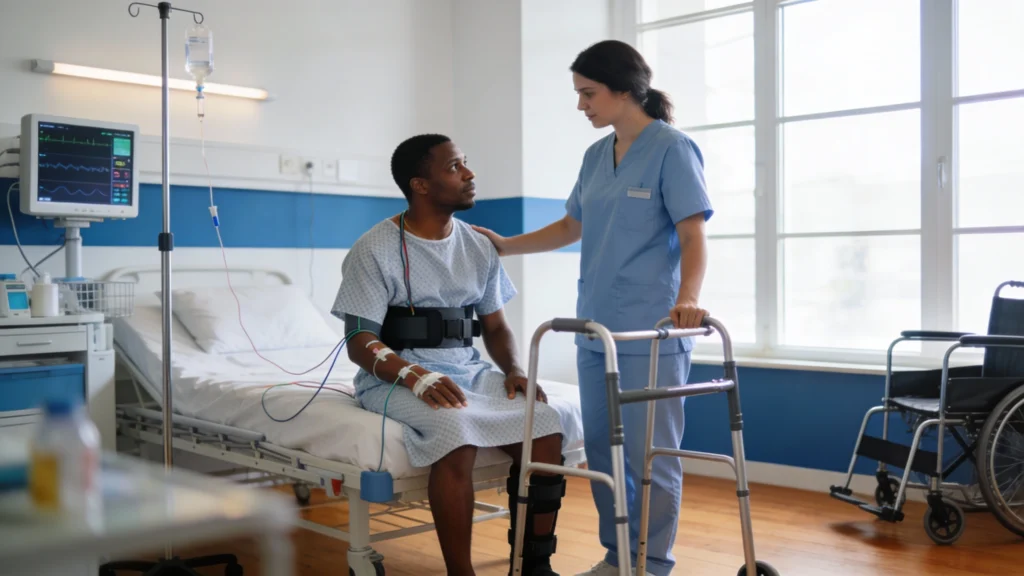
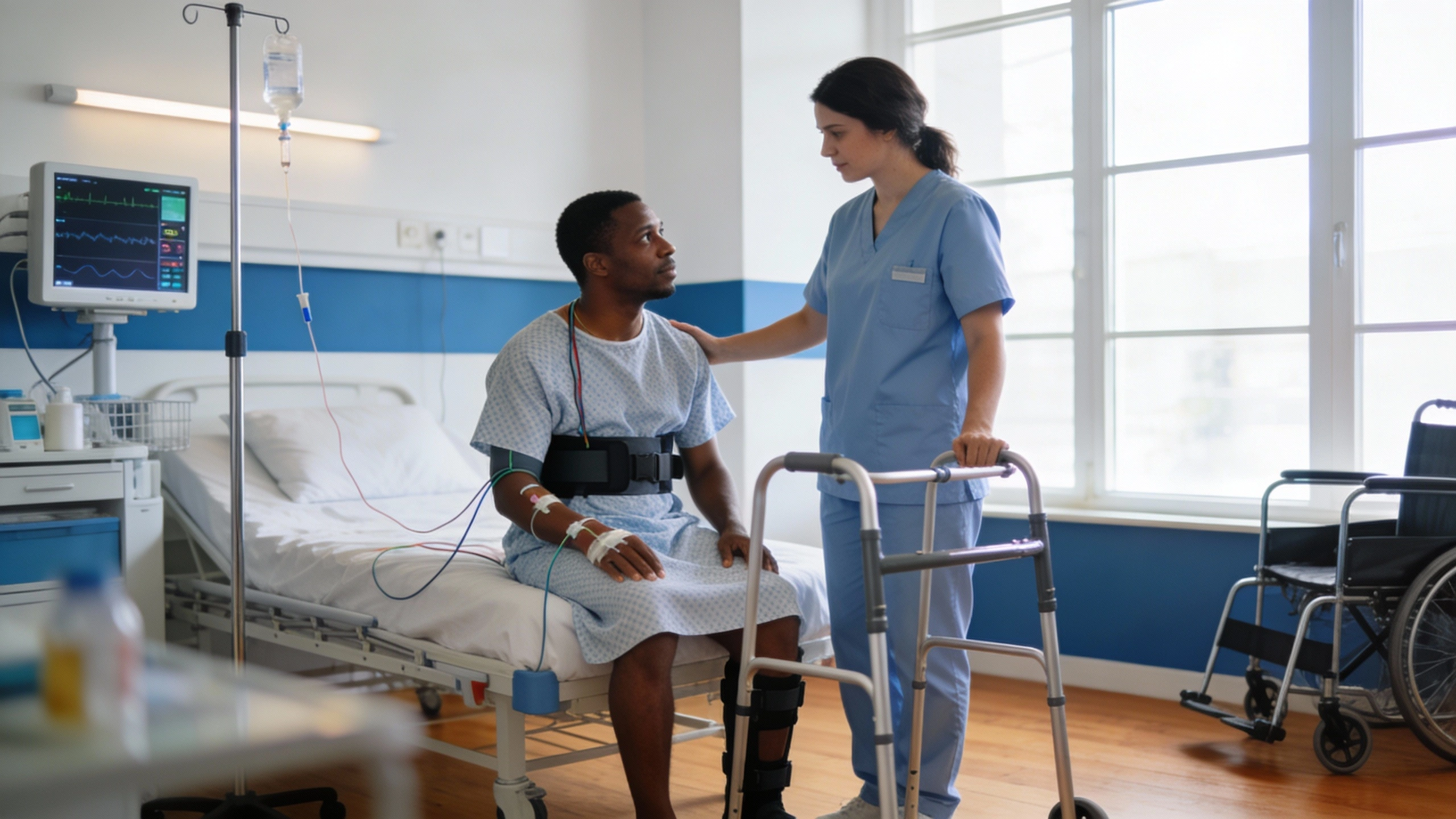
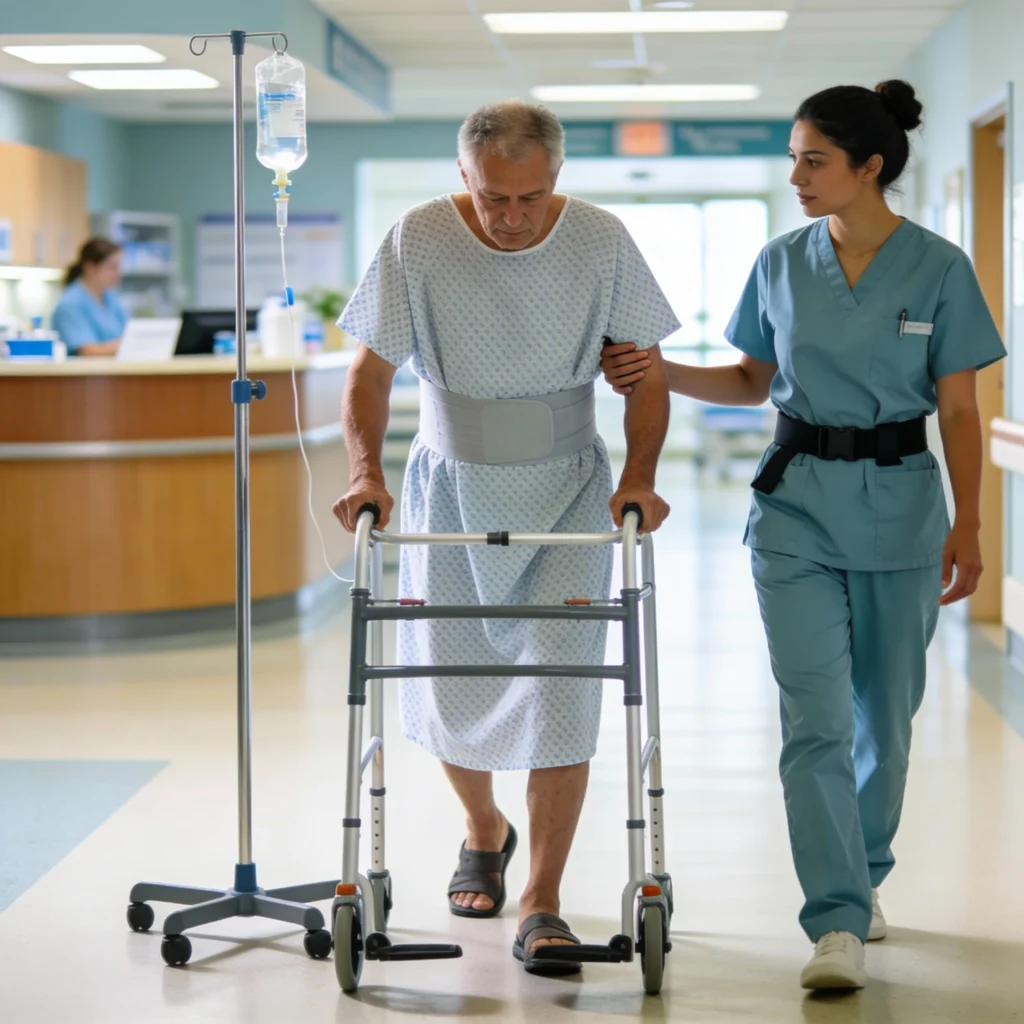
Acute physical therapy typically starts within 24–48 hours of admission or surgery, often right in the hallway outside the patient’s room. Therapists carefully monitor vital signs and fatigue while encouraging short walks. These brief, supervised sessions help prevent rapid strength loss and support a safer, more independent transition out of the hospital.
Acute care physical therapy is hospital-based rehabilitation delivered during the earliest, most medically complex phase of illness, injury, or surgery. Instead of waiting for full medical stability, therapists begin as soon as vital signs, lab values, and surgical guidelines allow, sometimes within 12–24 hours. The goal is to maintain function while doctors treat the underlying condition, preventing deconditioning that can delay discharge for days.
Where Acute PT Fits in the Continuum of Care
Within the rehabilitation continuum, acute care physical therapy occupies the first step, before inpatient rehab, home health, or outpatient therapy. Therapists focus on bed mobility, short transfers, and brief hallway walks rather than high-intensity strengthening. They document objective metrics—such as distance walked in meters and assistance level—to determine whether you can safely return home, need inpatient rehab, or require a skilled nursing facility.
Typical Timing After Injury, Illness, or Surgery
Timing varies by diagnosis, but early mobilization is standard. After uncomplicated hip or knee replacement, many protocols start ambulation within 4–8 hours. For pneumonia or heart failure, therapists often begin sitting at the edge of the bed on day one, progressing to hallway ambulation by day two or three. Even in intensive care units, evidence supports gentle mobilization once blood pressure, oxygenation, and sedation levels are stable.