Best Percussion Massager: How to Choose the Right Percussion Massage Gun

Scan any fitness feed and you’ll see massage guns everywhere, from $60 budget sticks to $600 pro tools. Without understanding the specs behind the hype, it’s almost impossible to know which percussion massager will actually help your body rather than gather dust.

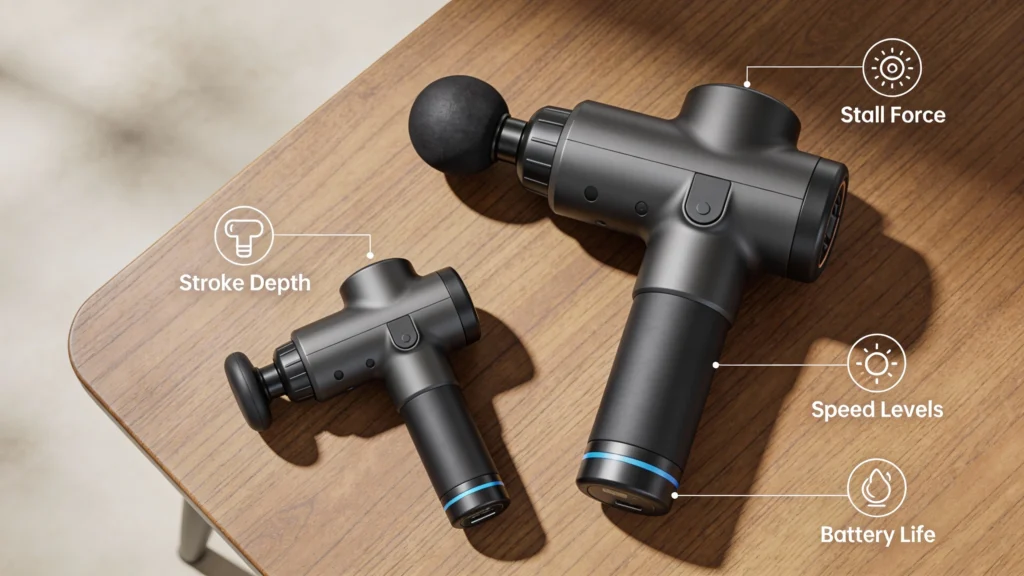
The best percussion massager is less about flashy marketing and more about measurable performance: stroke depth, stall force, speed range, and battery life. When you compare those numbers to your body type and training volume, you quickly see why one person thrives with a compact best handheld massage gun while another needs a heavier-duty model.

Most buyers focus only on price and brand, but two guns costing $200 can feel completely different on muscle. One might reach only superficial tissue, while another penetrates 14 mm and still won’t stall on quads. Understanding how specs translate to real-world relief helps you avoid overpaying for features you’ll never use.

By the end of this guide, you’ll know how to read spec sheets like a coach reads a training plan. You’ll be able to distinguish true percussion therapy from simple vibration, match a best gun massager to your lifestyle, and test devices in minutes to see whether they genuinely loosen tight tissue or just buzz on the surface.

1

What Is a Percussion Massager and How Does It Work?

What Is a Percussion Massager and How Does It Work?

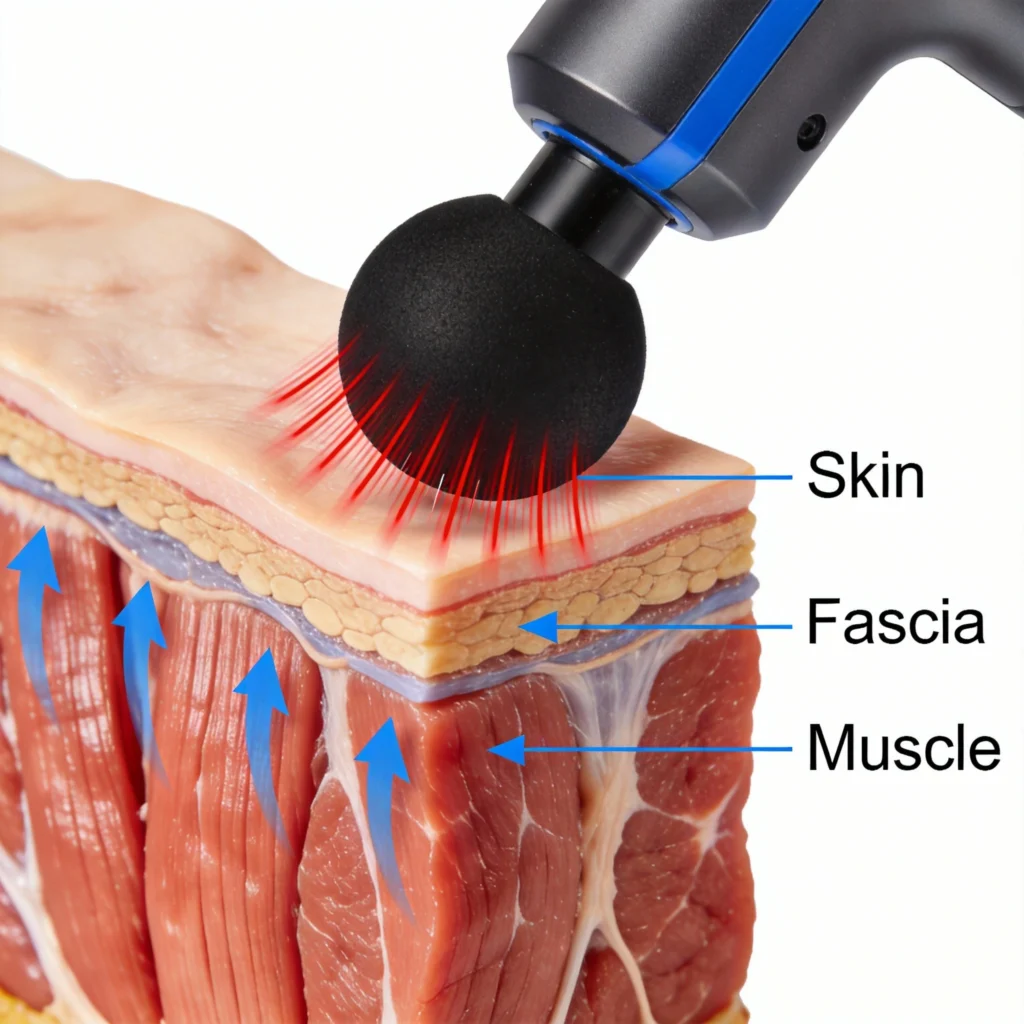
A percussion massager works by driving rapid, repetitive pulses into muscle tissue, reaching deeper layers than simple vibration. Visualizing how the head moves through skin and fascia into the muscle helps explain why stroke depth and stall force matter so much for relieving tightness, improving circulation, and supporting recovery after intense training.

A percussion massager uses a motor-driven arm to drive a massage head in and out of the muscle at high speed. Instead of just shaking on the surface, the head travels a specific amplitude, usually 10–16 mm, delivering rapid, repeated blows that briefly deform muscle fibers and fascia, improving circulation and reducing protective tension.

Deep percussion works by creating short, controlled mechanical stress that stimulates mechanoreceptors in muscle and fascia, signaling the nervous system to reduce tone. This can increase short-term range of motion by 10–20% and decrease perceived soreness scores within minutes, especially when combined with active movement afterward.

Percussion vs. Vibration and Rolling

Vibration plates and low-amplitude guns mainly oscillate side to side, often under 5 mm of movement. They feel buzzy but rarely reach deeper trigger points or thick glutes. Foam rollers compress tissue over a broad area but depend heavily on body weight and technique. True percussion combines vertical depth and speed, typically 1,600–3,200 percussions per minute, giving focused intensity with less effort.

Who Benefits Most from Percussion Therapy?

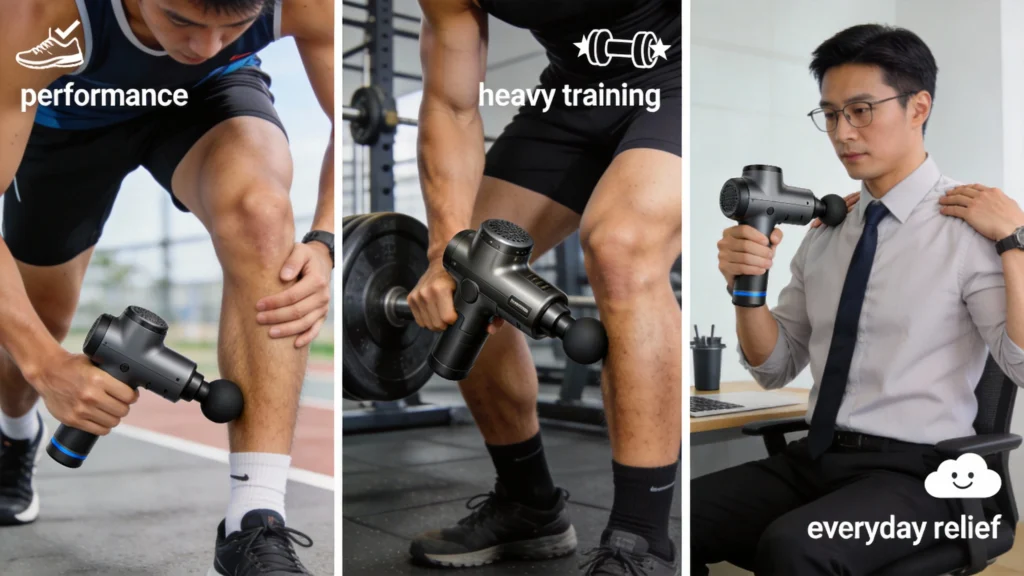
Athletes doing heavy lifting or running 30–60 miles weekly often prefer deeper percussion because quads and calves tolerate more force. Desk workers with chronic neck tightness usually need lower speeds and softer heads to avoid guarding. Seniors or people with fibromyalgia may benefit from gentler, adjustable devices, using shorter sessions to prevent overstimulation and post-treatment soreness.
2
best percussion massager

Core Features of the Best Percussion Massager

Specs determine whether a device can deliver meaningful relief or just a gentle buzz. The best percussion massager balances amplitude, stall force, speed, noise, and battery life. When you look at these numbers together, you can quickly tell if a gun is designed for light relaxation, serious deep-tissue work, or a flexible mix of both.

Core Features of the Best Percussion Massager

Matching the right percussion massager to your use case is crucial. A runner may benefit from a lighter, portable model for calves and feet, while a strength athlete might need a powerful gun that won’t stall on quads or glutes. For desk workers, quieter, gentler devices often provide more practical day-to-day relief.

Key Performance Specs Explained

Amplitude is stroke depth: 10–12 mm suits sensitive areas, while 14–16 mm targets deep glutes and hamstrings. Stall force indicates how much pressure, usually 20–60 pounds, the motor tolerates before stopping. A best gun massager for powerlifters might offer 50–60 pounds, while a compact best handheld massage gun for travel may sit around 25–30 pounds.

Comfort, Noise, and Battery Trade-Offs

Higher stall force and amplitude require stronger motors, which can increase weight and vibration in your hand. Top models keep noise around 40–50 dB at low speeds, similar to a quiet conversation, while cheaper units can exceed 60 dB. Battery life typically ranges from 2–5 hours; swappable batteries are valuable for therapists or coaches treating multiple clients daily.

3

Best Percussion Massager vs. Standard Massage Gun: Is There a Difference?

Best Percussion Massager vs. Standard Massage Gun: Is There a Difference?

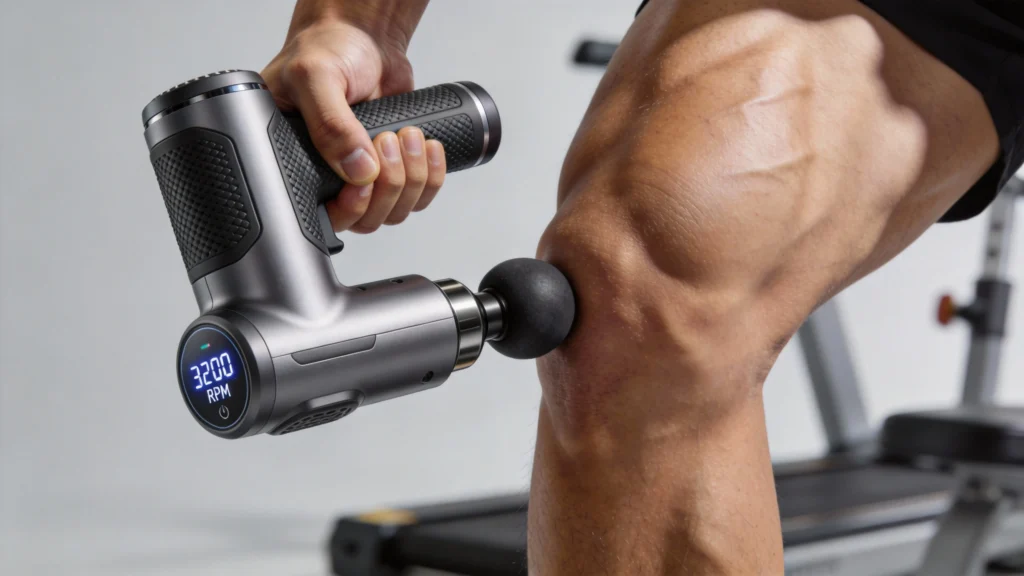
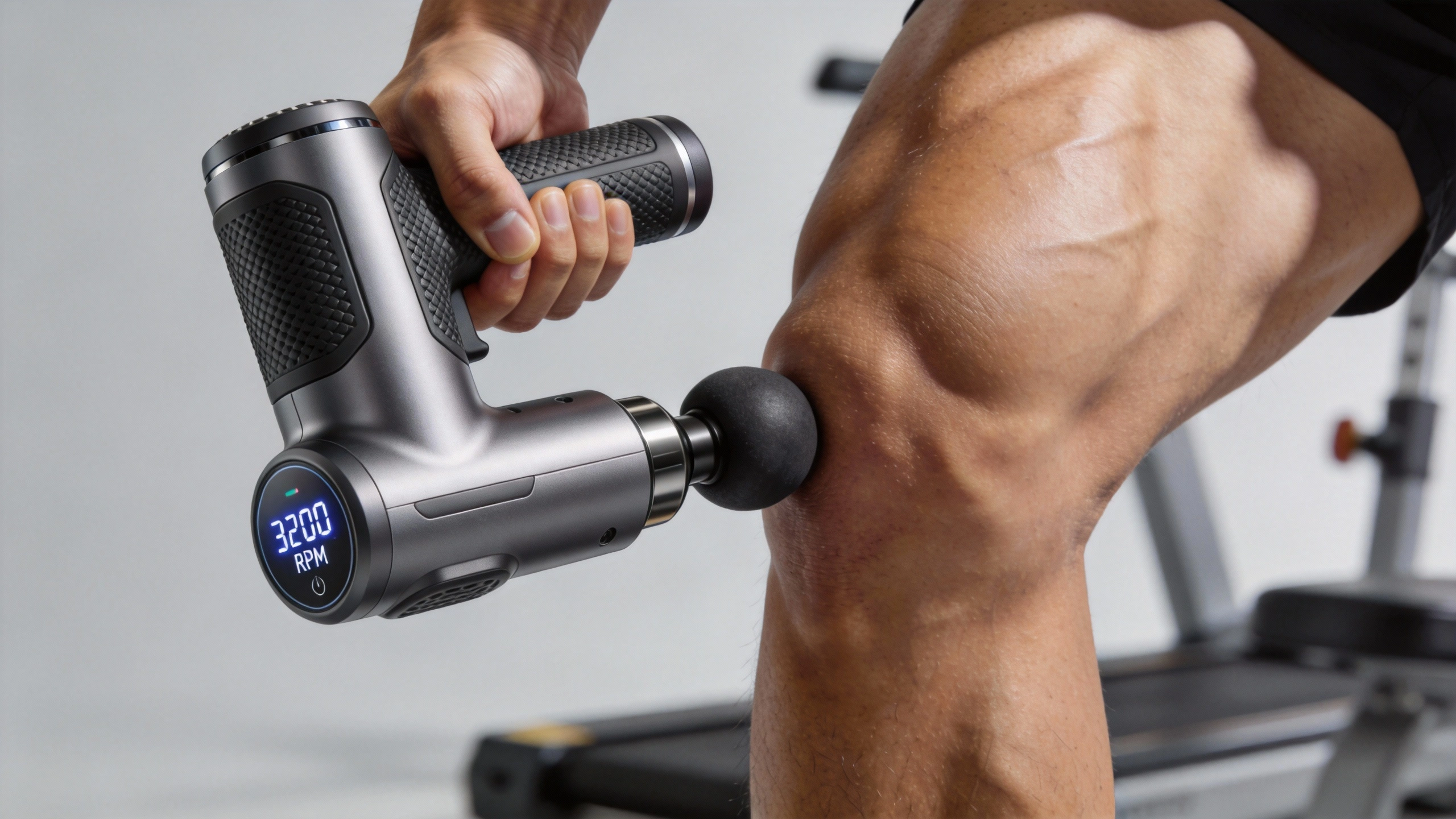
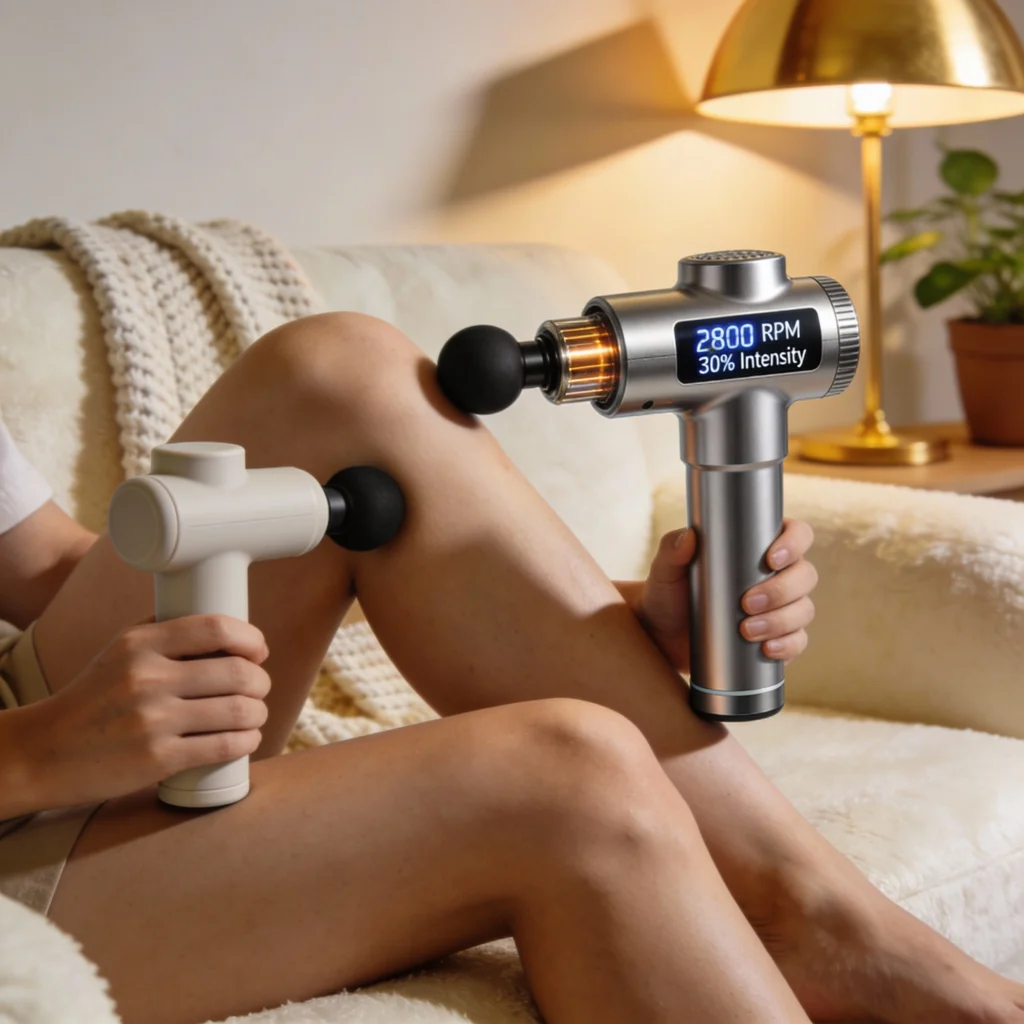
Not every massage gun on the market qualifies as a true percussion massager. Standard models often provide surface-level vibration, while higher-performance units deliver a longer, more forceful stroke. Seeing both in action makes it clear why some devices barely skim the surface and others can reach deep, stubborn muscle tension.

Many brands use “percussion massager” and “massage gun” interchangeably, but not every gun truly delivers percussion. A true percussion device has enough amplitude and stall force to create distinct, punchy strokes rather than a surface-level vibration. Understanding this difference helps you avoid overpaying for a generic handheld massager labeled as performance gear.

True Percussion vs. Generic Massage Guns

True percussion guns, like Theragun Prime or Hypervolt 2 Pro, typically feature 12–16 mm amplitude and at least 40 pounds of stall force. Generic guns often advertise 30 speed levels but only offer 6–8 mm amplitude and weak motors. They feel intense on bony areas yet fail to affect dense tissue, leading to frustration for athletes seeking deep recovery.

  • Look for published amplitude between 12–16 mm rather than vague “deep tissue” claims without measurable stroke depth listed.
  • Check stall force ratings of at least 35–40 pounds if you regularly treat quads, glutes, or hamstrings after heavy training.
  • Ignore inflated speed numbers like “30 levels”; a useful range is 1,600–3,000 percussions per minute with 3–5 clear steps.
  • Confirm warranty length; reputable percussion brands usually provide 1–2 years, signaling confidence in motor durability.

Comparing to Other Home Massagers

Compared with shiatsu cushions or rolling sticks, a best handheld massage gun offers far more control over pressure and angle. You can reach calves, hip flexors, and mid-back without awkward body positions. However, for those mainly seeking relaxation, a heated cushion or compression boot might provide more passive comfort with less active handling required.

4

Comparing Best Percussion Massager Models by Use Case

Choosing the best percussion massager starts with how you’ll actually use it. A marathoner treating calves twice daily needs different specs than a retiree easing arthritic shoulders. Instead of chasing the highest numbers, match amplitude, stall force, and weight to your typical session length, grip strength, and areas you struggle to reach independently.

Comparing Best Percussion Massager Models by Use Case

Core features like stroke depth, stall force, speed range, and battery life determine how a percussion massager feels in use. Side-by-side, a compact and a heavy-duty gun can share a similar price tag yet deliver very different performance, especially when you compare how deeply they reach and how easily they stall on larger muscles.

Use-Case Comparison Table

The table below compares representative models for different users. Prices reflect typical online ranges in 2024 and show how features cluster by use case. Use these benchmarks to evaluate any best gun massager you’re considering, even if it’s a different brand with similar specifications and target audience.

Use CaseExample ModelAmplitude (mm)Stall Force (lb)Approx. Price (USD)
Strength athletesTheragun Pro (5th Gen)1660599
Endurance runnersHypervolt 2 Pro1445329
Desk workersTheragun Prime1630299
Seniors/light usersRENPHO R3 Mini1020120
Budget all-rounderBob and Brad C21035130
Travel-focusedTheragun Mini (2nd Gen)1220199

Athletes training 4–6 days weekly often justify higher prices because durable motors and swappable batteries reduce downtime. Desk workers using a gun 10 minutes nightly can prioritize ergonomics and quieter operation. Seniors may prefer under one kilogram of weight to protect grip strength. Matching these patterns prevents overspending on pro features you’ll barely tap.

5
best percussion massage gun

Attachments and Accessories for the Best Percussion Massage Gun

Attachments dramatically change how a percussion massager feels on your body. The same device with a hard bullet head can feel painfully sharp, while a soft, wide head feels soothing on sore quads. Understanding which heads to use where lets you customize intensity without constantly adjusting speed or pressing harder into sensitive tissues.

Attachments and Accessories for the Best Percussion Massage Gun

Common Attachment Types and Uses

Most best handheld massage gun kits include at least four heads: ball, flat, fork, and bullet. Ball heads, often EVA foam, disperse force across larger areas like quads or glutes. Flat heads suit denser tissue, while fork heads straddle the spine or Achilles. Bullet tips target small trigger points but should be used cautiously on bony regions.

  • Soft ball head: ideal for quads, hamstrings, and glutes, offering forgiving contact during early recovery days after heavy lifting.
  • Flat head: better for IT band and pecs, spreading pressure evenly while still reaching moderately deep tissue layers.
  • Fork head: designed to run along the spine or Achilles, avoiding direct pressure on spinous processes or tendons.
  • Bullet head: used sparingly on dense knots in calves or rotator cuff, at low speeds for short, targeted bursts.

Extra Accessories That Actually Help

Swappable batteries extend runtime for therapists treating multiple clients, while carrying cases protect guns tossed into gym bags. Extension handles or angled grips improve reach to mid-back, especially for people with limited shoulder mobility. Smart app integration can guide session duration and pressure, but many users find simple preset routines easier to follow consistently.

6

How to Test and Evaluate a Percussion Massager Before You Buy

How to Test and Evaluate a Percussion Massager Before You Buy

Hands-on testing quickly reveals whether a device’s specs match your comfort and strength. Even five minutes in a store or during a home trial can show if a gun stalls too easily on quads, feels awkward to hold, or produces distracting noise levels that would discourage regular use in shared living spaces.

Practical Testing Checklist

Start by holding the gun on its lowest speed for 30 seconds on your forearm. Notice handle vibration, grip comfort, and noise. Then apply it to quads at a mid-speed, gradually adding pressure until you feel relief without bracing. Finally, evaluate reach to mid-back and calves, simulating how you’d actually use the device daily.

  • Time how long your hand feels comfortable gripping; heavy guns over 1.2 kg may fatigue smaller users quickly.
  • Listen for rattling or high-pitched noise; anything above about 55 dB can annoy roommates or partners nearby.
  • Check for stalling when pressing into quads; frequent stalls suggest insufficient stall force for athletic recovery.
  • Test switching attachments; if it feels stiff or flimsy, you’re more likely to avoid experimenting with different heads.

Interpreting Your Impressions

If you instinctively lower pressure or speed because the sensation feels too sharp, you may need a softer head or lower amplitude device. Conversely, if you’re maxing out speed and still craving more depth, prioritize higher stall force and 14–16 mm amplitude. Comfort and ease of use matter more than chasing the most aggressive specs on paper.

7

Safety Tips When Using the Best Percussion Massager at Home

Used correctly, percussion massagers are generally safe, but overuse or poor technique can cause bruising or aggravate existing injuries. Most users benefit from short, focused sessions of 30–60 seconds per muscle group, repeated one to three times daily. Respecting these limits protects tissue while still delivering meaningful improvements in comfort and mobility.

Safety Tips When Using the Best Percussion Massager at Home

Session Length, Pressure, and Frequency

Spend about 30 seconds sweeping along a muscle, then reassess. If it feels looser, move on instead of camping on one spot. Use light to moderate pressure; let the gun’s weight and motor do most of the work. Athletes might use a best gun massager pre-workout for 5–10 minutes and post-workout for another 10 minutes.

Aim for a sensation of 6–7 out of 10 on an intensity scale, where 0 is nothing and 10 is unbearable pain. If you’re wincing, holding your breath, or tensing around the area, you’re likely exceeding a useful threshold and training your nervous system to guard rather than relax.

Contraindications and When to Avoid Use

Avoid using percussion over recent fractures, open wounds, blood clots, or areas with decreased sensation from neuropathy. People on blood thinners bruise more easily and should use lower speeds and softer heads. Pregnant users should avoid direct use over the abdomen and lower back without medical clearance, focusing instead on calves, glutes, and upper back.

Always consult a healthcare professional if you have cardiovascular disease, implanted devices like pacemakers, or uncontrolled diabetes. When in doubt, start with shorter sessions and gentler settings, observing how your body responds over 24 hours. Mild soreness is acceptable, but sharp pain or lasting bruising means you should reduce intensity or discontinue use and seek guidance.

Face, Neck, Head, Body, Back & Foot Massager
For a Relaxing & Relieving Lifestyle
14-day money back guarantee
Lowest Prices: 365 Days Discount
Safe & Secure online payment
Contact Us

Massagers Mart © 2025. All Rights Reserved

Massagers Mart
Logo
Compare items
  • Total (0)
Compare
0
Shopping cart