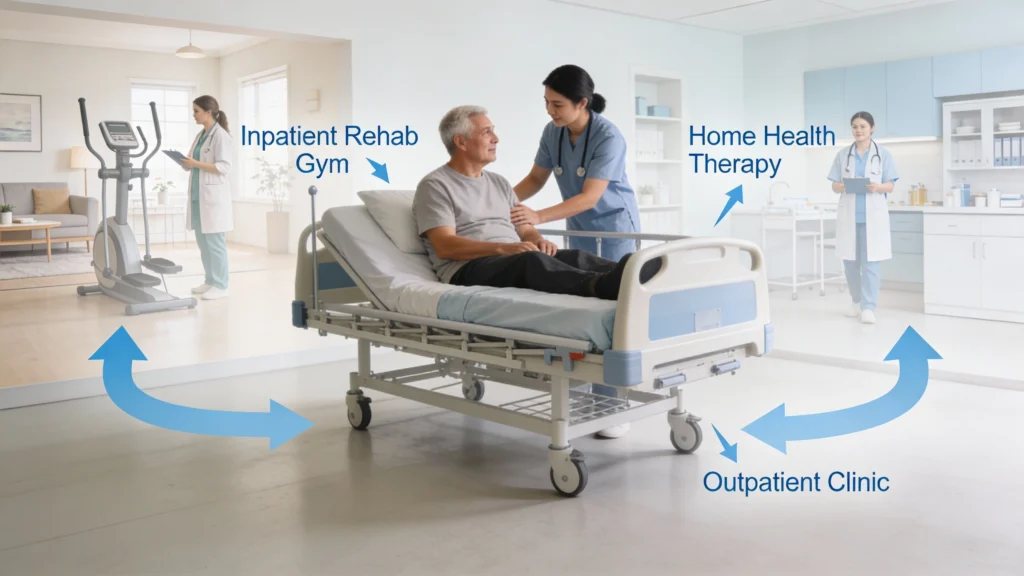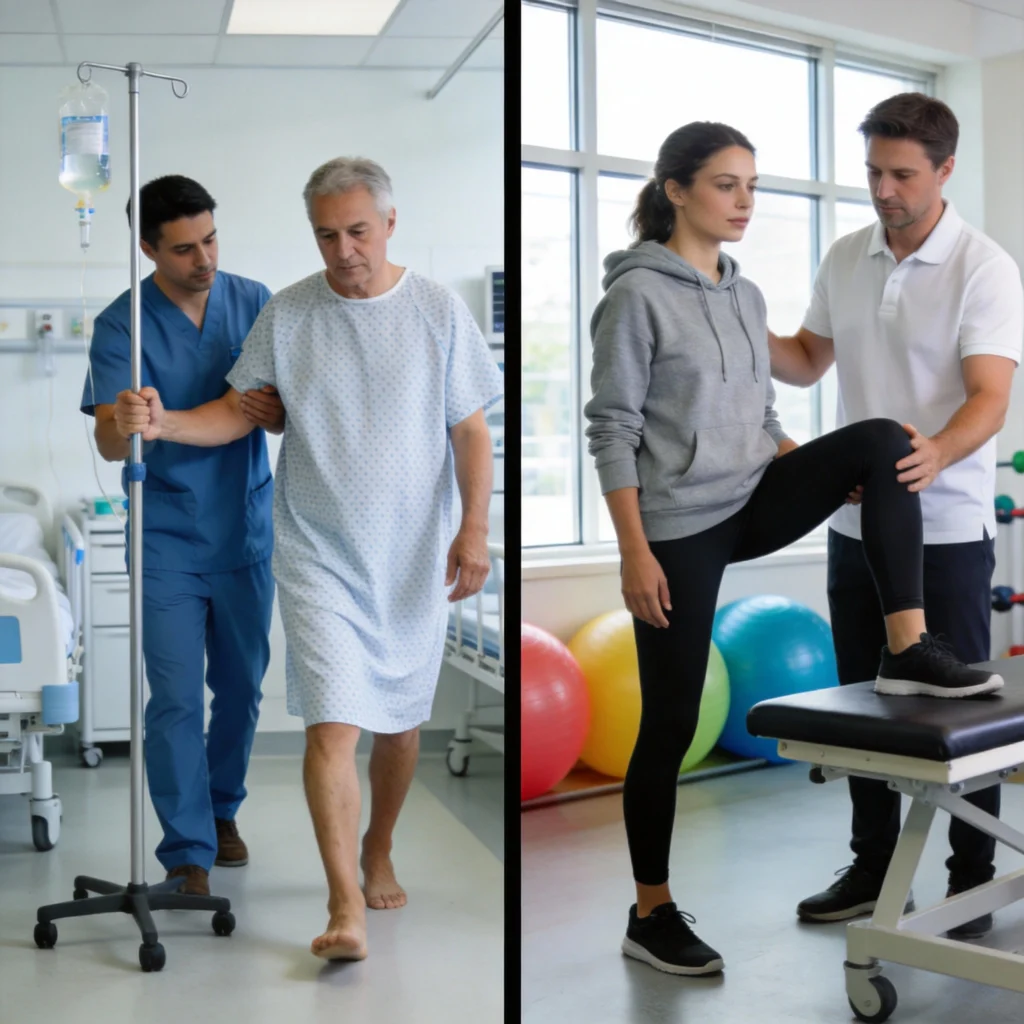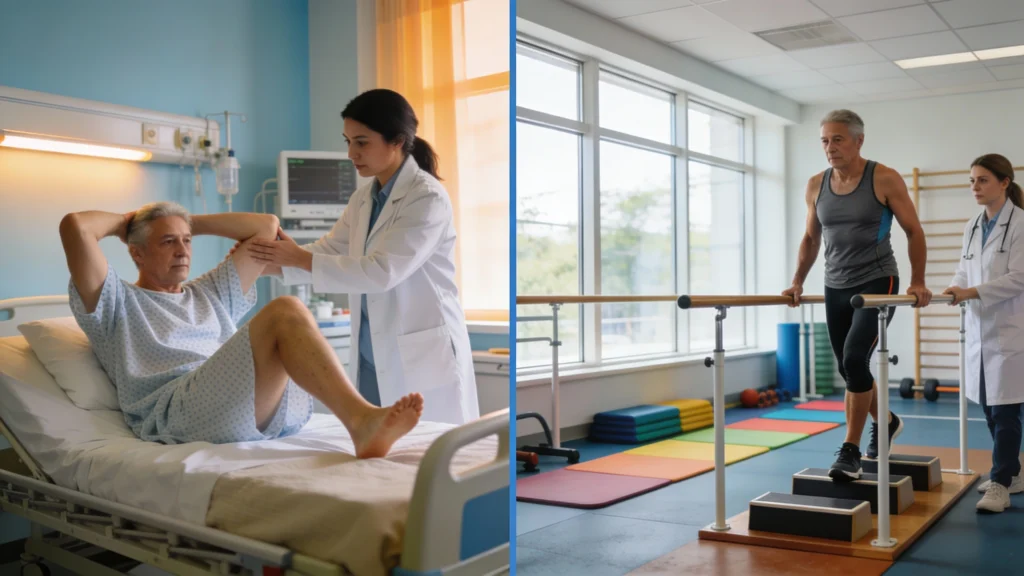

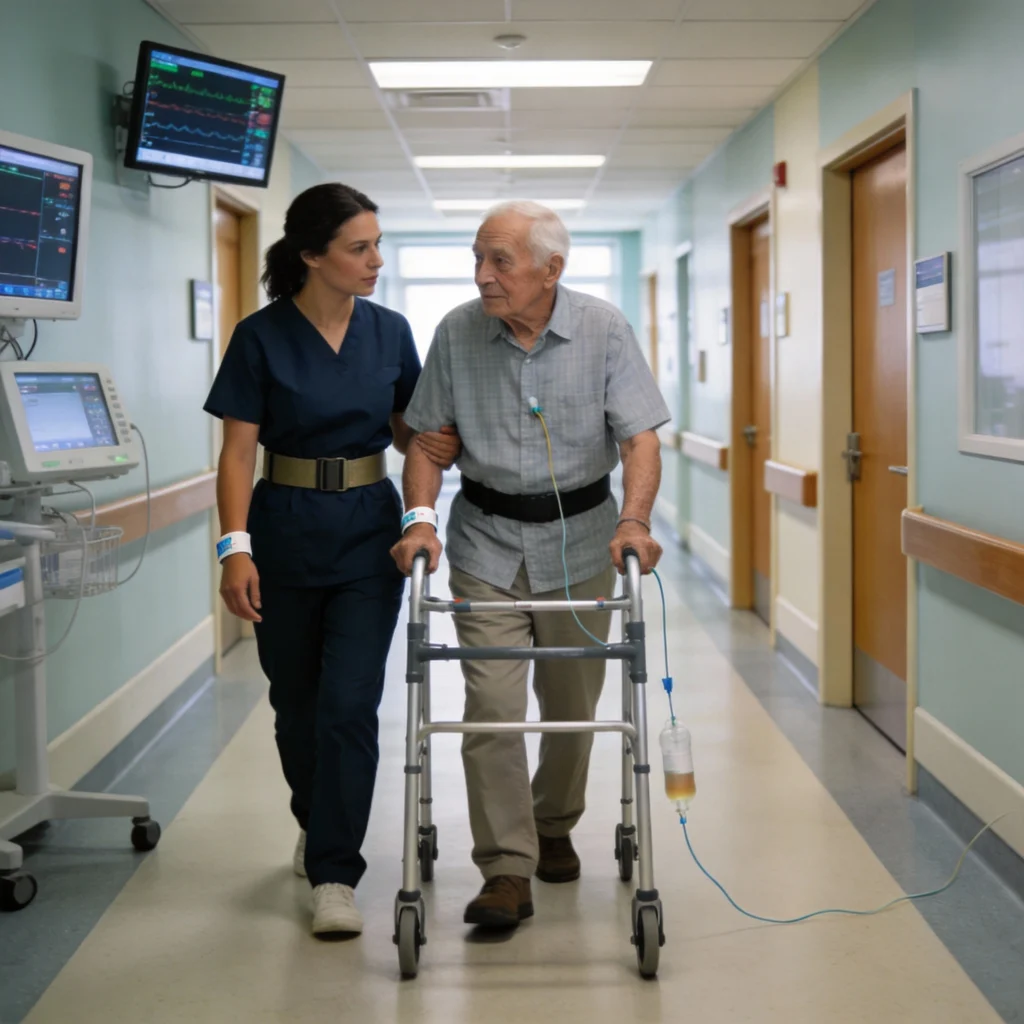
In the acute care setting, physical therapists often work in tight hospital spaces like hallways and small rooms. Sessions are brief but focused on essentials: getting out of bed safely, walking short distances with equipment, and practicing transfers to a chair or toilet while keeping lines, monitors, and medical precautions in mind.
Acute care physical therapy takes place on hospital floors like ICU, step-down, and medical-surgical units, where patients may have oxygen lines, IV pumps, or heart monitors. Therapists typically see people within hours to a few days after events such as hip fractures, heart failure exacerbations, or sepsis, when medical instability and safety risks demand short, carefully monitored sessions.
Patient Population and Clinical Priorities
Therapists in acute care manage patients whose blood pressure can swing 20–30 mmHg with standing and whose oxygen saturation may drop below 90% during simple transfers. They prioritize preventing complications—like deconditioning, skin breakdown, and delirium—through early mobilization, even if it’s only sitting at the edge of the bed for five minutes or marching in place with a walker and portable monitor.
Hospital Environment and Team Collaboration
Sessions occur amid frequent lab draws, imaging tests, and medication changes, so acute therapists coordinate closely with nurses, respiratory therapists, and physicians. They constantly weigh benefits of movement against risks like arrhythmias or falls. Notes from each 15–30 minute treatment directly inform daily medical rounds, influencing decisions about discharge timing, oxygen needs, and whether a patient can safely tolerate more intensive rehabilitation.