Best ACL Knee Brace for Sports: Stay Protected While You Play

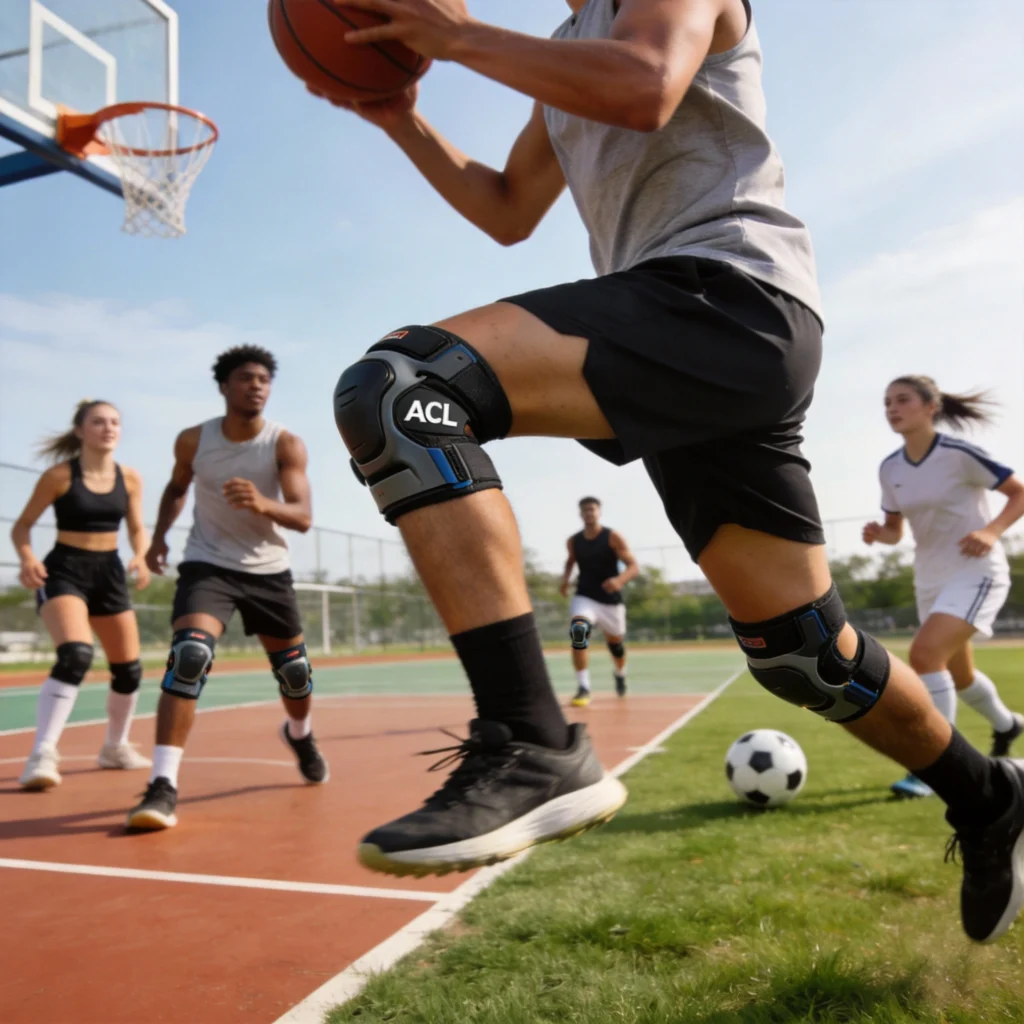
Planting hard for a jump shot or cutting to the goal after an ACL injury can feel terrifying. The right ACL knee brace for sports helps bridge the gap between rehab and full-speed play, adding mechanical stability and psychological confidence when every pivot matters.

Choosing an ACL brace for knee stability is about more than buying the stiffest model online. Different sports, body sizes, and stages of ACL physical therapy demand very specific support levels, hinge designs, and strap systems. Matching brace features to your cutting, jumping, or contact loads reduces re-injury risk while keeping you mobile enough to actually perform.

Surgeons often recommend functional bracing for at least the first competitive season after reconstruction, especially in pivoting sports like basketball, soccer, and skiing. A well-fitted brace can resist anterior tibial translation by several millimeters, similar to the original ligament. That external support lets you trust your knee while your graft and neuromuscular control continue to mature over 9–12 months.

Braces are not magic shields, though. Without strong quads, hamstrings, and good landing mechanics, even a $700 custom brace cannot fully protect you. The goal is combining progressive ACL physical therapy with a brace that matches your sport’s exact demands. That integrated strategy supports both your knee joint and your mindset when you finally return to competition.

1
ACL knee brace for sports

How an ACL Knee Brace for Sports Helps During Return to Play

How an ACL Knee Brace for Sports Helps During Return to Play

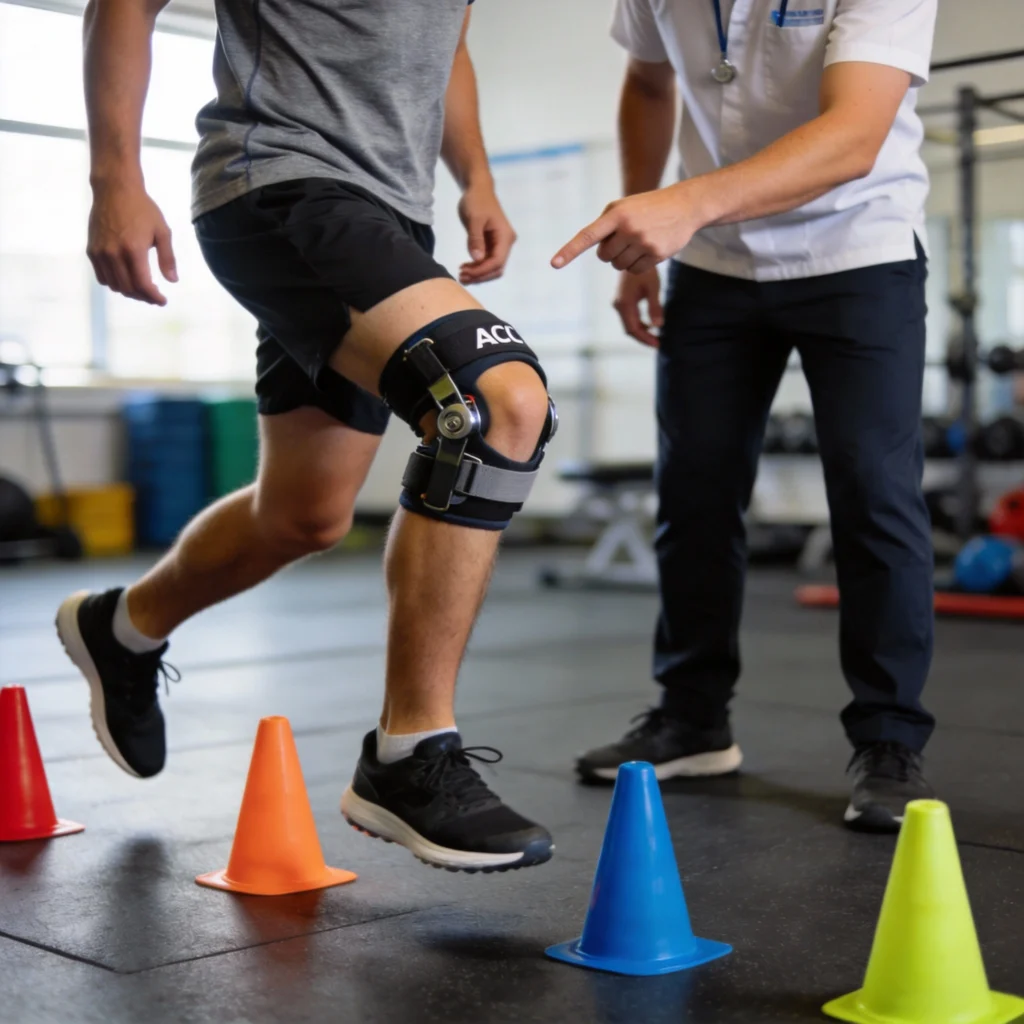
During the return-to-play phase, an ACL knee brace acts as an external safety net while you rebuild strength and control. By resisting anterior tibial translation and supporting rotational stability during drills, it lets you practice cutting, hopping, and deceleration patterns under supervision without overloading a still-maturing graft.

After ACL surgery, the graft is weakest between weeks 6 and 12, just when athletes start more aggressive drills. An ACL knee brace for sports adds external stability against anterior tibial translation and rotational forces created by cutting and landing. That mechanical backup can reduce peak strain on the healing graft during unpredictable movements like unplanned pivots or contact.

Mechanical Support in High-Risk Movements

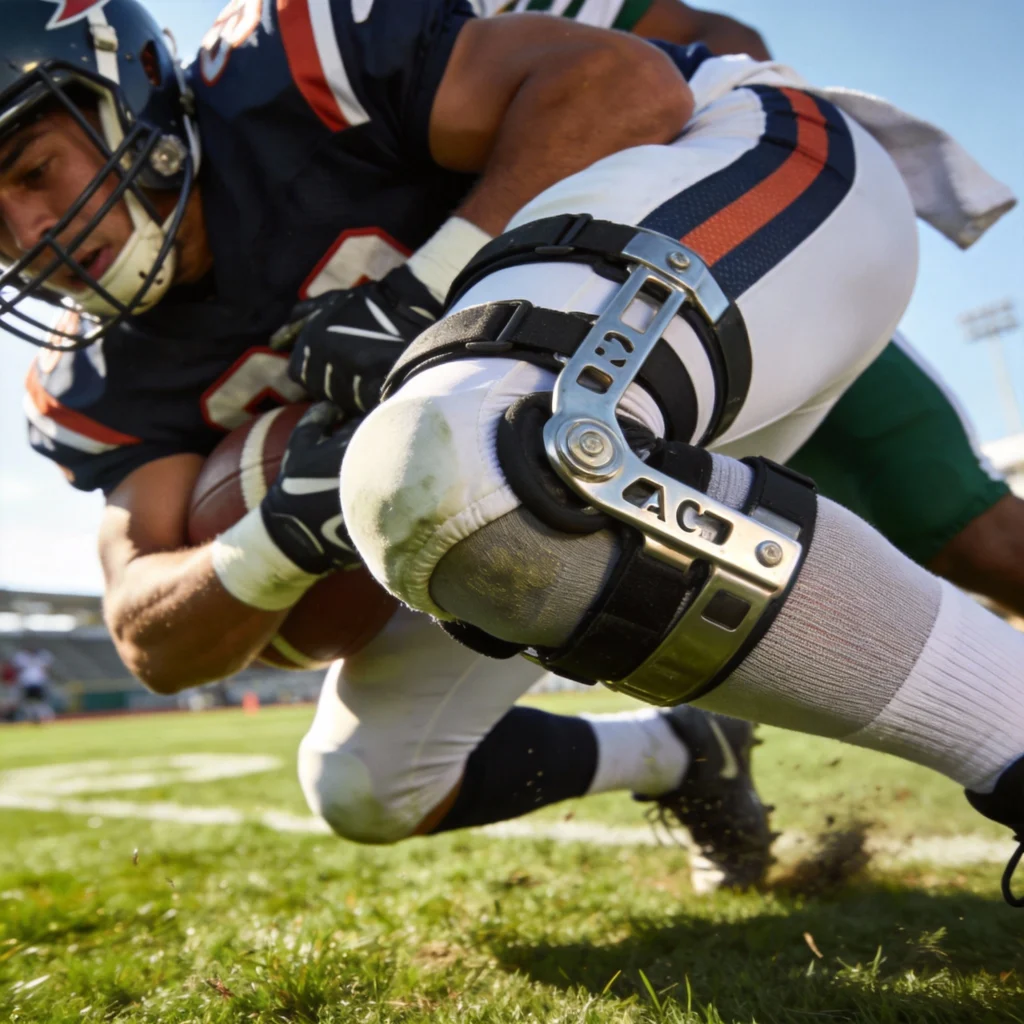
Functional ACL braces use rigid side uprights and a four-point strap system to resist forward tibial movement by roughly 2–3 mm under load. During a soccer cut at 30–40 degrees, that small reduction meaningfully lowers strain on the graft. Hinges also help control hyperextension by blocking motion past 0–5 degrees, crucial when landing from rebounds or ski jumps.

Psychological Confidence and Motor Control

Fear of re-injury can reduce quad activation by 10–20%, slowing reaction times and destabilizing the knee. Wearing a brace often improves perceived stability scores in return-to-sport testing, encouraging athletes to fully commit to cuts and landings. That confidence allows more natural movement patterns, which in turn improves neuromuscular control gained during ACL physical therapy.

Many athletes report the brace as a “safety belt,” not because it prevents every injury, but because it lets them trust their training enough to move decisively again.
2
acl knee brace

Key Features to Look For in an ACL Knee Brace for Sports

Picking a brace off reviews alone can backfire if it snags on shin guards or slips under a wetsuit. Evaluating rigidity, hinge design, materials, and strap layout against your sport’s specific gear and movement demands ensures the brace supports you without constantly distracting or restricting performance-critical motions like sprinting or deep squats.

Key Features to Look For in an ACL Knee Brace for Sports

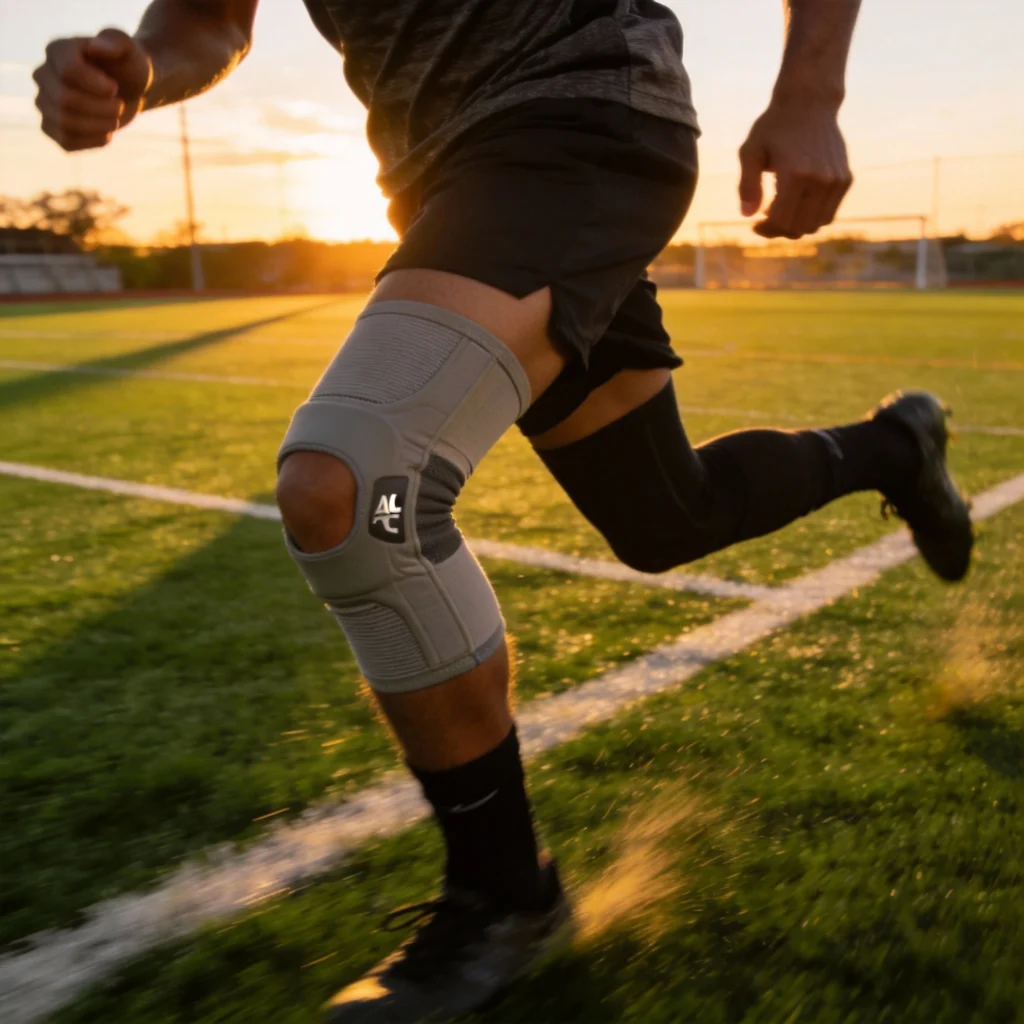
Athletes in speed- and agility-focused sports often prefer low-profile ACL braces that won’t feel bulky during rapid sprints or quick changes of direction. Lightweight frames and minimalist hinges provide targeted support against rotational stress while preserving a natural stride, so you can accelerate, decelerate, and cut without feeling restricted.

Structural Design, Materials, and Hinge Function

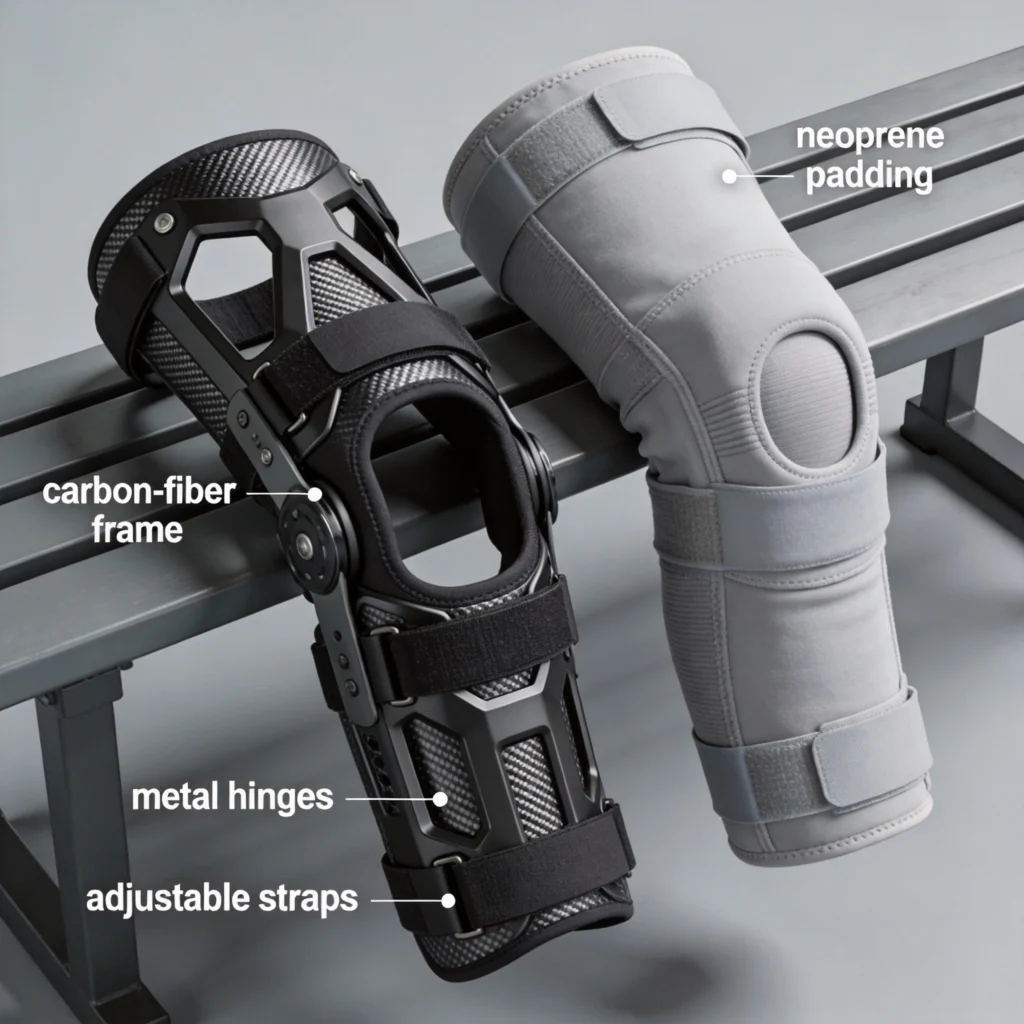
Rigid-frame braces made from aluminum or carbon fiber provide higher resistance to torsion, ideal for football linemen or skiers facing unpredictable forces. Dual-axis polycentric hinges track the knee’s natural rolling-gliding motion better than single hinges, reducing pinching at 90–120 degrees flexion. Lightweight models under 500 grams suit guards and wingers who rely on acceleration more than constant contact resistance.

  • Carbon-fiber frames around 450–550 g balance rigidity and speed, common in braces like DonJoy Defiance III.
  • Aluminum uprights closer to 650–750 g suit football or rugby where impact resistance outweighs agility needs.
  • Polycentric hinges allow smoother 0–130 degree flexion, limiting hyperextension without blocking deep squats.
  • Breathable liners with moisture-wicking fabrics reduce sweat accumulation during 60–90 minute games or training.

Strap Configuration and Sport-Specific Compatibility

Four-point strapping systems cross above and below the knee to counteract anterior tibial translation during deceleration. Wider 5 cm straps distribute pressure better during long runs, while low-profile buckles avoid catching on compression tights. For soccer or lacrosse, shorter calf cuffs prevent interference with shin guards, whereas skiers often prefer longer cuffs for boot overlap stability.

  • Anti-slip silicone gripping on inner cuffs reduces brace migration more than 30–40 mm during repeated sprints.
  • Quick-release buckles save 30–60 seconds during halftime adjustments compared with traditional loop-and-hook straps.
  • Low-profile hinges under 15 mm thickness fit comfortably beneath slim basketball or soccer tights.
  • Removable pads allow fine-tuning over graft sites, reducing local pressure on surgical tunnels or hardware.
3

Top Rigid-Frame ACL Knee Brace for Sports for High-Impact Activities

Rigid-frame braces are the go-to choice when collisions, unpredictable terrain, or high torque loads threaten knee stability. These models prioritize maximum control of tibial translation and rotation, making them popular among football players, skiers, and contact athletes returning after ACL reconstruction who still face frequent pileups, tackles, or aggressive blocking scenarios.

Top Rigid-Frame ACL Knee Brace for Sports for High-Impact Activities

For collision and high-impact sports like football or rugby, a rigid-frame ACL brace is often recommended. Its sturdy uprights and firm hinges help control valgus stress and twisting forces that occur during tackles and pileups, reducing the risk of re-injury while still allowing enough flexion and extension for explosive movements.

Comparing Leading Rigid-Frame Options

Several widely used braces combine carbon or aluminum frames with polycentric hinges to restrain motion in multiple planes. Designs like the DonJoy Defiance III and CTi Custom focus on four-point leverage systems, while off-the-shelf versions balance cost and adjustability. Understanding frame weight, adjustability ranges, and typical price points helps align your choice with both sport demands and budget.

Brace ModelFrame MaterialWeight (grams)Approx. Price (USD)Best For
DonJoy Defiance IIICarbon fiber500800–1,000Basketball, soccer, high-level pivoting sports
Össur CTi CustomCarbon composite550900–1,100Skiing, snowboarding, motocross
DonJoy Armor FourcePointAluminum650450–600Football, rugby, contact sports
Össur CTi OTSCarbon composite600500–700Recreational pivoting, multi-sport athletes
Breg Fusion XTAluminum alloy620400–550Field sports, larger athletes, linemen

When choosing among these, think about your collision frequency, playing surface, and typical season length. A skier logging 40–60 days per winter may justify a custom carbon brace for precise boot integration, whereas a high-school linebacker might prioritize the Armor FourcePoint’s impact resistance and lower price. Discussing these specifics with your surgeon or physical therapist ensures the brace truly matches your risk profile.

4

Best Lightweight ACL Knee Brace for Sports Focused on Speed and Agility

Not every athlete needs a heavy, rigid cage around the knee. Guards, wingers, and distance runners often prioritize speed, quick footwork, and minimal restriction. Lightweight ACL knee braces under about 450–500 grams still provide functional support against anterior translation but reduce bulk, making them easier to wear for full games or long training sessions.

Best Lightweight ACL Knee Brace for Sports Focused on Speed and Agility

Key brace features—such as rigid or flexible hinges, strap configuration, frame material, and padding—should match your sport demands and body type. Rigid frames offer strong control for heavy contact or aggressive cutting, while lighter hinged sleeves favor athletes who prioritize speed and agility but still need directional support.

Low-Profile Braces for Running and Court Sports

Lightweight models use thinner composite frames, slim hinges, and breathable sleeves to cut weight while preserving essential stability. Designs like the DonJoy Playmaker II or Breg Z-12 offer moderate rigid support without the mass of full-contact braces. These are ideal for athletes who have completed advanced ACL physical therapy and mainly need reassurance plus mild mechanical backup.

Brace ModelTypeWeight (grams)Approx. Price (USD)Ideal Sports
DonJoy Playmaker IISoft-hinged350150–250Basketball, volleyball, recreational soccer
Breg Z-12Light rigid-frame430250–350Soccer wings, lacrosse middies, tennis
Össur Formfit Pro KneeCompression with hinges22080–130Running, fitness classes, non-contact sports
Shock Doctor Ultra HingedRetail hinged30070–120Recreational basketball, flag football
McDavid 429XHinged sleeve32090–140Pickup sports, early return to jogging

These braces shine when your main concern is occasional instability rather than constant heavy contact. They pair well with agility ladders, shuttle runs, and plyometrics in late-stage rehab. If you still feel significant giving-way episodes during hard cuts, though, you may need to step up to a more rigid-frame model or revisit strength deficits with your therapist.

5

Comparing Custom vs Off-the-Shelf ACL Knee Brace for Sports

One major decision is whether to invest in a custom-molded brace or choose an off-the-shelf size-adjustable model. Custom braces use measurements or 3D scans of your leg to contour the frame closely, while ready-made options rely on S–XL sizing. Each approach has trade-offs in fit precision, cost, and how well they integrate with your sport-specific equipment.

Comparing Custom vs Off-the-Shelf ACL Knee Brace for Sports

Fit Precision, Comfort, and Performance Differences

Custom braces generally distribute pressure more evenly because the frame follows your exact thigh and calf curves. That can reduce hot spots during 90-minute matches or full tournament days. They also tend to migrate less, sometimes under 5–10 mm during repeated sprints. Off-the-shelf braces may require more strap tweaking but are easier to replace or adjust if your leg size changes.

Cost, Insurance, and Practical Considerations

Custom ACL braces typically cost between $800 and $1,200, though insurance may cover 50–80% when prescribed post-surgery. Off-the-shelf options range from about $150 for basic hinged sleeves to $600 for high-end rigid models. If you play multiple sports or expect muscle mass changes from strength training, an adjustable off-the-shelf brace can be more practical than a single, fixed custom fit.

Think of custom braces like tailored cleats: unbeatable when dialed in, but only worth the premium if you consistently play at higher intensities and volumes.

6

How to Fit and Wear an ACL Knee Brace for Sports Correctly

How to Fit and Wear an ACL Knee Brace for Sports Correctly

Even the best-designed brace fails if it slides down your leg or pinches during deep bends. Proper sizing, strap tension, and sport-specific testing matter as much as the brand name. A good rule is that the brace should move less than 10–15 mm during a full sprint and never create numbness or tingling below the knee.

Sizing, Positioning, and Strap Adjustment

Start by measuring mid-thigh and calf circumferences about 15 cm above and below the kneecap, matching the manufacturer’s chart carefully. When donning, center the hinge slightly above the joint line to match your natural axis. Tighten straps in the recommended sequence, usually distal to proximal, until snug but not constricting; you should still slide two fingers under each strap.

Testing Fit with Sport-Specific Movements

Before game day, test the brace during controlled drills: 10–20 bodyweight squats, lateral shuffles, and 45-degree cuts. Watch for rotation of the frame or more than 1–2 cm downward migration. If you feel pressure over surgical scars, adjust pads rather than loosening all straps. Recheck strap tension after 10–15 minutes of warm-up since sweat and tissue compression can change fit.

Never judge fit only while standing still; your brace must stay aligned through full-speed, sport-specific movements or it becomes an expensive distraction.

Face, Neck, Head, Body, Back & Foot Massager
For a Relaxing & Relieving Lifestyle
14-day money back guarantee
Lowest Prices: 365 Days Discount
Safe & Secure online payment
Contact Us

Massagers Mart © 2025. All Rights Reserved

Massagers Mart
Logo
Compare items
  • Total (0)
Compare
0
Shopping cart