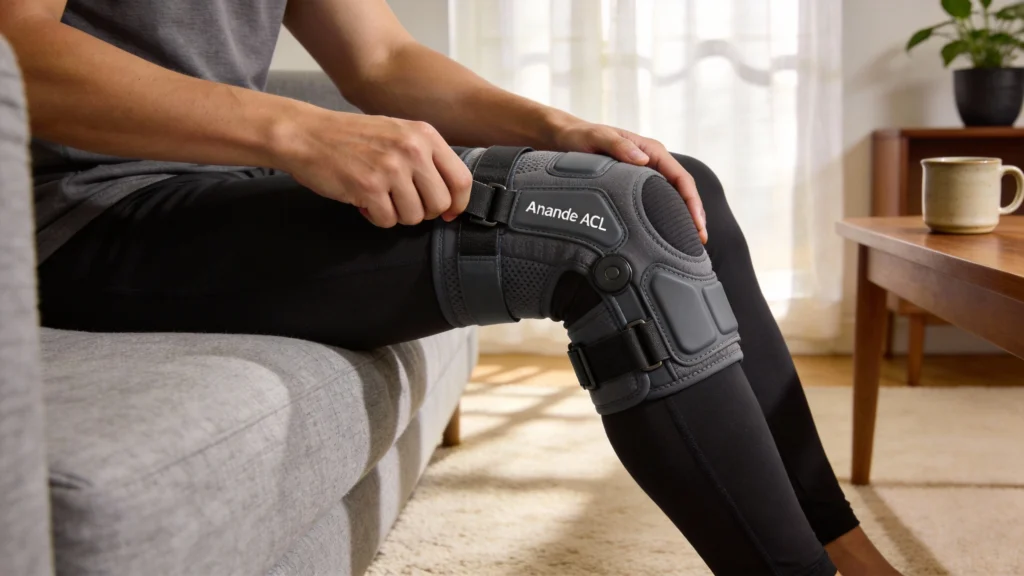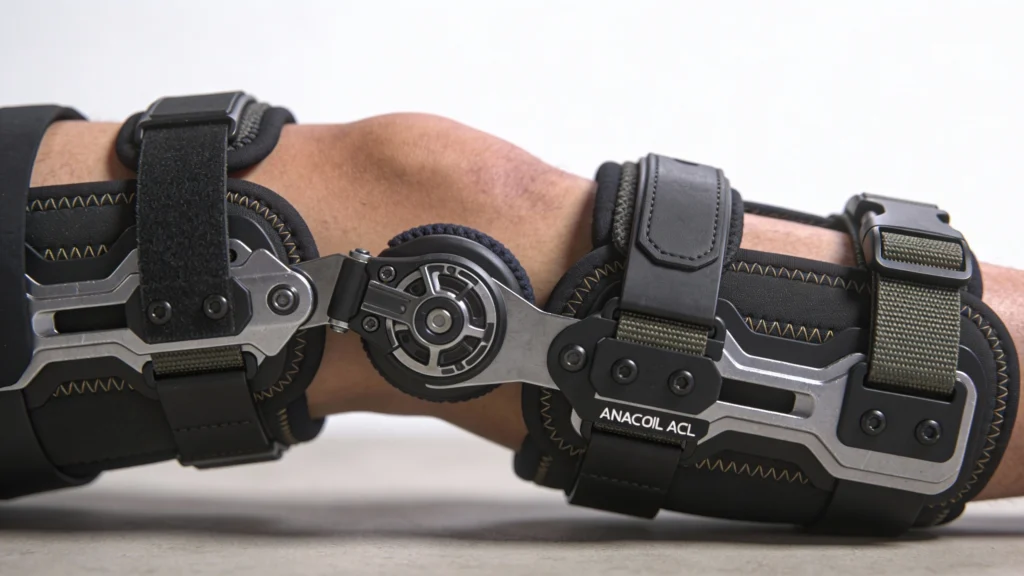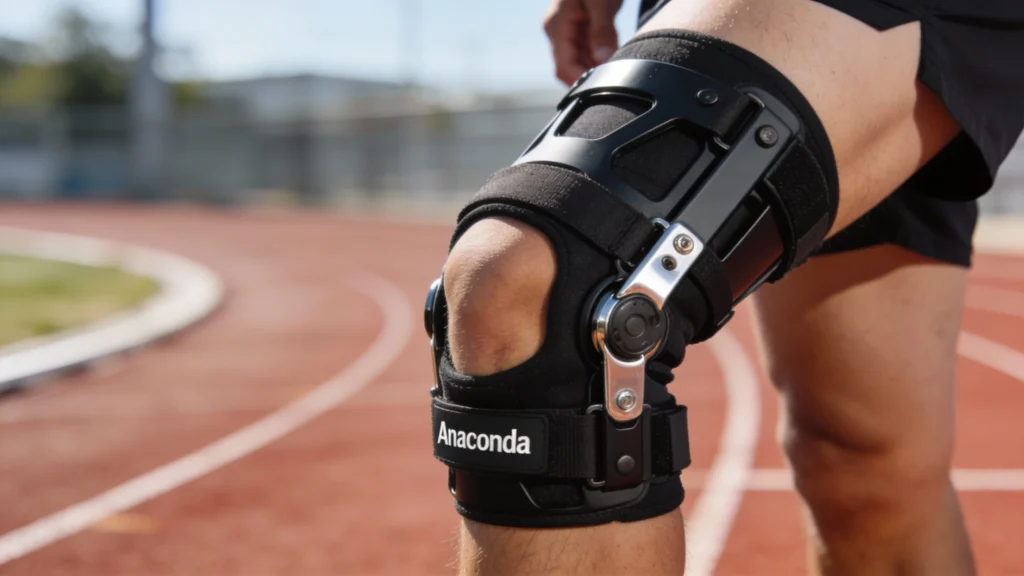
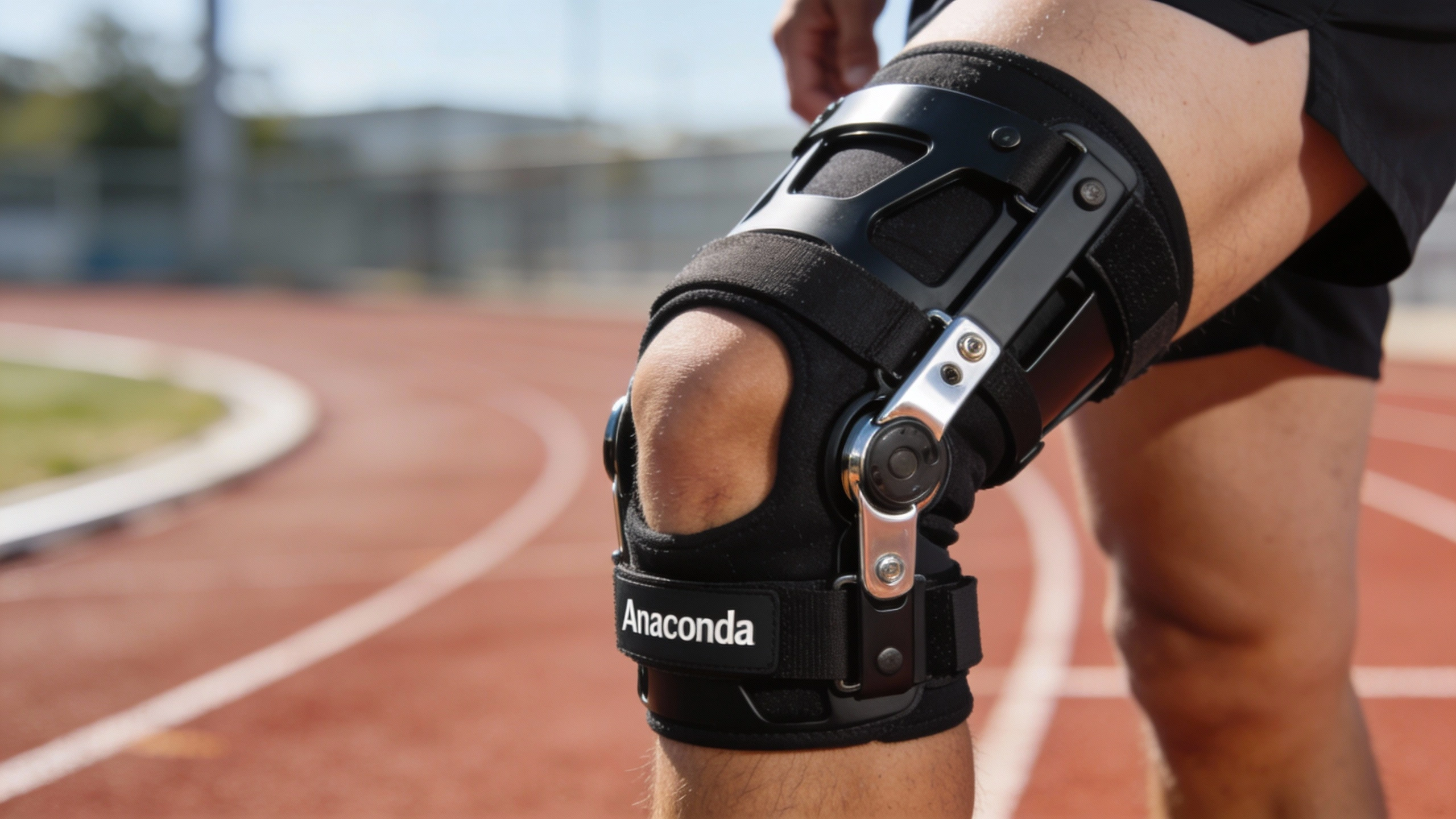
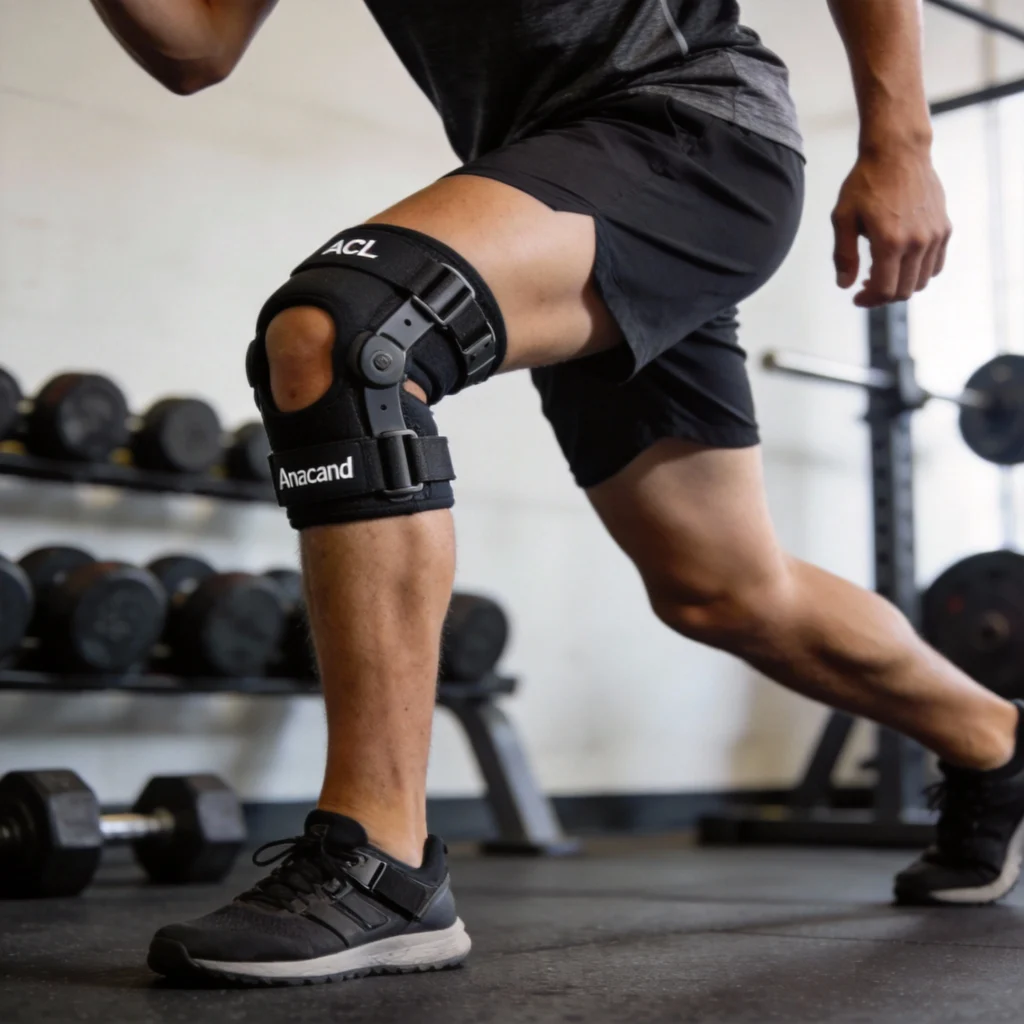
As an ACL knee brace, the Anaconda is positioned for people with partial tears, post-reconstruction recovery, or chronic instability who still want to move. It’s designed for low- to moderate-intensity activities, like gym work or light drills, where you need more control than a soft sleeve but not a full custom frame.
The Anaconda is positioned as a functional ACL knee brace for sports and everyday protection, rather than a simple compression sleeve. It typically features a rigid aluminum or composite frame spanning mid-thigh to upper calf, about 35–40 cm in length, with dual hinges. This structure aims to control anterior tibial translation and valgus stress, two motions strongly linked to ACL strain during cutting or landing.
Intended Use and Target Users
Manufacturers usually recommend the Anaconda brace for individuals between six weeks and two years post-ACL reconstruction or for chronic ACL-deficient knees. It is designed for users weighing roughly 55–110 kg, with thigh circumferences from about 38–65 cm. This range covers most adult athletes, but very petite or very muscular users may struggle to get precise strap tension, affecting stability under rapid deceleration.
Marketing Claims and Realistic Expectations
Marketing materials often emphasize that this acl brace for knee injuries can support recreational soccer, skiing, and basketball without significantly limiting performance. However, no brace restores the original ligament function or eliminates injury risk. Instead, the Anaconda should be seen as a mechanical backup while neuromuscular control improves.
“A brace can reduce peak strain by roughly 20–30%, but only coordinated strength and technique close the remaining gap.”