Best Neck and Shoulder Massager with Heat: Complete Buying Guide

Stiff neck, tight shoulders, and that dull ache behind your shoulder blades can build up after hours at a desk. A heated neck and shoulder massager promises spa‑like relief in minutes, but not every model delivers safe, targeted comfort. Understanding how heat and massage work together helps you avoid gimmicks and choose a device that truly supports recovery.

The best neck massager with heat combines controlled warmth with mechanical kneading to relax muscles that stay contracted for eight to ten hours daily. Instead of only masking pain, these devices improve circulation in the trapezius and cervical muscles, helping clear metabolic waste. When you know what temperature ranges, massage styles, and safety features to prioritize, you can match a device to your specific pain pattern and tolerance.

A good heated massager will not replace physical therapy or medical care, especially for chronic conditions like cervical disc disease. It can, however, extend the benefits of stretching, ergonomic adjustments, and exercise by providing 15–20 minutes of focused relaxation at home. Setting realistic expectations—relief, not cure—keeps you from overusing heat, which can worsen inflammation if applied for too long or at excessive temperatures.

Before buying, think about where you’ll use it most: at a desk, on the couch, or lying in bed. Cord length, weight, and strap design determine whether you can comfortably target upper traps or the base of the skull. Paying attention to these practical details, along with safety certifications and warranty terms, ensures your best neck and shoulder massager with heat remains a helpful tool instead of an expensive drawer accessory.

1
neck and shoulder massager with heat

How a Best Neck and Shoulder Massager with Heat Relieves Tension

How a Best Neck and Shoulder Massager with Heat Relieves Tension

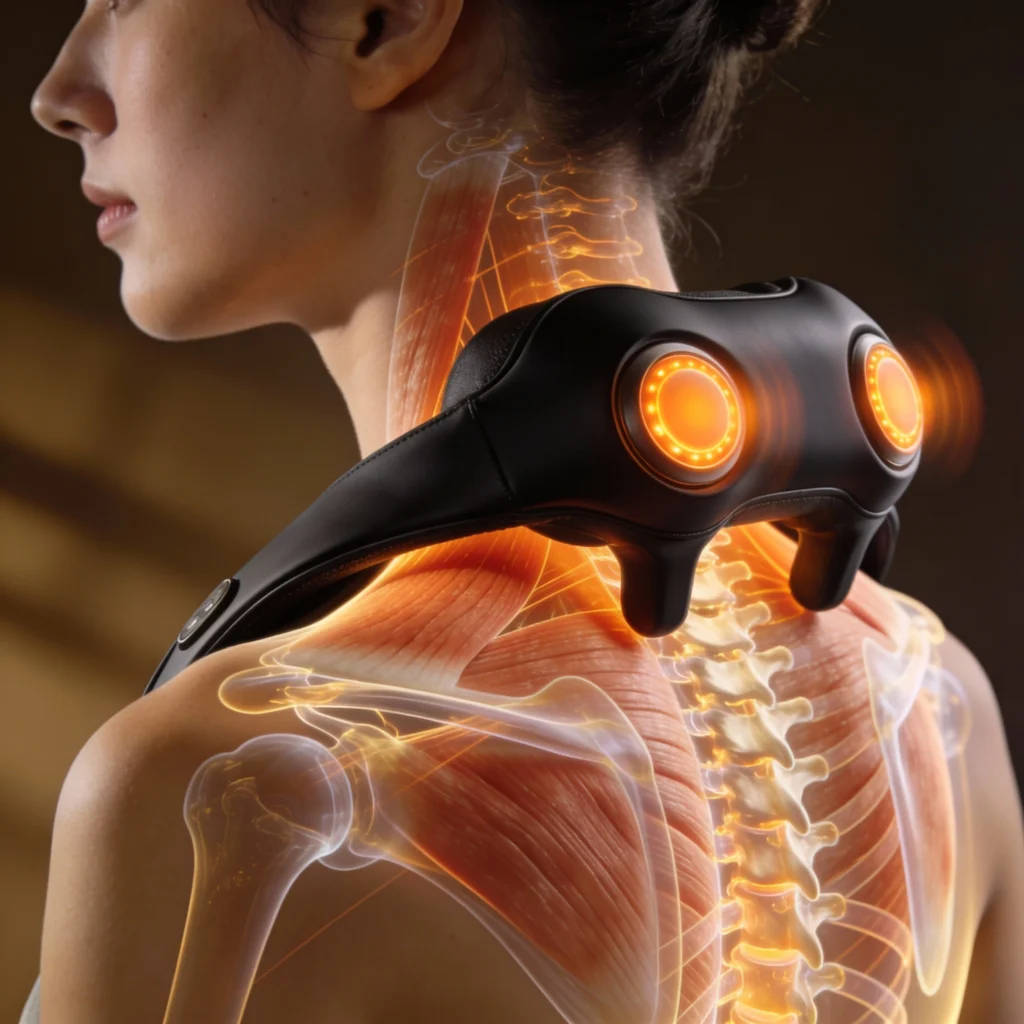
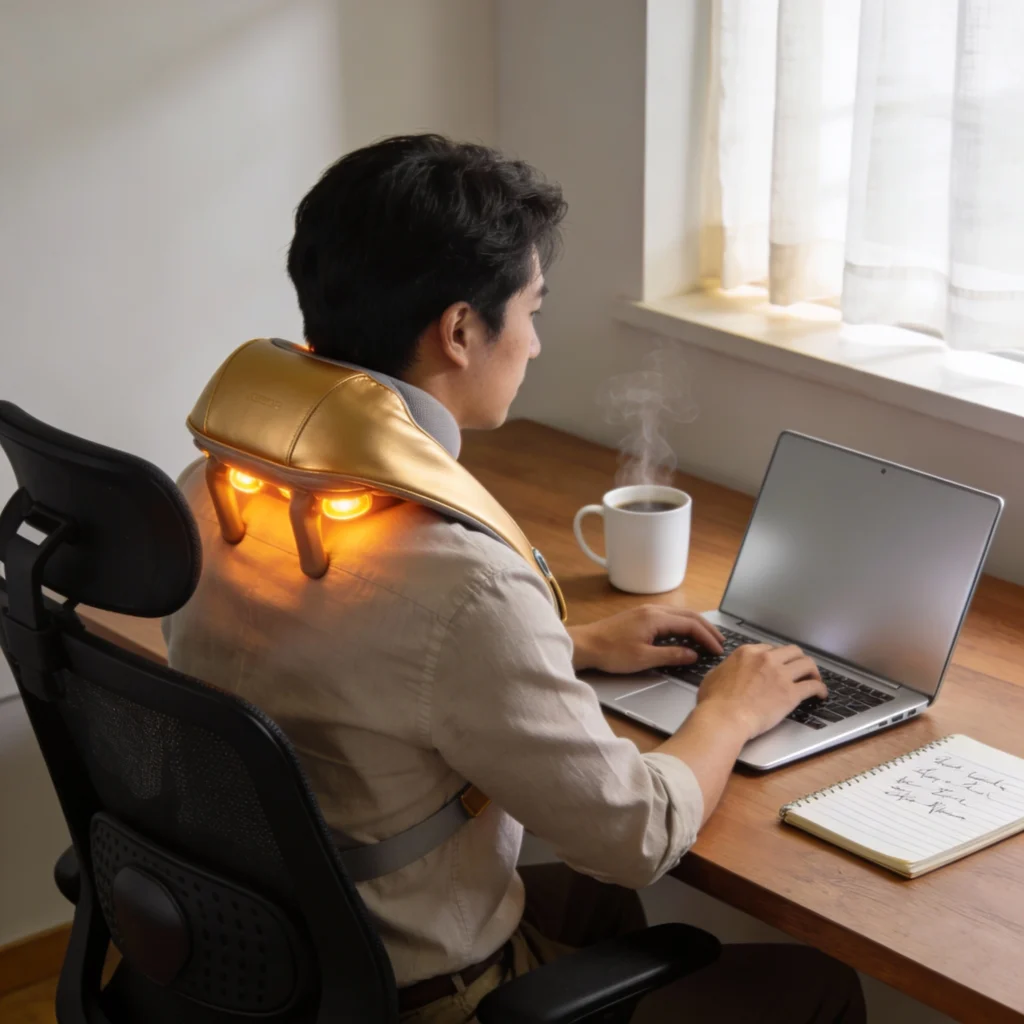
To understand how a heated neck and shoulder massager relieves tension, it helps to visualize the underlying muscles. The trapezius and cervical muscles often stay partially contracted for hours, especially when you lean over a laptop. Gentle heat and kneading help these fibers lengthen again, easing stiffness and improving blood flow.

Heat therapy and mechanical kneading work together by changing blood flow and nerve signaling in tight muscles. When tissue temperature rises even 2–3°C, blood vessels dilate, delivering more oxygen and nutrients to fatigued fibers. At the same time, rhythmic pressure from rotating nodes stretches muscle spindles, reducing the reflex that keeps shoulders hunched toward your ears during stress or computer work.

Why Heat Enhances Massage Benefits

Warmth between 40–45°C (104–113°F) softens connective tissue, making fascia and tendons more pliable during massage. This matters because trigger points in the upper trapezius often sit within stiff fascial layers that resist manual pressure when cold. By pre‑warming the area, a best neck massager with heat allows gentler kneading to reach the same depth, reducing the need for painful force and lowering the risk of next‑day soreness.

The Role of Kneading and Shiatsu Nodes

Most neck and shoulder massagers use 4–8 rotating nodes in a shiatsu pattern, mimicking thumbs pressing in circular motions. As these nodes compress muscle against underlying bone, they temporarily restrict blood flow, then release it, creating a pumping effect. This cycle helps flush lactate and inflammatory chemicals that accumulate after static postures, explaining why 15 minutes can feel more relieving than an hour of passive rest on the couch.

2

Key Features to Look for in the Best Neck and Shoulder Massager with Heat

Choosing the best neck massager with heat means looking beyond marketing terms like “deep kneading” and focusing on measurable features. Temperature range, motor strength, strap design, and fabric type all influence whether you can comfortably use the device three to four times weekly without irritation. Paying attention to these specifications also helps you avoid underpowered gadgets that end up unused.

Key Features to Look for in the Best Neck and Shoulder Massager with Heat

If you have sensitive skin, prioritize neck massagers with soft, breathable fabrics and lower heat settings. Models that warm gradually and distribute heat evenly reduce the risk of irritation or hot spots. Look for hypoallergenic materials and the option to use a thin towel barrier when you first test a new device.

Essential Specs and Adjustability

Before comparing brands, decide how much control you want over heat and intensity settings.

  • Look for adjustable heat with at least two levels between 38–45°C, so you can adapt to changing sensitivity.
  • Choose massagers offering three or more speed settings, allowing lighter strokes on sore days and stronger pressure on knots.
  • Prioritize auto shut‑off between 15–20 minutes, preventing overheating if you doze off while using it in bed.
  • Check power ratings around 24–36 watts; very low wattage often means weak motors that stall under shoulder weight.
  • Consider strap length of 40–60 cm per side, giving leverage to pull the nodes precisely into the upper trapezius.

Materials, Ergonomics, and Safety

How the device touches your skin and distributes weight affects both comfort and durability. PU leather exteriors resist sweat and are easy to wipe, but they can trap heat more than mesh, raising surface temperature a few extra degrees. Breathable mesh over the nodes lets warmth escape gradually, reducing hot spots. Reinforced stitching at stress points, especially around arm straps, prevents tearing after hundreds of pulls.

3

Best Neck and Shoulder Massager with Heat for Office and Home Use

Many people want one device that transitions from office chair to sofa without fuss. Versatile designs typically weigh under 4 pounds, include both wall and car adapters, and have cords at least 1.8–2 meters long. These details determine whether you can comfortably use the massager during a 30‑minute lunch break or while watching a two‑hour movie without awkward extension cords.

Best Neck and Shoulder Massager with Heat for Office and Home Use

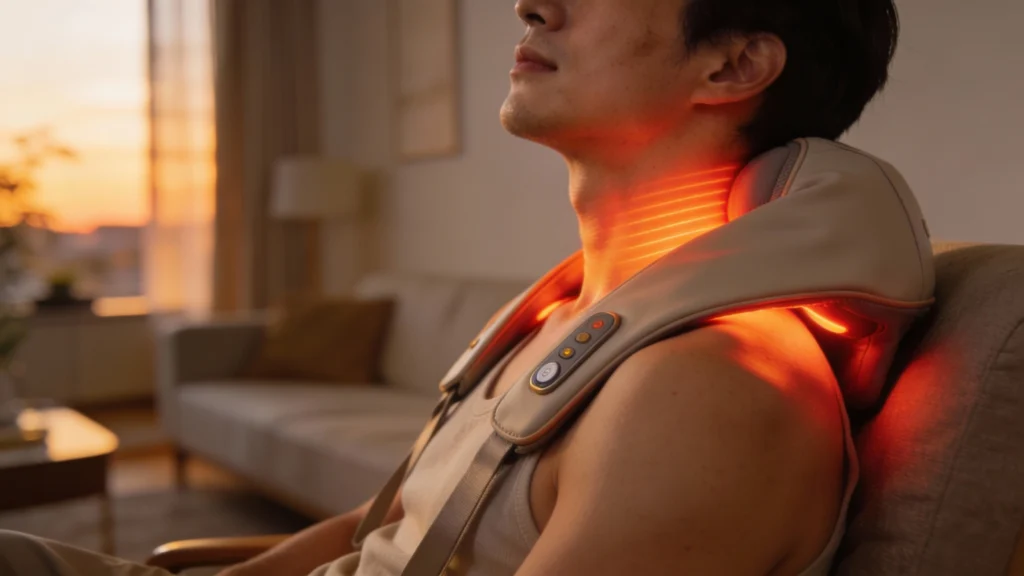
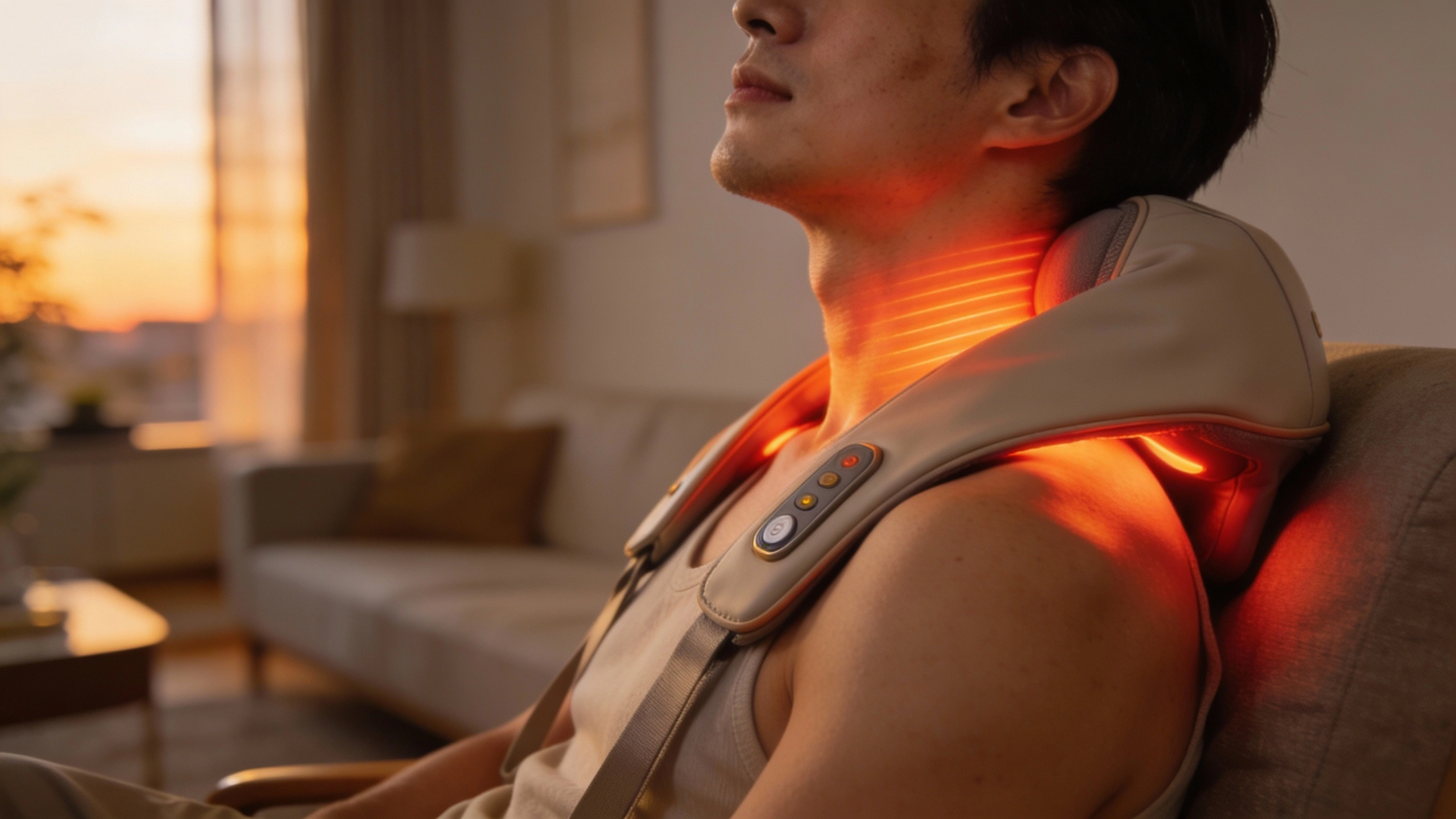
For office and home use, a versatile neck and shoulder massager should fit seamlessly into your routine. Lightweight designs with quiet motors let you ease tension between meetings, while longer power cords or cordless options make it easy to transition from your desk chair to the couch without interrupting your relaxation.

Comparing Versatile Heated Models

The table below compares several popular styles that work well in multiple settings, helping you see how specs translate into daily usability.

Model TypeApprox. Price (USD)WeightHeat RangeBest Use Scenario
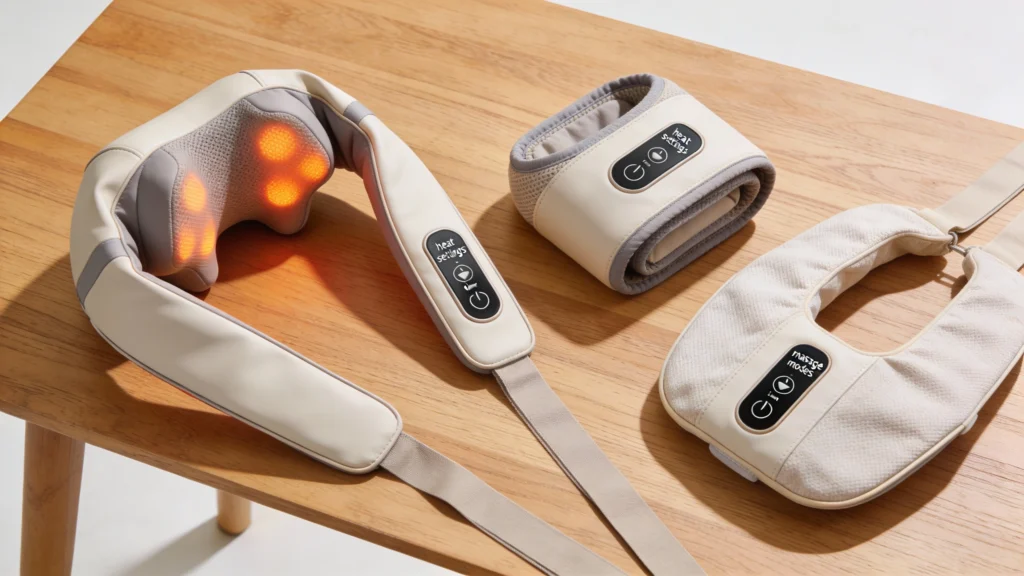
U‑shaped shiatsu with straps$50–$803–4 lbs40–45°CDesk chair or sofa with back support
Flat heating pad with neck contour$40–$702–3 lbs38–43°CRecliner or bed, lying semi‑flat
High‑back chair massager$120–$2008–12 lbs40–46°CDedicated office chair or gaming chair
Portable cordless neck wrap$60–$1101–1.5 lbs38–42°CTravel, hot‑desk offices, commuting
3‑zone neck‑back combo$90–$1505–7 lbs40–45°CCouch use targeting neck, shoulders, mid‑back

For office environments, quieter motors under 50–55 decibels and subtle designs matter, so you are not broadcasting every session to coworkers. At home, you might accept a slightly louder motor in exchange for stronger kneading. When evaluating your best neck massager with heat, think about where outlets are placed and whether you routinely sit upright or recline, then match the model to that posture.

4

Best Heated Neck Massager Options for Sensitive Skin

If your skin reddens quickly or you have conditions like eczema, choosing a gentle heated massager is crucial. Devices with lower maximum temperatures, softer fabrics, and removable covers can prevent irritation even with regular use. Sensitive users should also look for more gradual heating curves, where the device reaches target temperature over several minutes instead of spiking rapidly.

Best Heated Neck Massager Options for Sensitive Skin

When comparing neck and shoulder massagers with heat, pay attention to more than just appearance. Look for adjustable temperature levels, multiple massage modes, and an automatic shutoff timer. These features not only customize your comfort but also ensure the device delivers consistent, safe relief tailored to your pain patterns.

Design Elements That Protect Delicate Skin

For sensitive skin, the interface between your neck and the heating elements matters as much as the actual temperature.

  • Seek breathable mesh or cotton‑blend covers instead of slick PU leather directly against the neck region.
  • Choose models with low heat settings around 38–40°C, reducing the risk of lingering redness after 15 minutes.
  • Prefer removable, machine‑washable sleeves, so detergents and sweat do not accumulate and trigger flare‑ups.
  • Look for certifications like CE or ETL, indicating tested temperature regulation and reduced risk of hot spots forming.

Usage Strategies for Extra Caution

Even with the best neck massager with heat, how you use it determines whether your skin stays calm. Start with a thin cotton T‑shirt or towel between the device and neck for the first few sessions, gradually reducing layers if no irritation appears. Limit initial sessions to 10 minutes, checking the skin afterward. If you notice persistent redness lasting over an hour, lower the heat or switch to massage‑only mode.

5
best neck massager with heat

Best Neck Massager with Heat for Deep Tissue and Trigger Points

Some users crave intense pressure on stubborn knots at the base of the skull or along the upper trapezius. For them, the best neck massager with heat will prioritize stronger motors, firmer nodes, and strap designs that let you pull the device deeply into muscle. Heat in the 42–45°C range can further soften dense tissue, but must be balanced with session limits to avoid bruising.

Best Neck Massager with Heat for Deep Tissue and Trigger Points

What Makes a Massager Truly “Deep Tissue”

Deep tissue designs usually combine 8 rotating nodes, each around 3–4 cm in diameter, with a power rating near 30–36 watts. This combination resists stalling when you pull down on the straps to dig into trigger points. Reversible rotation patterns change direction every minute or so, preventing repetitive stress on the same fibers and distributing pressure across a broader area along the neck and shoulders.

Targeting Specific Trigger Points Safely

When working on trigger points, placement and duration matter more than brute force. Position the nodes just below the skull base for suboccipital release, then hold for 30–60 seconds before moving slightly lower. Alternate between left and right upper trapezius rather than pressing both sides aggressively at once. Overly long sessions exceeding 20 minutes can inflame tissue, so use strong settings sparingly and follow with gentle stretching.

6

Safety Tips When Using a Best Neck and Shoulder Massager with Heat

Safety Tips When Using a Best Neck and Shoulder Massager with Heat

Heated massagers are generally safe when used correctly, but misuse can cause burns, dizziness, or aggravated inflammation. Most manufacturers design devices around 15‑minute cycles because skin and superficial tissues can overheat if exposed much longer. Respecting these limits and listening to your body helps you enjoy daily relief while avoiding the cumulative strain that comes from treating a device like a 60‑minute heating pad.

Time, Temperature, and Positioning Guidelines

To stay safe, anchor your routine around conservative settings, then adjust slowly.

  • Begin with 10–15 minute sessions once daily, increasing to twice daily only if no soreness appears afterward.
  • Use moderate heat settings below 43°C when first trying a new device, especially if you have reduced sensation.
  • Avoid lying face‑down on the massager; extra body weight can amplify pressure beyond what the motor can handle.
  • Stop immediately if you feel sharp, radiating pain, dizziness, or tingling into the arms, and consult a clinician.

Medical Considerations and Professional Advice

People with conditions like diabetes, neuropathy, or cervical spine instability should speak with a healthcare provider before using any best neck massager with heat. Reduced sensation can prevent you from noticing early overheating, while structural spine issues may worsen under repeated compression. When in doubt, bring the product manual to your physical therapist and ask which settings and positions align with your treatment plan, rather than experimenting blindly at home.

7
best neck massager

Care, Cleaning, and Longevity of Your Best Neck Massager with Heat

Proper care extends the life of your device and keeps it hygienic, especially if you use it after workouts or share it with family. Because heating elements and motors sit just beneath the fabric, soaking or machine‑washing the entire unit can destroy internal wiring. Instead, focus on surface cleaning, smart cord management, and storage practices that prevent strain on connectors and stitching over hundreds of sessions.

Care, Cleaning, and Longevity of Your Best Neck Massager with Heat

Cleaning Heated Components Safely

Always unplug the device and let it cool for at least 15 minutes before cleaning. Use a slightly damp microfiber cloth with mild soap to wipe PU leather or mesh surfaces, avoiding any saturation near seams where moisture could reach wiring. Removable covers or sleeves can usually be machine‑washed on gentle cycles at 30°C, then air‑dried completely before reattaching to prevent trapped humidity.

Storage, Cord Care, and Durability

How you store your best neck massager with heat directly influences its lifespan. Avoid wrapping cords tightly around the unit, which stresses internal copper strands and can cause intermittent power after a few months. Instead, loop cables loosely and secure them with a Velcro tie. Store the massager flat in a drawer or on a shelf, rather than hanging it by straps, to prevent fabric stretching and uneven pressure on the heating elements.

8

Who Should Avoid a Best Heated Neck Massager (and Alternatives)

Who Should Avoid a Best Heated Neck Massager (and Alternatives)

Heated neck massagers are not appropriate for everyone. Certain medical conditions increase the risk of burns, impaired healing, or worsening symptoms under heat and mechanical pressure. Recognizing when to skip heat—and sometimes massage altogether—protects you from complications that can take weeks to resolve. In these cases, non‑heated supports or professional hands‑on care may be safer ways to manage neck and shoulder discomfort.

Conditions and Situations Where Heat Is Risky

People with peripheral neuropathy, uncontrolled diabetes, active skin infections, or recent neck surgery should generally avoid heated massagers. Pregnancy, especially in the third trimester, warrants extra caution around the upper back and neck due to joint laxity and blood pressure changes. If you have a pacemaker or implanted cervical hardware, consult your cardiologist or surgeon before using any device that applies sustained pressure near the chest or spine.

Alternative Tools Without Heat

For those who cannot safely use a best neck massager with heat, non‑heated options still offer meaningful relief. Foam rollers, peanut‑shaped mobility balls, and simple cervical support pillows can reduce muscle guarding by improving posture and spinal alignment. Gentle stretching routines held for 20–30 seconds per muscle group, two or three times daily, often provide more sustainable improvements than sporadic intense heat, especially when combined with ergonomic adjustments at your workstation.

Face, Neck, Head, Body, Back & Foot Massager
For a Relaxing & Relieving Lifestyle
14-day money back guarantee
Lowest Prices: 365 Days Discount
Safe & Secure online payment
Contact Us

Massagers Mart © 2025. All Rights Reserved

Massagers Mart
Logo
Compare items
  • Total (0)
Compare
0
Shopping cart